
Wedding turned to carnage in US strike on Iran

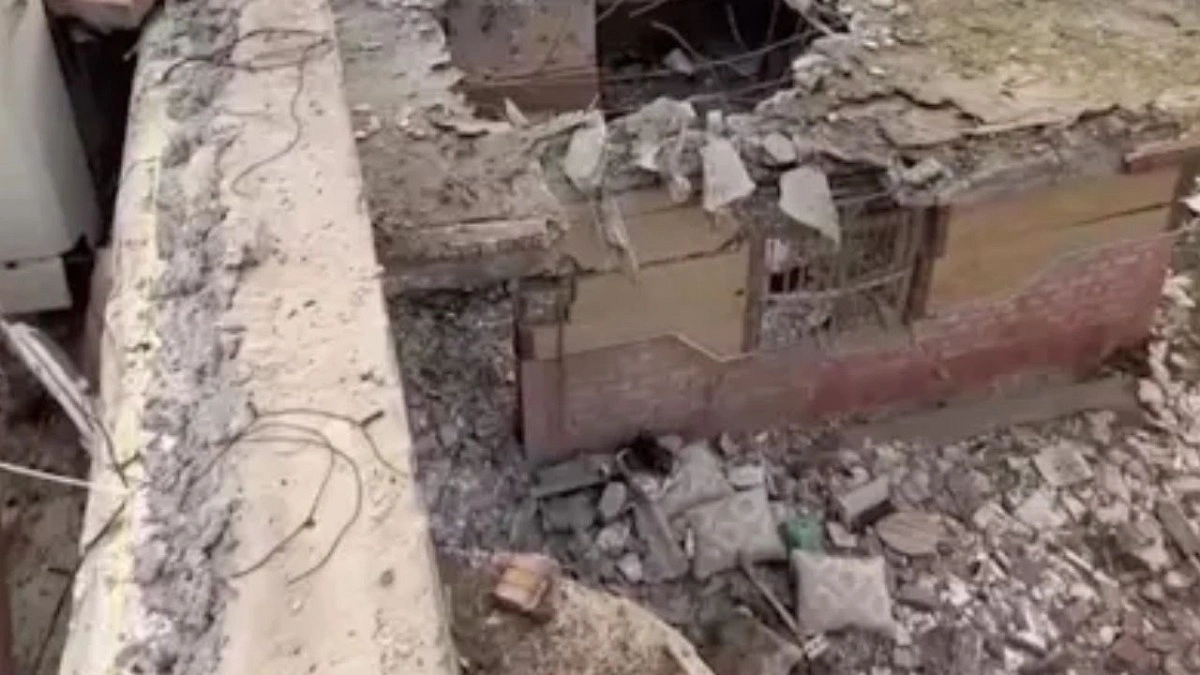
Collected Photo
US military launched several overnight airstrikes against the southern Iranian coastal city of Kuhestak, located in Sirik County of Hormozgan province near the Strait of Hormuz, directly hitting a wedding celebration and turning a festive night into a scene of carnage.
Hormozgan governor’s office on Wednesday officially identified four deceased victims of the strike: Amir Ali Karimi, 4, Mohammad Malahi, 16, Kolsoum Malahi, 43, and Zarkhatoun Taheri, 43.
The attack also severely wounded more than 60 other attendees, sending many to local hospitals with life-threatening injuries.
While US Central Command (CENTCOM) spokesperson Tim Hawkins acknowledged reports of civilian deaths, he claimed they “originated from Iranian state media”. Hawkins defended the actions of the American forces, asserting, “The US military never targets civilians, unlike the IRGC.”
Despite his denial, overwhelming physical evidence, local witness accounts, and recorded video footage paint a drastically different picture. Projectiles battered Kuhestak with lethal force, leaving a trail of destruction.
One weapon demolished a local shoreline telecommunications tower. Defense analysts inspecting the leftover weapon fragments suggested that the US military likely deployed a variant of Boeing’s AGM-84K SLAM-ER - an advanced, air-launched precision-guided cruise missile marketed as having “surgical strike capability”.
Recorded footage from Wednesday morning showed a direct missile strike puncturing the roof of the building where the wedding was taking place. The blast knocked out local power, shattered adjacent residential buildings, and left bloodied women’s and children’s slippers scattered among the rubble.
A state television reporter confirmed that three US missiles struck the venue, with one boring a 1.5-meter (5-foot) hole deep into the ground.
Outcry from victims and calls for international justice
The building’s owner, Ali Malahi, who was hosting his daughter’s wedding, spoke to state television, confirming that only civilians occupied the premises during the strike. From his hospital bed, a wounded young local man described the terrifying moments before the blast, recounting how they heard military jets roaring overhead just as they arrived, followed by deafening explosions. He said, “Many young children and women were horribly wounded.”
Another survivor, a woman with blood-stained hands, appeared in a video released by state-linked SNN to reinforce that no military operations were nearby. She emphasized, “This house was by no means close to any military site,” and noted that the munitions directly targeted the building.
In response to the tragedy, the Iranian Red Crescent Society compiled comprehensive documentation and images of the injured children. The humanitarian group formally petitioned the Office of the Prosecutor of the International Criminal Court, demanding immediate legal prosecution against the perpetrators of what they termed a “grave” war crime.
Iranian Ministry of Foreign Affairs condemned the strike, calling it the latest addition to a “catalogue of atrocities against the nation of Iran” by US forces.
Ministry spokesman Esmaeil Baghaei posted on X, “This cruelty cannot be separated from the chain of atrocities that preceded it in Minab, Lamerd, Qeshm and elsewhere nor from the strikes on military targets that were dressed in deceptive justifications.”
Baghaei warned against global indifference, saying, “More dangerous than the bomb itself is the normalisation of bombing; and more dangerous than silence is the conversion of silence into legitimacy.”
On 28 February, the opening day of the war, a strike devastated an elementary school in Minab, killing about 156 civilians - predominantly schoolchildren, teachers, and parents.
Despite evidence of Tomahawk missile fragments at the site, US military has suppressed its investigation findings. CENTCOM Commander Brad Cooper sought to justify the attack by claiming the school sat “on an active IRGC cruise missile base”.
Another US missile tore through a sports arena in the city of Lamerd in Fars province, killing 21 people, including four children, during a women’s volleyball match. Though CENTCOM denied involvement and blamed Iran, investigations by The New York Times, BBC, and independent weapon specialists traced the strike to a US Precision Strike Missile (PrSM).
This weapon is designed to burst midair, spraying thousands of lethal tungsten pellets over a wide radius.
Over more than six months of relentless conflict, joint US and Israeli forces have systematically targeted critical civilian infrastructure across Iran, including oil and gas facilities, fuel depots, steel and petrochemical factories, airports, ports, bridges, power installations, medical centers, and water facilities.
According to local authorities, the war has claimed the lives of more than 3,500 Iranians, including over 50 civilians killed during a brief 60-day truce in July.
Source: Al Jazeera (adapted)


