


Shortage of hilsa even during peak season

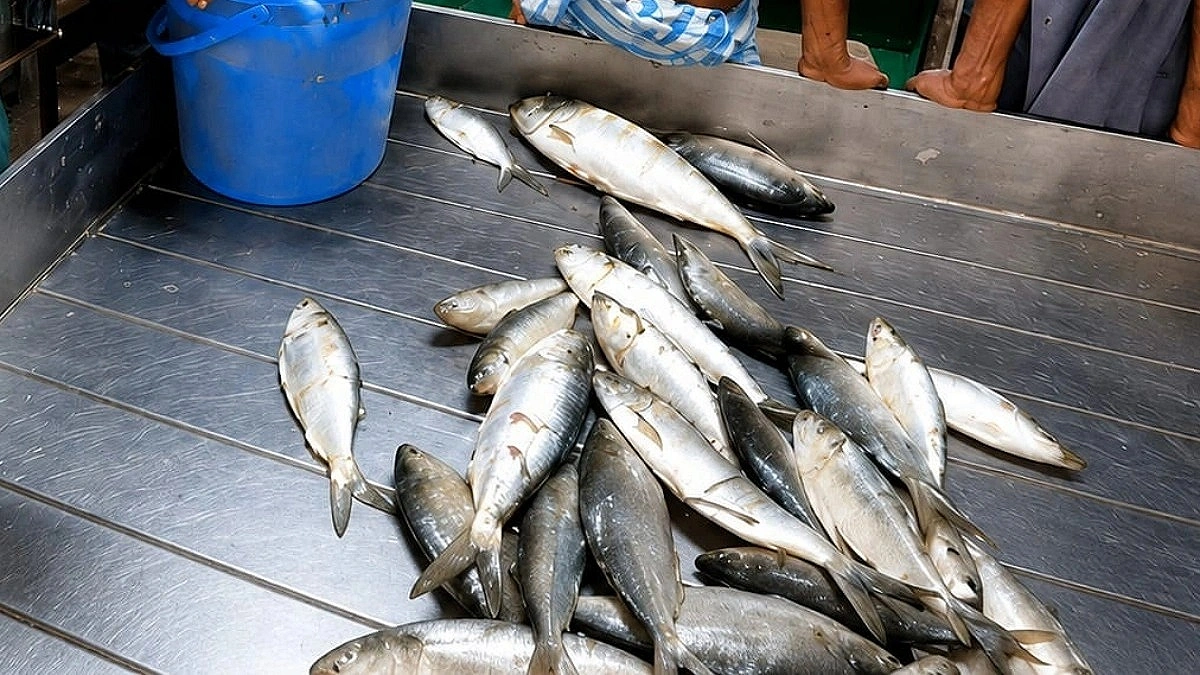
The desired amount of hilsa is not being found in the Meghna River
The peak season for hilsa is underway in the Meghna River. Fishermen have become busier on the river. Boats and trawlers are returning to the landing stations one after another. However, fishermen are frustrated as they are not getting the expected amount of hilsa. Along with the lower catch, fishing costs have increased. As a result, many fishermen have no reason to smile even during the peak season.
Meanwhile, hilsa prices are high in local markets. A one-kilogram hilsa is being priced at Tk 4,000 to Tk 5,000. Even a 200-gram hilsa costs around Tk 1,500. As a result, hilsa has become unaffordable for many low- and middle-income buyers.
Speaking to fishermen in different areas of Raipur in Lakshmipur including Altaf Master Ghat, Rahul Ghat, Purana Beri, Meghna Bazar Ghat, Chandar Khal, Hajimara and Saju Molla Ghat, they complained that fewer hilsa are being caught in the Meghna this season compared with previous years.
The fishermen said taking a boat or trawler onto the river requires a large amount of money for fuel, ice, food and workers' wages. Sometimes they stay on the river for several days but still fail to catch the expected number of fish. After selling the fish, many of them have little money left after paying for fuel, ice and workers' wages.
As a result, they fear losses even during the peak season. Several fishermen said that in the past they could catch a certain number of fish on a single trip but now they often catch less. At the same time, the cost of fishing has not decreased.
A visit to various markets in Raipur found that hilsa from the local Meghna as well as hilsa brought from Chattogram are being sold. Local residents believe the hilsa are being brought from Chattogram by pickup trucks and sold in various markets in Raipur. Due to the low supply of local hilsa, buyers have to rely on fish brought from other areas.
Several local buyers said the taste and aroma of Meghna hilsa are different from those of hilsa from other areas. However, due to the low supply of local hilsa in the markets, they are being forced to buy hilsa from other areas.
Hannan had come to shop at the weekly market in Mirganj of the upazila. He works as a construction helper. His daily wage is Tk 500. His income is even lower because he does not have work one or two days a week.
Hannan said, "I am struggling to manage the household shopping for essentials including rice and lentils. On top of that, my son is insisting on eating hilsa. I was shocked when I came to the hilsa shop. They are asking Tk 1,500 for a 200-gram hilsa. A one-kilogram hilsa costs Tk 5,000. Hilsa is not meant for poor people like us. It is now food for the rich."
As fewer fish are being caught in the river, fishermen's families are also facing financial difficulties. They complained that despite the high price of hilsa, they are not receiving the full benefit of the increased income. Because of the low catch, many are struggling just to cover their fishing expenses.
Local residents complained that unless the use of banned current nets and China duari nets in the river is stopped, the future of hilsa and other fish species could face an even greater crisis. They claimed that these nets indiscriminately catch small and large fish as well as juvenile fish along with hilsa. This is negatively affecting fish breeding and reproduction.
Mahfuzul Hasnain, senior fisheries officer of Raipur Upazila, said the formation of chars in different parts of the river could also affect the movement and availability of hilsa. However, a fairly good amount of hilsa is currently being found in the Meghna section of Raipur.
He further said the fisheries department is conducting regular drives to stop the catching of mother hilsa during the banned period and the use of illegal nets. Drives are also being conducted to stop fishing with China duari and current nets. Fishermen have been sentenced to jail and fined during these drives.
He also said various natural and human made factors affect the movement and availability of hilsa in the river. As a result, the number of fish in the river may increase or decrease at different times.


