
PM explains causes of energy crisis and outlines way forward

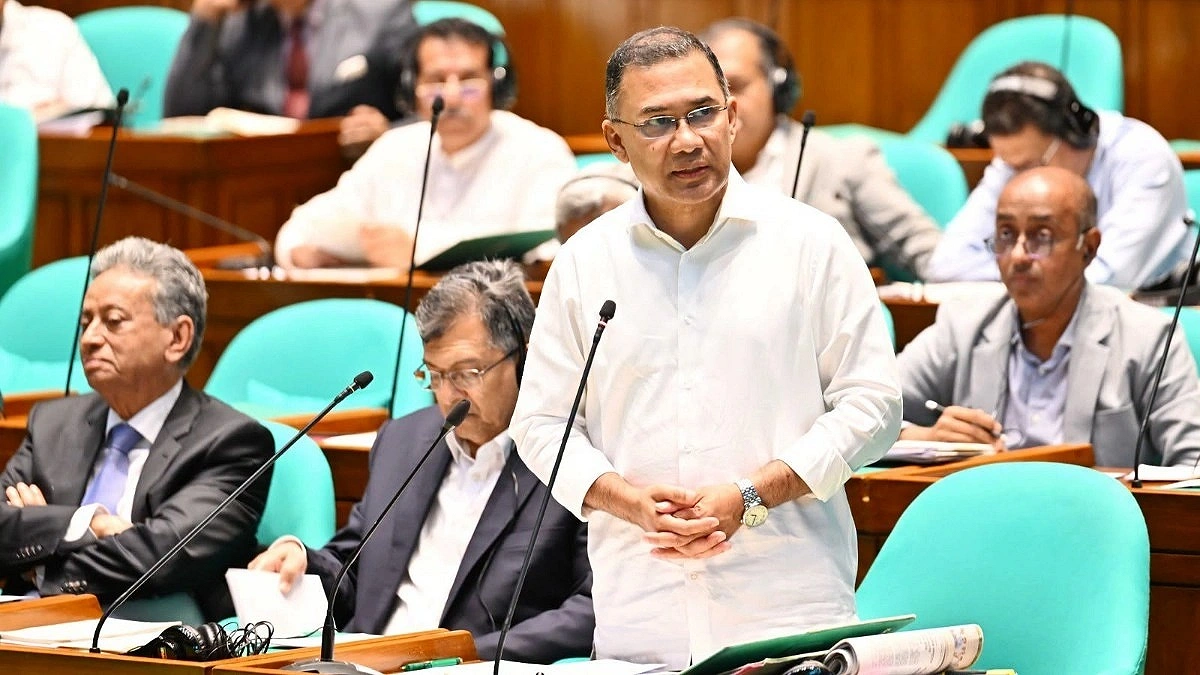
Prime Minister Tarique Rahman during the Parliament session on Wednesday. Photo: Prime Minister’s Office Facebook page
Prime Minister Tarique Rahman has blamed the previous government for the country’s current energy crisis. He said the current government is implementing an integrated plan to overcome the crisis.
The prime minister spoke about the issue during the question-and-answer session in Parliament on Wednesday against the backdrop of the ongoing energy crisis and the resulting electricity crisis, according to BSS. The question was asked by female lawmaker Selina Sultana.
Explaining the causes of the crisis, Tarique Rahman said, “The energy sector was virtually crippled through plans made during the fascist government. As a result, the current energy crisis has been created by inadequate gas exploration over a long period and dependence on imports.”
He presented the government’s coordinated action plan in Parliament and said the government is working to overcome the crisis.
He said a program has been undertaken to drill 150 wells to increase domestic gas production. Of these, 30 wells have already been drilled and 140 MMCFD of gas has been added to the national grid through them.
Work on another seven wells is underway. Once the work is completed, another 85 MMCFD of gas will be added to the national grid, the prime minister said.
He also said the government has adopted an action plan to conduct 4,500-line kilometers of 2D seismic surveys and 4,200 square kilometers of 3D seismic surveys for gas exploration.
The prime minister also said the government plans to purchase two new rigs to strengthen Bangladesh Petroleum Exploration and Production Company (BAPEX), the state-owned oil and gas exploration agency.
He said tenders have been invited after approval of the “Offshore Model PSC 2026” for gas exploration at sea. The “Onshore Model PSC” for land-based exploration is in the process of being approved, he added.
The prime minister expressed hope that gas discoveries through renewed exploration would play a significant role in ensuring the country’s energy security.
Regarding gas imports, Tarique Rahman said discussions are underway with interested companies to establish a floating LNG terminal at Kutubjom in the deep sea off Maheshkhali in Cox’s Bazar district as part of the expansion of LNG infrastructure. It will be possible to supply LNG from the terminal by 2028.
He said the government aims to increase LNG imports by 600 MMCFD within the next two years. Besides, he said an initiative will be taken to assess the feasibility of urgently establishing one or two new floating LNG terminals in the Payra or Mongla port areas or along the sea coast of the southwestern region.
