
US grabs Venezuela's oil, will prices drop?

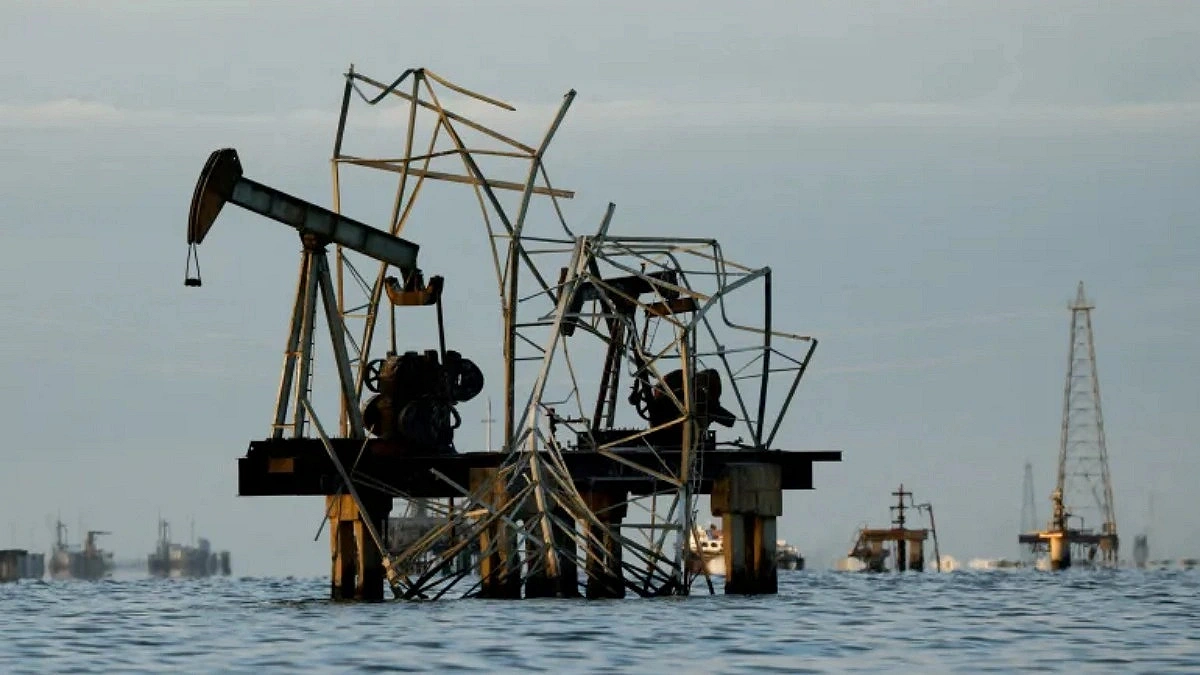
An abandoned pumpjack sits at an oil field belonging to the state-owned oil company PDVSA on the shores of Lake Maracaibo, Venezuela. Photo: Reuters
US President Donald Trump recently announced what he described as "the largest oil deal in the history of the world" with Venezuela.
On August 28, he claimed that this deal would more than double the United States' oil reserves. At the same time, it would lower fuel prices for Americans. Additionally, Venezuela's economy would benefit.
However, analysts say the reality is different. This deal could increase oil supply in the long term. But in the immediate term, there is little chance of oil or fuel prices falling in the United States.
Moreover, questions remain about how much this can serve as an alternative to the Hormuz crisis and whether it will reduce global market prices.
What is in the deal?
Venezuela holds the world's largest proven oil reserves—approximately 303 billion barrels. The country accounts for about 17% of the world's total oil reserves.
Under the new agreement, the United States will gain control over more than 65 billion barrels of Venezuela's proven oil—more than one-fifth of the country's total proven reserves.
For this purpose, the US is forming a joint venture with North American Blue Energy Partners (NABEP), a North America‑based company.
The company is owned by Venezuelan billionaire Alejandro Betancourt, who was once a close associate of former President Hugo Chávez.
Currently, NABEP is the second-largest oil producer in Venezuela after US oil company Chevron. Chevron is also expected to expand its operations in the country.
In the new joint venture, the office of the US Department of Defense will hold a 35% stake.
The White House has stated that millions of barrels of new oil produced in Venezuela will be processed in US refineries. US machinery and infrastructure will be used for this work, which will increase investment and employment in the United States.
Under the agreement, the US will also have the right to purchase 20% of the oil produced at production cost.
Currently, the joint venture has a daily production capacity of about 200,000 barrels. However, further investment is needed to increase oil production in Venezuela.
So why aren't oil prices falling in the US?
After Trump announced the deal, oil prices in the US actually rose. Before the deal, US benchmark WTI crude was selling at around $83–$86 per barrel, while Brent was trading between $85 and $88.
Since then, WTI has crossed $90, and Brent has risen above $95.
According to analysts, the main reason is the tensions in the Middle East. In particular, the supply crisis in the Strait of Hormuz has driven up oil prices in the global market.
On Thursday morning, WTI futures were priced at $90.83 per barrel.
That is, despite the deal with Venezuela, the market is still more concerned about the supply crisis in the Middle East than about new oil supplies coming to market.
When will Venezuelan oil reach the market?
Venezuela's biggest problem is infrastructure.
The country's oil is heavy and high in sulfur. Extracting and refining this oil is relatively expensive.
Venezuela has an aging pipeline system. There are also problems with electricity supply. There is a shortage of equipment for refining this specific type of oil.
Therefore, production will not increase overnight just by signing a new deal.
Analyst Johannes Rauball believes that it could take years for a significant amount of new oil to reach the market.
Another problem is the capacity of US refineries. Currently, US refineries are operating at nearly maximum capacity to meet demand. As a result, even if new oil arrives, there is not much excess capacity to refine it quickly.
For this reason, the expectation that Venezuelan oil will quickly lower prices at US pumps is not realistic.
Economist Tracy Shuchart of the futures trading platform NinjaTrader echoed the same sentiment.
In her view, many people are looking at Venezuela's vast oil reserves and thinking that cheap oil supplies will soon flood the market. In reality, that will not happen.
Venezuela is currently producing about 1.2 million barrels of oil per day. A few months ago, production was just under 1 million barrels.
Most of this increased production has come from Chevron's older wells—not from new oil fields.
That is, most of the easily extractable oil is already on the market. Having vast reserves and being able to bring that oil to market quickly are two different things.
How much impact will it have on the global market?
Under normal circumstances, more than 20% of the world's oil and natural gas is transported through the Strait of Hormuz. Due to Iran's blockade, that supply has taken a major hit.
Before the war, Brent crude was priced at about $66 per barrel. After the Hormuz closure, it crossed $100.
On Thursday, Brent rose to $95.68.
In this situation, the Venezuela deal has almost no immediate effect.
However, in the long run, if Venezuelan production increases, global oil supply will rise, and prices could then fall.
But Venezuelan oil cannot fully compensate for the Hormuz shortfall.
Because Venezuelan oil is heavy and sulfurous. On the other hand, most of the oil that passes through Hormuz from the Gulf countries is relatively light.
So the two types of oil are not direct substitutes for each other.
According to Middle East researcher Frederic Schneider, due to the Iran war, at least 10 million barrels of oil per day have been taken off the market through Hormuz. Venezuela cannot fill that gap.
Can all countries take Venezuelan oil?
Only a handful of countries in the world have the capability to refine Venezuela's heavy oil. Among them, the United States, China, and India are the main ones.
Many European refineries are designed to refine relatively light oil. As a result, demand for Venezuelan oil there may be low.
Even the US Strategic Petroleum Reserve has questions about storing Venezuelan oil. There are concerns that heavy oil could damage underground storage facilities.
So who benefits the most?
The biggest beneficiaries are likely to be US oil companies.
After the deal was announced, shares of Chevron, the only major US oil company currently active in Venezuela, rose 2.2% to $206.20.
US Energy Secretary Chris Wright said that in addition to Chevron, several other companies—such as Italy's Eni—could sign new oil deals in Venezuela. India's ONGC, Colombia's GeoPark, and US-based GE Vernova are also among potential investors.
In the late 1990s, Venezuela's daily oil production exceeded 3 million barrels. Later, due to a lack of investment, mismanagement, and US sanctions, production fell sharply.
Recently, production has been between 1.1 and 1.2 million barrels per day.
Wright claimed that with new investment, oil production will increase, which could lower prices.
However, he also acknowledged that the major problem with fuel prices in the US right now is not oil supply, but refinery capacity.
Trump's deal with Venezuela could increase oil supply in the long term. But it will take time to see the results.
The biggest problem right now is the supply crisis in the Strait of Hormuz. As long as that crisis persists, even additional oil from Venezuela will not bring about a major change in the global market.
An even bigger obstacle is Venezuela's political risk. Investing in the country requires massive amounts of capital.
But it is also a question whether investors will be willing to take that risk, given the political instability and production costs.
In the words of Middle East researcher Frederic Schneider, due to the uncertainty of the war and the lack of a clear picture of future demand, no company will readily want to invest $100 billion in a risky country like Venezuela.
Therefore, Trump's announced "cheap oil" will not be seen at US pumps anytime soon. The real impact of the deal will depend on three factors—how quickly Venezuela's production increases, how much oil the US can refine, and when the Strait of Hormuz crisis is resolved.


