
Israel’s state institutions are crumbling
- ‘If Israel were a flesh-and-blood person, it would probably have been taken to the ICU yesterday.’

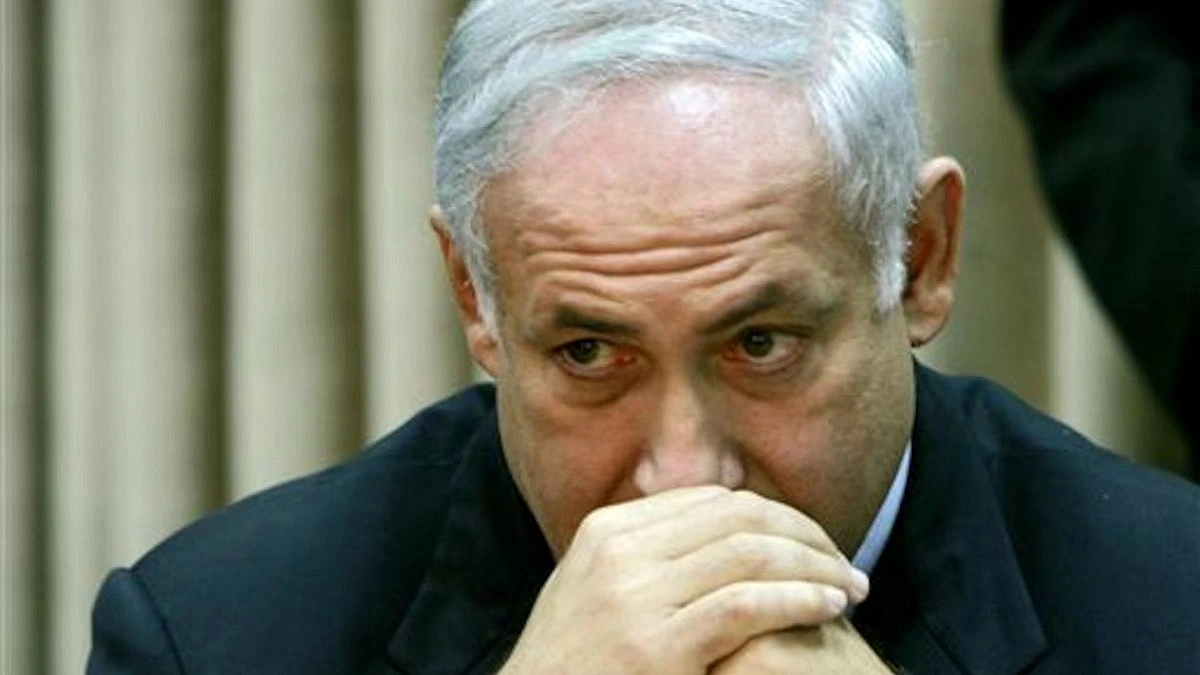
Israeli Prime Minister Benjamin Netanyahu. Photo: Reuters
“If Israel were a flesh-and-blood person, it would probably have been taken to the ICU yesterday.” This is how senior journalist Avi Ashkenazi described Israel’s current situation in an article published in the Hebrew-language daily Maariv. He claimed that under Prime Minister Benjamin Netanyahu’s government, the country’s state institutions, security apparatus, and political structure are becoming increasingly weakened, pushing the state toward a major institutional crisis.
According to Ashkenazi, for nearly 80 years Israel’s state structure has been built on the army, police, the internal security agency Shin Bet, the intelligence agency Mossad, the prison service, an independent judiciary, and professional media. But the current government is weakening those very foundations. In his words, Netanyahu has not only lost political direction but has also lost the necessary control over power.
The article cites several recent developments as examples of the crisis. Among them is the law concerning ultra-Orthodox Jewish religious students and their treatment on par with military personnel. Ashkenazi claimed that the government’s leaders ignored warnings from Chief of Staff Eyal Zamir on the issue. Instead, Likud Party lawmaker Tally Gotliv called for the army chief’s dismissal. In his view, party politics and Likud’s internal electoral calculations are being given greater importance than national security.
Ashkenazi also criticized an initiative by Defense Minister Israel Katz. Katz appealed to the president to pardon former Israeli soldier Elor Azaria, who was convicted of killing wounded Palestinian Abd al-Fattah al-Sharif in 2016, and to erase his criminal record. However, the army chief, military legal officials, and the head of the army’s personnel directorate opposed the move. According to Ashkenazi, trying to pardon Azaria despite his failure to admit responsibility or express remorse has raised questions about the government’s moral standing.
He also questioned a decision by Transportation Minister Miri Regev. Ashkenazi described the initial refusal to allow a US military fuel-carrying aircraft to land at Ben Gurion Airport, followed by the reversal of that decision two hours later, as a political publicity tactic. He said an unnecessary dispute with the United States had been created despite the availability of alternative measures to handle the situation.
The Israeli media has also questioned another decision by Transportation Minister Miri Regev. She initially blocked a US military fuel-carrying aircraft from landing at Ben Gurion Airport and withdrew the decision two hours later. According to Ashkenazi, it was not an effective administrative measure but rather a political publicity tactic. Although alternative options were available to manage the situation, unnecessary tensions with the United States were created.
He also described disputes over the rehabilitation fund for wounded Israeli soldiers and legislation protecting members of the ultra-Orthodox community who evade mandatory military service from arrest as alarming for state institutions.
He said that if political competition surrounding the Knesset and the Likud Party’s internal elections intensifies further, pressure on state institutions and the security system will also increase. His article reflects growing concern among sections of Israel’s political and media circles, where accusations are mounting that Netanyahu’s government, in its effort to retain power, is putting the institutional foundations of the state at risk.
