
Sleepless Nights in Rising Heat
Urban residents losing 84 hours of sleep a year

Graphics: Agamir Somoy
The toxic impacts of climate change are not only disrupting environmental balance but also robbing people of restful sleep at night. A recent report by international research organization Climate Central says residents of Bangladesh’s major cities are now losing between 72 and 84 hours of normal sleep each year. Over the past five decades, this heat-related sleep loss has at least doubled.
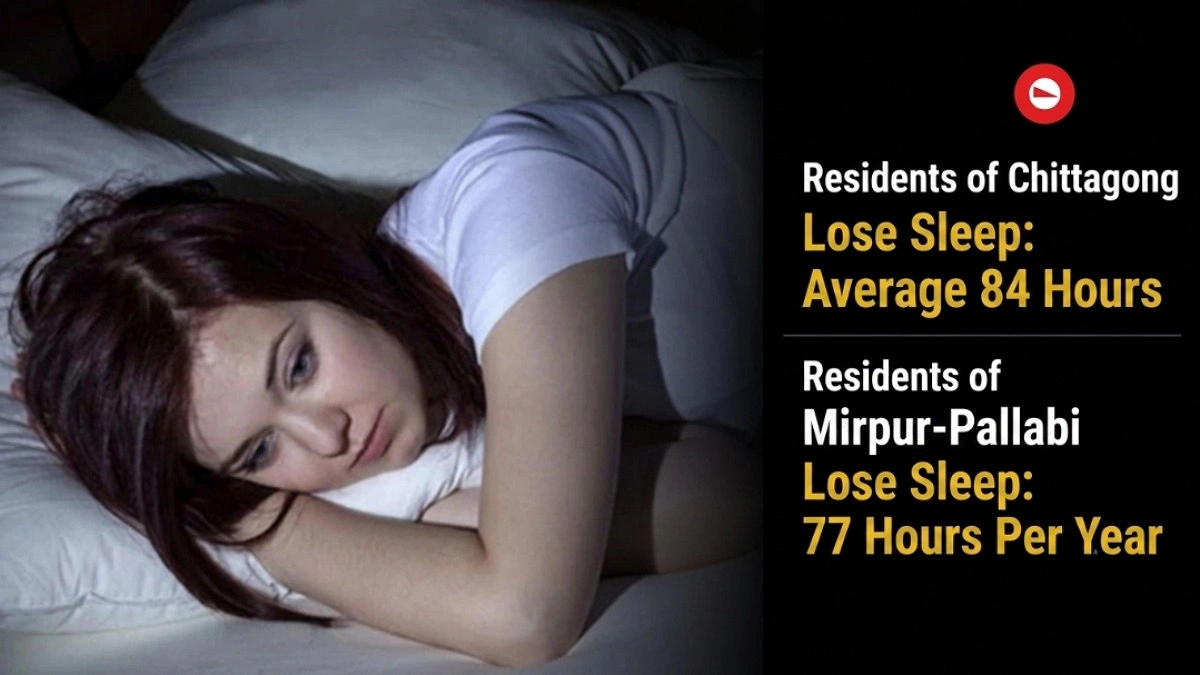
The study found that the port city of Chattogram tops the list of sleep loss. Residents there are losing an average of 84 hours of sleep annually. Other cities on the list include Khulna (79 hours), Dhaka and Rajshahi (76 hours), Gazipur and Cumilla (74 hours), and Rangpur (72 hours). The situation within Dhaka is also alarming. People living in Mirpur and Pallabi are losing 77 hours of sleep a year, while residents of Mohammadpur are suffering from a sleep deficit of up to 73 hours.
Losses Double Compared to the Past
The analysis says the situation has become significantly worse compared to 1970-1975. During that period, only 3 percent of temperature-related sleep loss in Dhaka and Rajshahi was attributed to climate change. In 2020-2025, that figure rose to 6 percent.
The situation in Cumilla and Rangpur is even more severe, where the rate has increased by more than 130 percent.
A Silent Public Health Crisis
According to researchers, higher nighttime temperatures prevent the body from recovering from daytime heat. In the long term, this is creating serious health risks, including heart disease, stroke, mental distress and reduced productivity. Older adults, children, pregnant women and low-income people who do not have access to air-conditioned environments are particularly vulnerable.
Dr. Courtney Howard, chair of the Global Climate and Health Alliance, said, “To stay healthy, an adult needs 7 to 9 hours of sleep each day. As warm nights continue to increase, sleep disruption has now become a national public health issue.”
Analysts say adaptation measures alone will not be enough to address the situation. They say rapidly reducing greenhouse gas emissions, minimizing the urban heat island effect through city planning and ensuring cooling facilities for low-income communities are now essential. Unless countries move away from fossil fuels and accelerate the transition to clean energy, the sleep crisis is likely to become even more severe in the coming years.
