
AI Decodes Centuries-Old Secrets Hidden in Ancient Manuscripts

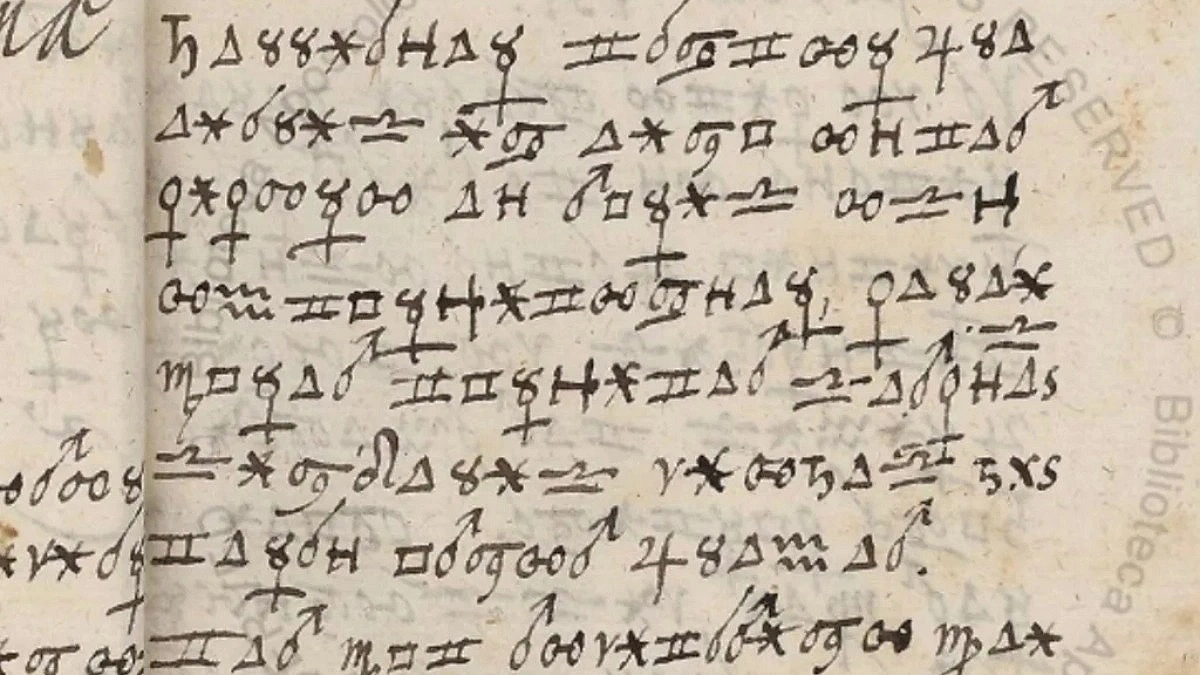
The 408-page 'Borg Cipher' manuscript combines 34 unusual symbols, Roman letters, and Arabic script.
Dusty shelves of libraries and archives have long held thousands of secret documents and historical messages locked away for centuries. Written in obscure symbols and undecipherable codes, many of these ancient records may no longer remain unreadable. With the help of artificial intelligence (AI), researchers are now steadily decoding some of history’s most intriguing mysteries.
Recently, researchers successfully decoded a mysterious handwritten book preserved for more than 400 years in the Vatican Library archives. The text contained coded medical treatments once used to avoid accusations or punishment for witchcraft. Beata Megyesi, professor of computational linguistics at Stockholm University, and her team decoded the complex system. The manuscript reportedly contained unusual remedies, including drinking red wine to treat dysentery and fermenting nutmeg in dough.
Around 1 percent of documents stored in global archives are either fully or partially written in coded or symbolic form. These secret writings, which date back to ancient Greece and Rome, conceal diplomatic intelligence, rituals of secret societies, banned medical practices, and even forbidden love stories. Recently decoded letters from Mary, Queen of Scots revealed her plans to regain the throne while imprisoned in England. In another case, cryptologist Cécile Pierrot from the French Institute for Computer Science Research spent six months decoding a 500-year-old letter written by King Charles V of Spain, in which the monarch expressed deep fear over a plot to assassinate him.
The first step in such research typically involves digitising faded handwriting or damaged ink-based symbols, a highly time-consuming process. However, AI platforms such as Transkribus have significantly accelerated this work. The technology helped quickly translate a partially coded letter written in 1637 by nobleman Sigismund during the Thirty Years’ War.
Currently, Professor Megyesi and her team are developing a more advanced AI chatbot under the ‘Descypt’ project. The system combines image recognition and large language models (LLMs), allowing it to identify symbols directly from images and translate them within seconds. The AI successfully translated a section of 500 symbols from a ‘Borg cipher’ into English in just 29 minutes, while also explaining its reasoning process to avoid hallucinations or inaccurate outputs.
Researchers
aim to merge transcription and decipherment into a single unified process.
Historians believe this breakthrough in AI technology could eventually unlock
mysteries of completely undeciphered scripts such as the 4,000-year-old
Phaistos Disc from Crete and the ancient Greek Linear B script.
Source: BBC (adaptive)
