Weaving Dreams With Golden Fiber
- City dwellers fascinated by rural women's handicrafts
- There would have been some profit if the shop had not been rented in

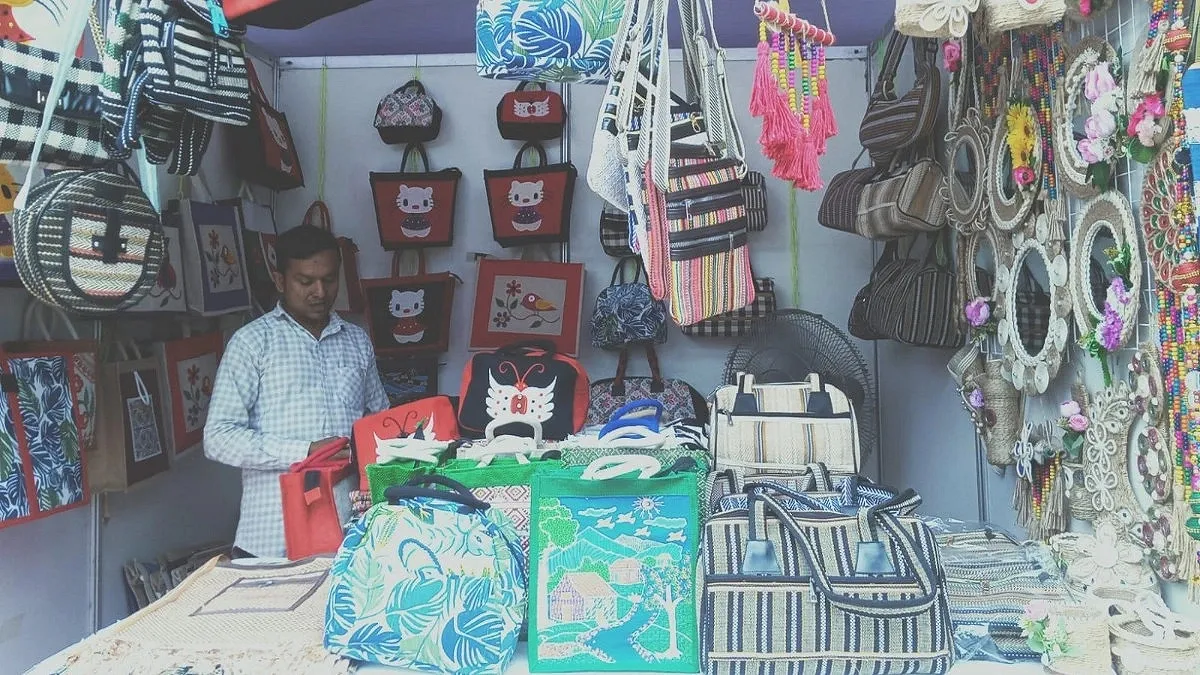
Photo: Agamir Somoy
It was exactly 10:00 AM when Farmgate vicinity in the capital was the very definition of busyness. Crowds of office-goers, passengers hanging from buses, and long queues of vehicles stopped at traffic signals—the city was rushing to its own rhythm.
Yet, amidst that hustle and bustle, a completely different scene unfolded at Monipuri Para, just off Airport Road. With colorful banners, the distinct aroma of jute, and displays of various handcrafted products, a five-day diversified jute products fair was in full swing.
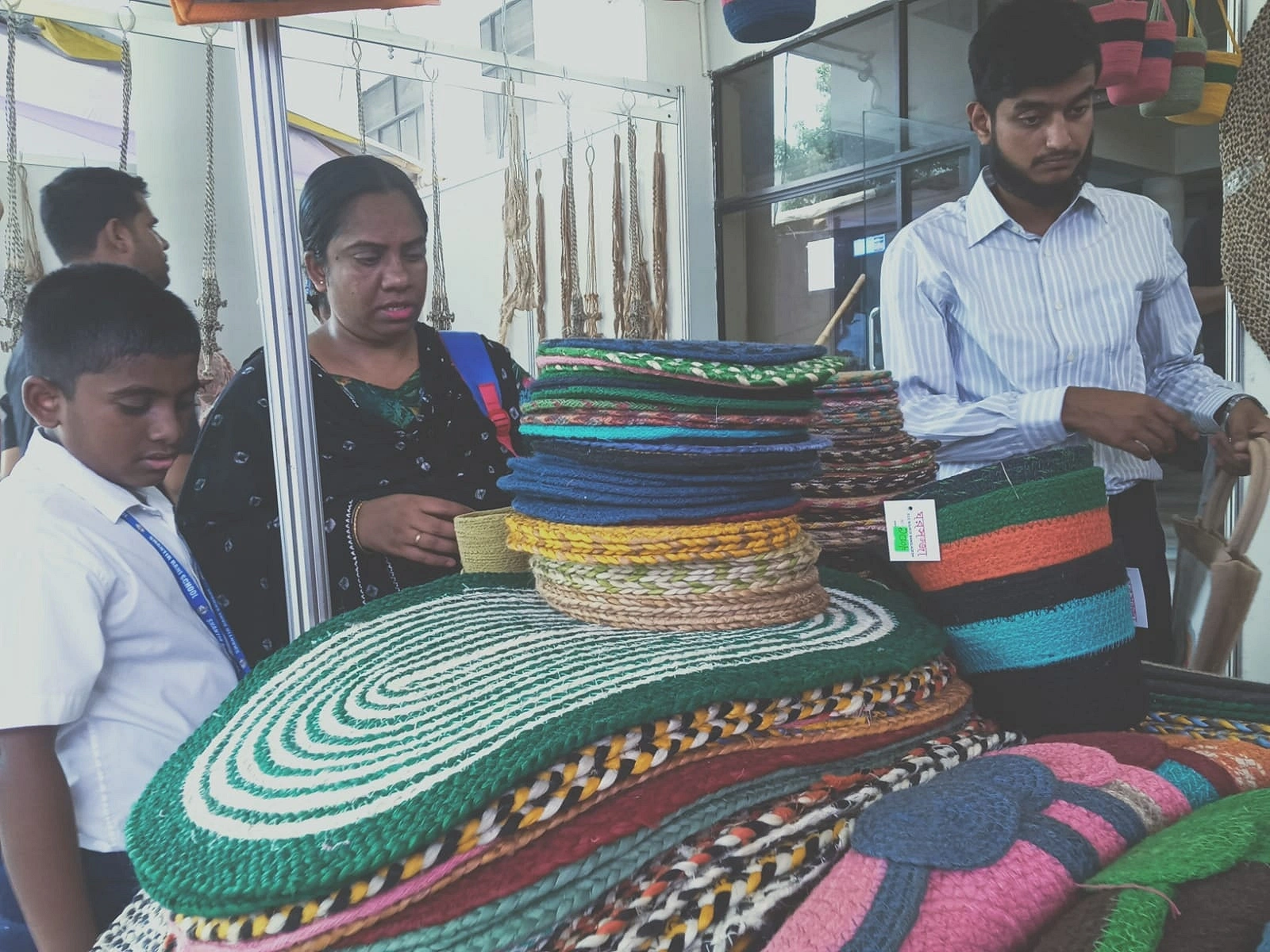
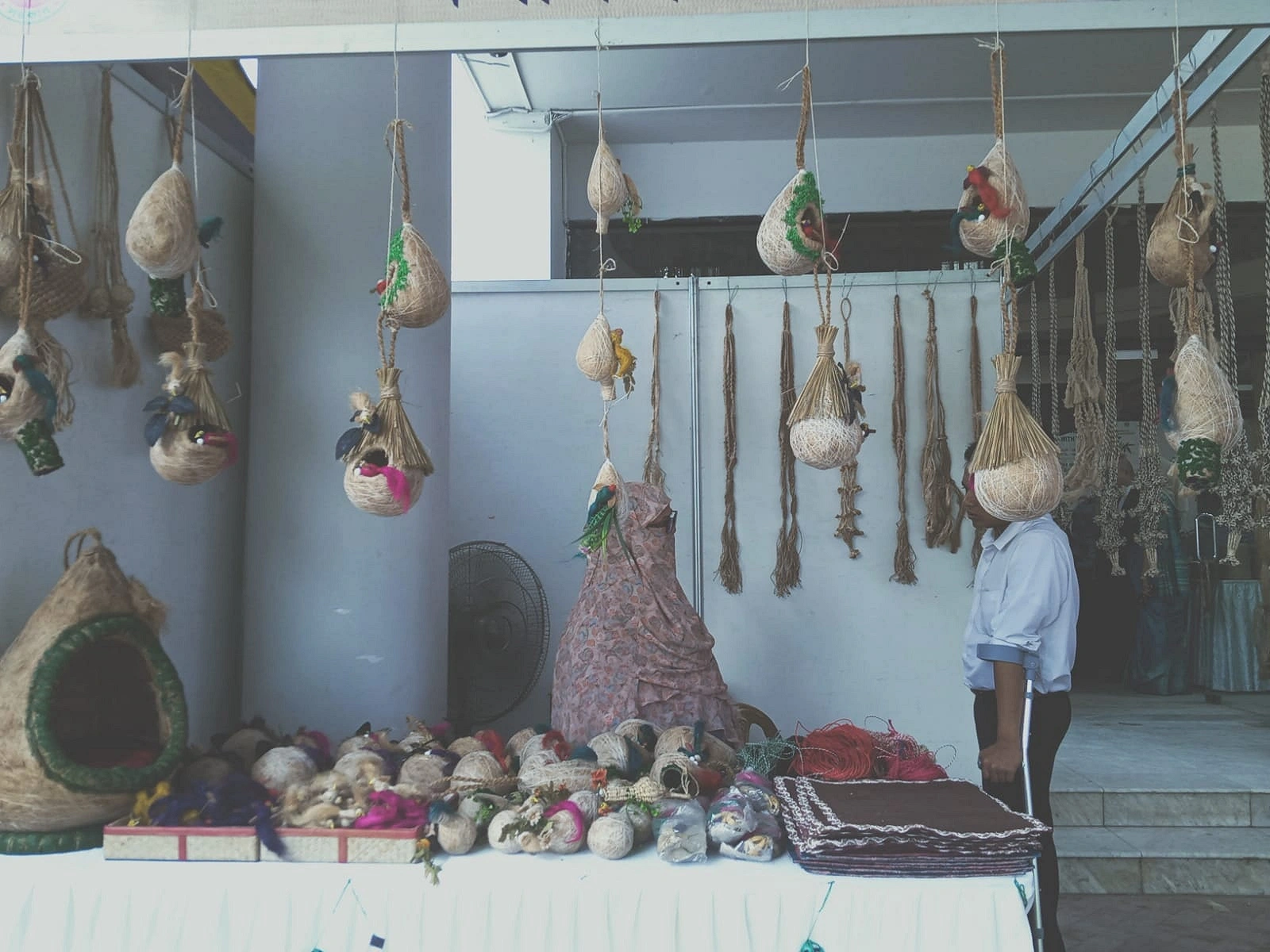
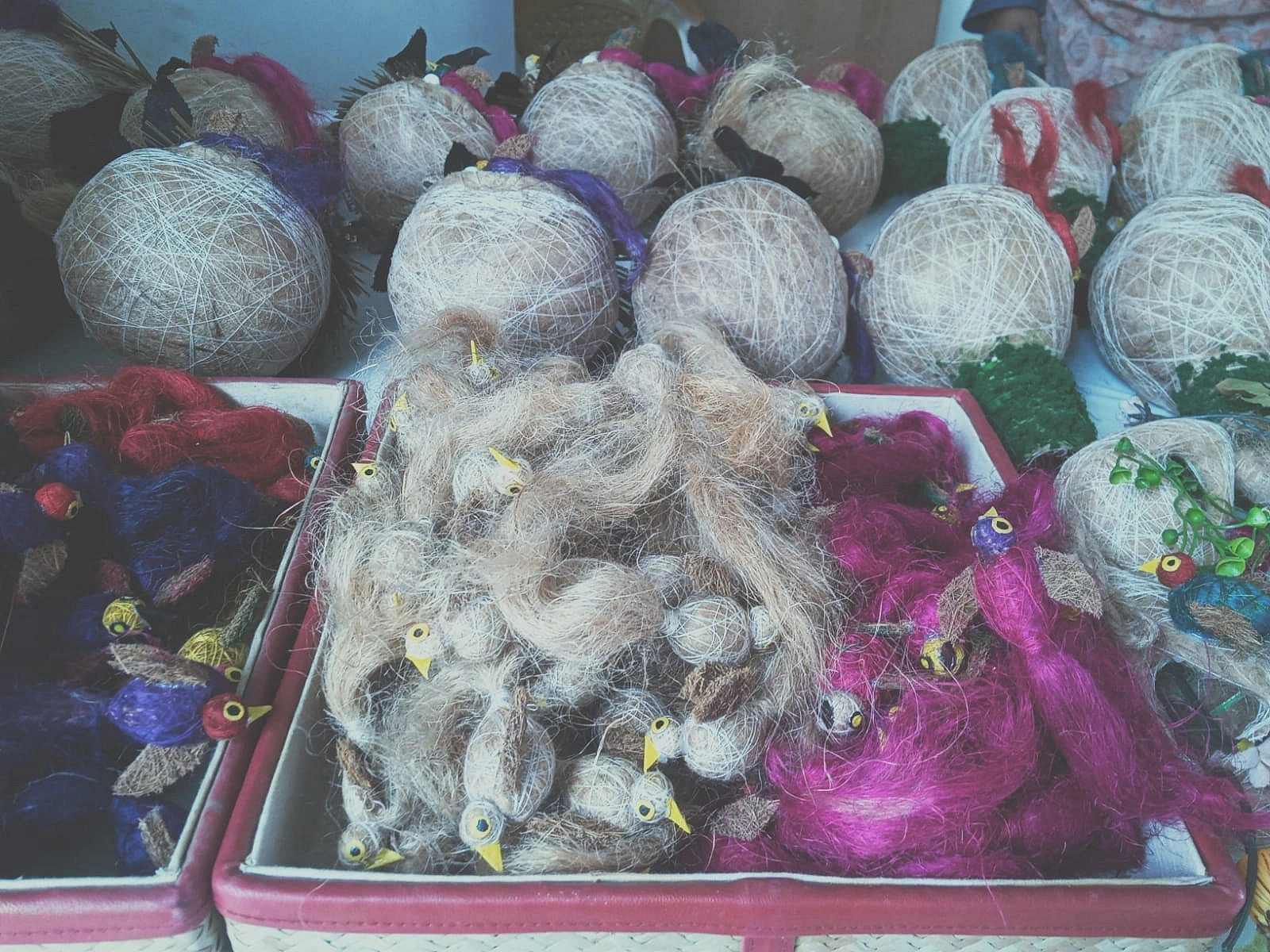
Upon entering the premises of the Jute Diversification Promotion Center (JDPC), the first things to catch the eye were tiny weaver birds (Babui) made of jute. Hanging right next to them were traditional weaver bird nests. Elsewhere, there were intricate designs made of jute rope, tablecloths, doormats, hanging pot holders (chika), school bags, file folders, flower pots, and carpets—collectively forming an art exhibition of the golden fiber.
The Minister for Textiles and Jute, Khandaker Abdul Muktadir, attended the inauguration of the fair and spoke about the immense potential of jute products. Later, the guests toured the stalls. As soon as the formalities ended, the fair truly came alive. Visitors started crowding the stalls one after another. Some were holding and examining the products, some were asking about prices, while others looked on in wonder, amazed that an agricultural product could take on so many beautiful forms.
One corner of the fair featured a stall named "Oishee Creator." It displayed various artistic products crafted from jute rope. Standing in front of the stall, the jute weaver bird nests immediately grabbed attention. The entrepreneur behind this stall, Monorama Parveen, spoke with confidence, mixed with a hint of grievance. She shared that she started her journey in 2013 with only 28 women. Today, 165 women work at her enterprise. Most of them are housewives from different villages in Kaliganj, who take up this work during their leisure time after finishing household chores, earning an extra income.
Monorama also shared the pricing. At her stall, a small jute weaver bird costs Tk20, while a weaver bird nest sells for Tk250. Additionally, jute rope is priced at Tk120, with jute tablecloths and hanging pot holders available at various prices.
Looking ahead, she said, "If people buy at least one jute product, this industry will survive. We paid five thousand taka as stall rent here. Moreover, it cost nearly ten thousand Taka just to transport the products. After expenses like these, it is difficult to sustain a business with a profit margin of only 10 to 20 BDT. If the government does not provide support, it will be very hard for us to survive."When asked if she exports these products, she mentioned that while they used to export before the pandemic, that opportunity no longer exists. Foreign buyers are reluctant to purchase these goods at such prices. Furthermore, shipping costs are high. Since these products are lightweight but bulky, they occupy a lot of space, making many carriers reluctant to transport them.On the other side of the fair, entrepreneur Rakibul Hasan was seated at the "Eco Source Bangladesh" stall. His display featured jute-made doormats, baskets, carpets, bags, and flower pots. Many visitors stopped to take photos in front of the stall. Young women, in particular, showed great interest, picking up and examining the flower pots and bags.Rakibul Hasan shared that small flower pots were selling for Tk50, while larger ones ranged between Tk800 and Tk900. "People are now leaning towards eco-friendly products. As an alternative to plastic, jute holds immense potential," he said.While he was speaking, a woman named Rahima picked up a bag to examine it. Liking what she saw, she asked for the price. She mentioned that she had purchased products here last year as well, finding them highly durable and beautiful.According to data from the Export Promotion Bureau (EPB), Bangladesh earned approximately $820 million from exporting jute and jute goods in the 2024-25 fiscal year. Although earnings stood at $1.16 billion in the 2020-21 fiscal year, showing a continuous decline over a few years, entrepreneurs see fresh potential due to the rising global demand for eco-friendly products.Data from the Bangladesh Investment Development Authority (BIDA) reveals that around 700 diversified jute product entrepreneurs and enterprises are currently active in Bangladesh. These sectors have created direct and indirect employment for approximately 50,000 to 100,000 people, a major portion of whom are female workers. The Jute Diversification Promotion Center (JDPC) has supported around 1,100 entrepreneurs involved in small and medium-scale jute product manufacturing and exporting. Currently, Bangladesh produces more than 280 types of jute goods and exports them to over 130 countries. However, many small entrepreneurs are under pressure due to the rising costs of raw materials, production, and transportation.Rashida Begum, a resident of the capital, was delighted while touring the fair. She happened to notice the banner and walked in while on her way to pick up her child from school. "I didn't know such beautiful things could be made from jute. I especially liked the flower pots and bags," she said. Rashida Begum did not stop at just looking; she picked up a few products, inspected them closely, and asked about the prices, later exploring the entire fair to compare different items.The owner of M/S Korotia Tant Sharee Ghor sat with Jamdani and other sarees. Most of these were not made of jute, but they were produced in his own factory. He mentioned that many visitors had already appreciated the price, color, and fabric quality, expecting more buyers as evening approached.