
US strikes Iran for 11th night as Trump targets nuclear site

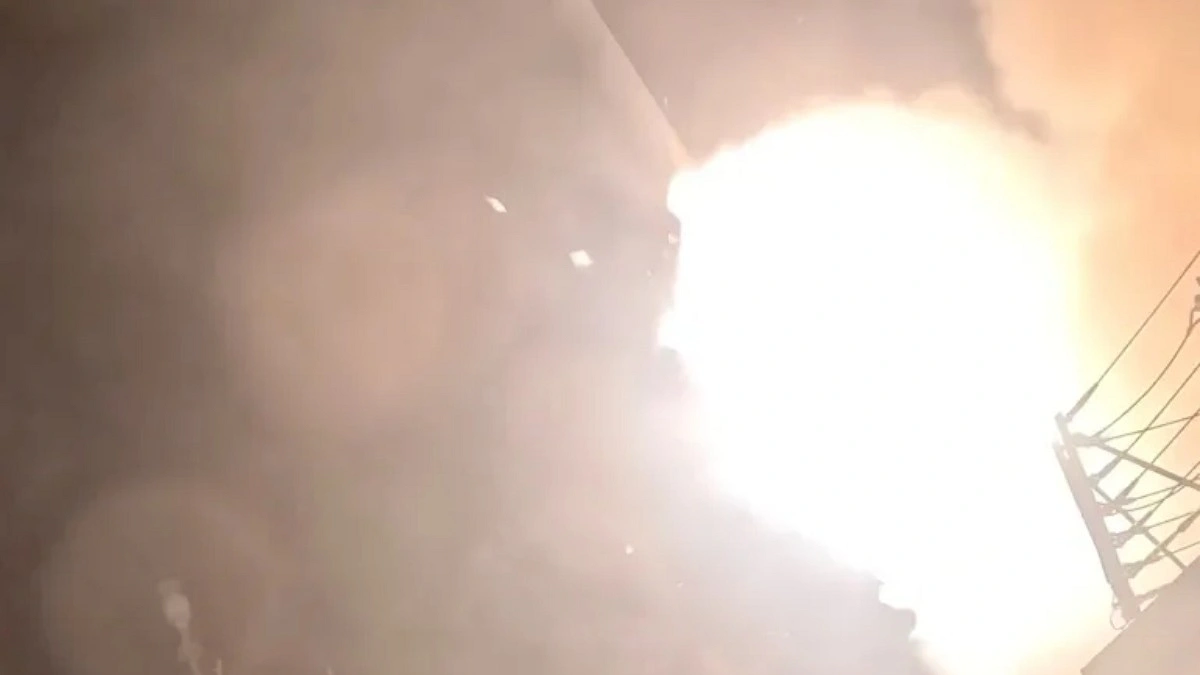
File photo: REUTERS
US military intensified its campaign against Iran on Tuesday, launching an 11th consecutive night of strikes as President Donald Trump signaled an imminent attack on a major underground nuclear facility.
US Central Command (CENTCOM) confirmed the latest wave of operations targeted Iranian military operations centers, drone storage, aircraft hangars, and maritime infrastructure.
CENTCOM said the strikes aim to “continue degrading Iran’s ability to threaten commercial shipping” in the Strait of Hormuz. Iranian state media reported that air defenses engaged targets over the capital, Tehran, while explosions also shook Tabriz, Chabahar, Konarak, and Bushehr, the site of Iran’s only nuclear power plant.
The escalation follows Trump’s identification of a complex known as Pickaxe Mountain as the next military target. Experts suspect Iran is building a secret enrichment facility at this underground site near Natanz.
During a White House meeting with Lebanese President Joseph Aoun, Trump told reporters, “We’ll be hitting that area pretty soon, and very heavily.” He added that while he typically does not announce targets, “there’s not a thing they can do about it.”
In response, Iran’s Khatam Al-Anbiya military command warned that such an attack would represent an “expansion of war in the region”. According to state-run broadcaster IRIB, Tehran is now threatening to strike “all the interests of America, the allies and supporters”.
Regional tensions have surged as other nations report involvement. On Wednesday, the Kuwaiti army confirmed its air defenses engaged Iranian drone attacks, while Bahrain and Jordan reported intercepting various missiles and drones.
This regional instability follows the collapse of a June Memorandum of Understanding (MoU) intended to halt hostilities. Although a ceasefire was briefly established in April, President Trump recently declared it “over” after accusing Iran of attacking more than 30 commercial vessels in the last three months.
The conflict is also severely impacting global energy routes. After Houthi rebels in Yemen threatened to block Saudi vessels at the Bab al-Mandab Strait, Trump vowed to “take care of” the militant group.
The British maritime risk management firm Vanguard reported that two tankers carrying Saudi crude to China and India performed U-turns near Yanbu on Tuesday, redirecting toward the Suez Canal.
With the Strait of Hormuz effectively closed, the Red Sea has become the primary, though threatened, corridor for Saudi oil shipments.
Domestically, the war’s financial burden is growing. Defense Secretary Pete Hegseth informed the Senate Appropriations Committee on Tuesday that the conflict has cost the US around $37.5 billion so far.
This represents an $8 billion increase since May. Hegseth warned lawmakers that the military must curtail training programs unless they approve an urgent boost in funding.
Source: BBC (adapted)
