
Cattle Hides at Tk 400, Goat Skins Nearly Free

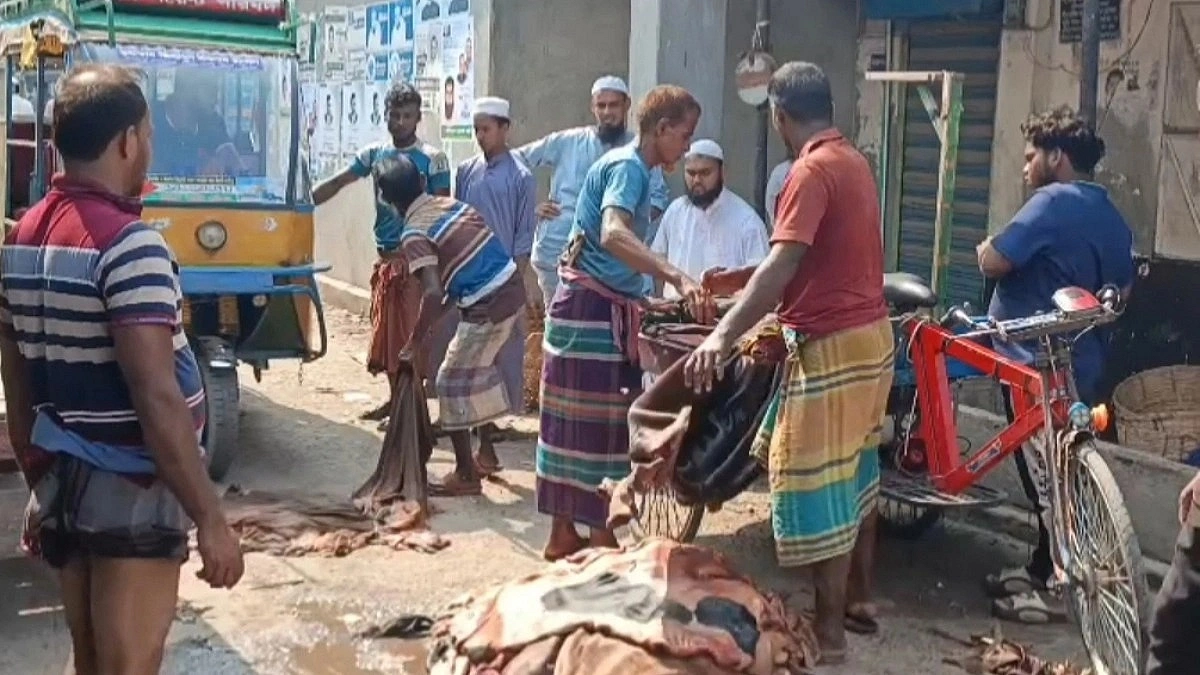
Photo: Agamir Somoy
A sharp fall in prices of sacrificial animal hides in Barishal has sparked anger among the general public and madrasas involved in hide collection. Due to prices far below expectations, many people left their hides unsold at traders’ points. Local traders also said they are struggling as tannery owners have yet to clear large outstanding payments from previous years, with nearly 80 percent of last year’s dues still unpaid.
On Thursday afternoon, people began arriving at the city’s Port Road area with hides carried on vans, rickshaws, and auto-rickshaws from different locations. Madrasa authorities, buyers, and sellers raised complaints about the situation in the area.
Mawlana Jubayer Abdullah, a teacher at a madrasa on Nobogram Road, said the institution initially decided not to collect hides. However, after assurances from the commerce minister, they entered the market expecting a price of Tk 60-65 per square foot. He said in reality they are being forced to sell each cattle hide for Tk 400, adding that in such a situation even basic costs cannot be recovered.
He further said that it costs Tk 200-250 to support each student, and the steep price drop has made it impossible to even cover transport expenses.
Kudrat Ali of Khaja Lillah Boarding in Battola area said, “After a full day of hard work, selling a cattle hide for Tk 400 brings no profit. In many cases, goat hides are being given away almost for free.”
Hide trader Mohammad Nasir at Port Road said traders have received only 20-25 percent of last year’s payments, pushing the business toward collapse. He said they keep only one hide out of every seven and discard the rest. He added that cattle hides are being bought at Tk 400-450 each, while goat hides have no value. He said the hides will be sent to Dhaka after 20-30 days. He also noted that the number of traders in Barishal has dropped sharply from 150-200 in the past to just 10-15 now, as many have shut down operations due to unpaid dues from tannery owners.
Meanwhile, purchased hides are being transported from Port Road to Balur Ghat, where workers wash off blood in the Kirtankhola River before taking them by trawler to Rasulpur. Workers then process the hides by applying salt and preparing them for preservation.
Hide processing worker Abu Bakkar said the market has remained in such a condition for the past 4-5 years. He said the number of traders and available work has been declining each year. Although many people come to sell hides, traders are reluctant to buy them because tannery owners do not pay. He added that while around 500 workers once processed hides in Barishal, the number has now dropped to a maximum of 30.
