


Sixteen students killed in Kenya school fire

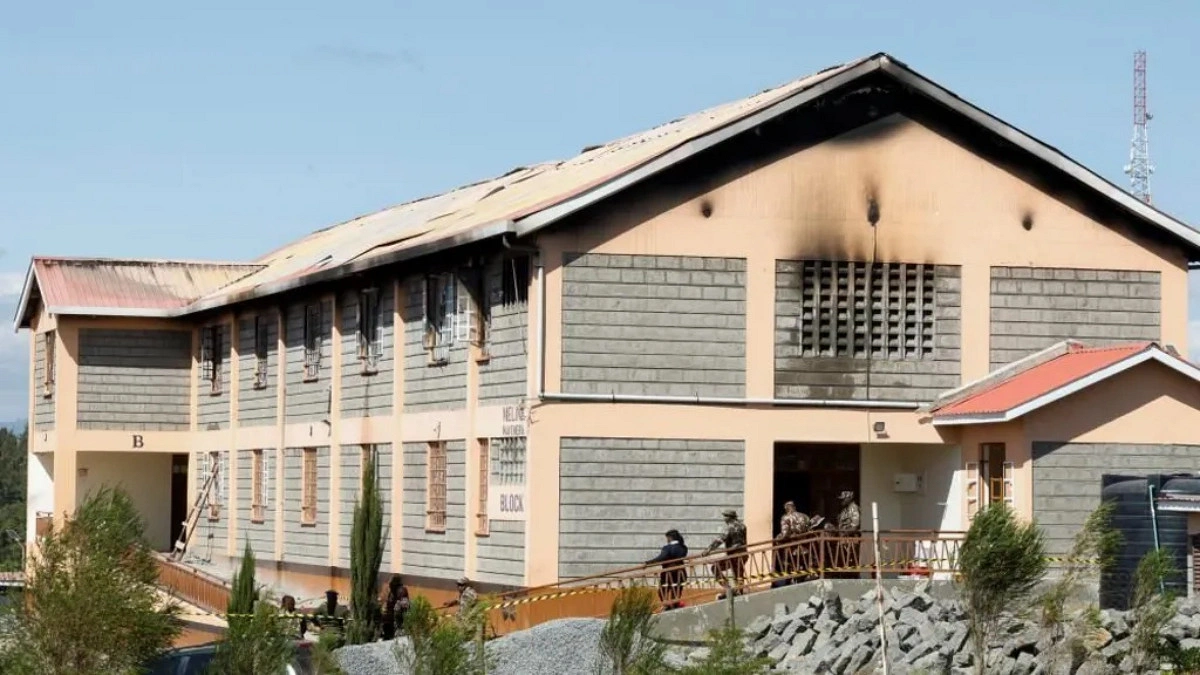
Photo: Reuters.
Sixteen students have died in a devastating fire at a boarding school in Gilgil, about 120km (77 miles) north-west of Nairobi, Kenyan authorities have confirmed.
Dozens of other students were injured and rushed to hospital. Education Minister Julius Ogamba, who visited the scene, said 71 students were later discharged while seven remain admitted for further treatment. He added that the cause of the fire has not yet been determined and investigations are ongoing.
The blaze broke out in the early hours of Thursday at Utumishi Girls Academy while students were asleep. As news spread, anxious parents and relatives gathered outside the school, waiting for information about their loved ones.
According to the education minister, the fire started on the first floor of a dormitory that was completely destroyed. “Response teams managed to extinguish the fire by about 03:00, but by then the damage had already been done,” he said.
He also noted that the school would begin releasing students to their parents and guardians throughout the day as authorities continue their investigations.
Interior Minister Kipchumba Murkomen, who was also present at the school, offered condolences to the bereaved families. “This is a very anxious moment. As we account for the 16 who have been identified as having passed on, I ask the people of Kenya to stand with the families in prayer and support,” he said, urging the public to remain patient and avoid speculation.
Earlier, police commander Masoud Mwinyi described the incident as “a sad and distressing situation” while addressing parents and onlookers outside the school.
Fires are not uncommon in Kenyan boarding schools, with several deadly incidents reported in recent years. Many have been caused by arson—often linked to student unrest over discipline or living conditions—while others have resulted from accidents.
Overcrowding in dormitories and failures to comply with safety rules—such as keeping exits unobstructed and windows unlocked—have often been cited as factors contributing to the high death toll in similar incidents.
Police said the fire in Gilgil broke out at around 01:00 local time (22:00 GMT on Wednesday) and rapidly spread through a dormitory block that housed about 220 students. At the time of the tragedy, more than 800 pupils were present on the school campus.
Earlier in the morning, police commander Masoud Mwinyi said some students who had fled into nearby areas amid the panic were still being traced. “As we speak, our officers are combing the area because some students ran away in shock and fear during the night,” he said.
One parent, Leah Serem, whose daughter is a final-year student, described the news of the fire as deeply shocking. She said she travelled with other parents from Nakuru, about 40km away. “We were anxious because we did not know whether our children were alive,” she said, adding that the atmosphere at the school compound was filled with grief.
Serem later reunited with her daughter several hours after arriving. “I was very happy and thanked God,” she told reporters. According to her, her daughter did not know how the fire started, but said students had begun waking one another as soon as the dormitory caught fire.
“We are praying for parents who have not yet found their children,” Serem said. “We ask Kenyans to pray for us and to remain calm as the cause of the fire is investigated.”
Meanwhile, another distraught parent told BBC through tears: “We’ve been here since 06:00. They’re not telling us where our daughter is.” She said her 17-year-old daughter was also in her final year at the school.
“We have searched all the hospitals around here. The teachers are not telling us anything,” she added. “No one came to their rescue.”
Kenya has a long and troubling history of school fires. The deadliest incident occurred in 2001 in Machakos County, south-east of the capital, when a dormitory blaze—allegedly started by students—killed 67 pupils.
More recently, in 2024, at least 21 people died in another dormitory fire in central Kenya, underscoring the persistent risks faced by boarding schools across the country.
Later that year, an assessment by the Ministry of Education found widespread non-compliance with safety standards. The review revealed that many schools had dormitories fitted with window grills, only a single exit, and doors that opened inward—features that significantly endangered occupants during emergencies. Overcrowding was also found to be common. As a result, the ministry announced the immediate closure of 348 schools.
In November 2021, the education ministry told a parliamentary committee that 126 cases of school arson had been recorded between January and November 2020. Separate research from 2018, cited by Reuters, reported 60 arson incidents in schools that year alone, highlighting the scale and persistence of the problem.

