
Those Who Find Joy in Others’ Happiness

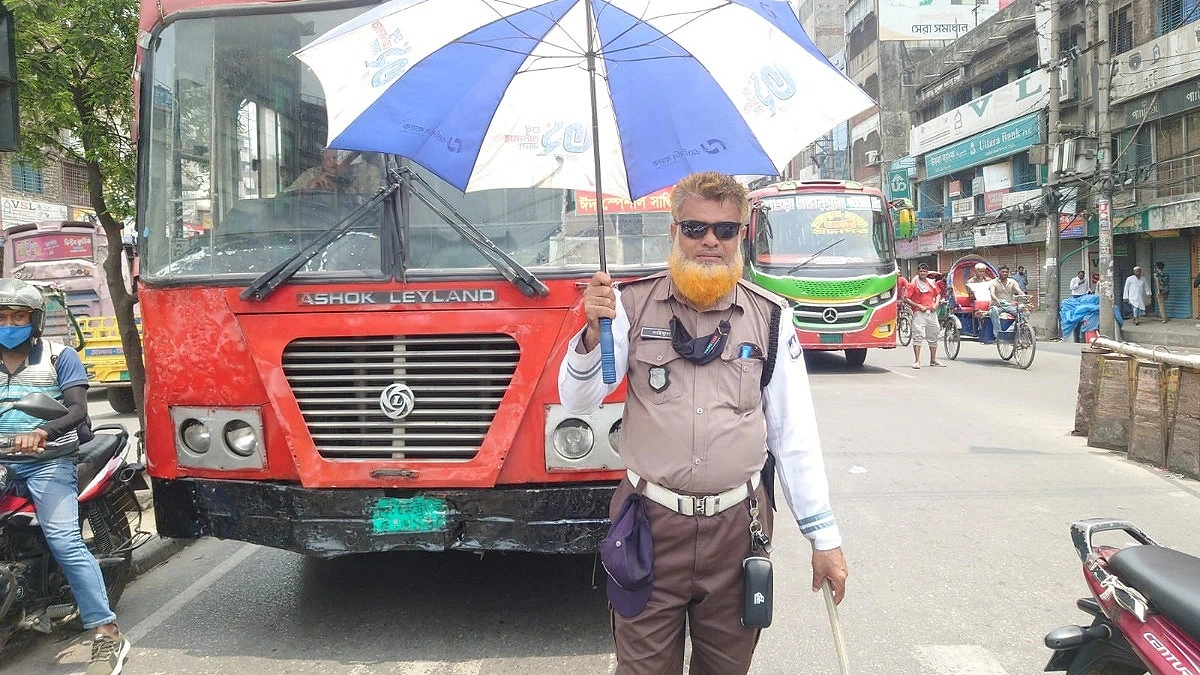
Photo: Agamir Somoy
As millions of people push through the overflowing crowds at Sadarghat, Gabtoli, and Kamalapur to return home, pulled by the call of their roots, there is another group whose eyes carry the pain of not going back. Some are bound to the pedals of rickshaws by the demands of livelihood, some stand in khaki uniforms ensuring the safety of others, and some remain busy with brooms, keeping the city clean.
While the entire country immerses itself in sharing the joy of Eid with loved ones, people like Md Badal, Constable Saiful Islam, and Amina Begum stay behind in the concrete city of the capital, carrying the weight of duty on their shoulders. It is to make others’ celebrations smooth and joyful that their own Eid seems to disappear behind quiet sacrifices.
Md Badal sets out every day with his rickshaw from Kamrangirchar, just as usual. In the days leading up to Eid, the pressure of people leaving the capital for their hometowns has increased, and so has his workload. From morning till evening, he ferries passengers to bus terminals, launch ghats, and railway stations.
Yet, whenever he sees the crowds heading home, memories of his own village come rushing back. His ancestral home is in Galachipa of Patuakhali. He lives with his wife in a small rented room in Kamrangirchar. There was a time when he ran a small grocery shop, and the household managed reasonably well. But after the business suffered losses, he had to choose rickshaw pulling as his means of survival.
Speaking about his life, Badal said, “My parents are no longer alive. My brothers, sisters, and relatives all live in the village. I miss them a lot, but I can’t go to see them even during Eid. Once every two or three years is all I can manage. Because of the travel expenses, my wife and I spend Eid in Dhaka. The money it would take to go home could support our household for almost two months. So even though it’s painful, there’s nothing else I can do.”
For most people, Eid means the joy of returning to family. Holidays, tickets, and travel preparations create a festive atmosphere. But beyond that celebration remains a group of people for whom the busyness before Eid does not mean going home—rather, it means even heavier workloads.
In the bustling Tantibazar intersection of Old Dhaka, Constable Saiful Islam was busy controlling traffic. His home is in Nagarkanda of Faridpur, where his three children are waiting eagerly for Eid.
At a time when people everywhere are rushing to return home at the last moment, Saiful Islam remains on duty on the streets. Because of his profession, he has not been able to spend Eid with his family for three consecutive years. Every year he applies for leave, but due to the demands of duty, it is never granted.
While on duty, he said, “My three children are waiting for me to get back home. Eating payesh at home on Eid morning is a tradition I’ve always followed. This year too, I’ll miss that taste. What will hurt the most is not being able to stand shoulder to shoulder with my father, brothers, and relatives in our familiar village Eidgah for the Eid prayers. This pain can’t really be put into words.”
On Eid morning, he will offer his prayers at a nearby mosque during a brief break from duty, then return to work. Yet, he gives greater importance to ensuring people’s safe journeys than to his own personal sorrow.
With a gentle smile, he said, “When I took this job, I knew what it involved. Even if it means a little personal hardship, thinking that millions of people can return home safely and celebrate with their families because of our work makes me feel good. Then my own pain doesn’t seem so big.”
