
What Should Our Foreign Policy Toward Myanmar Be Like

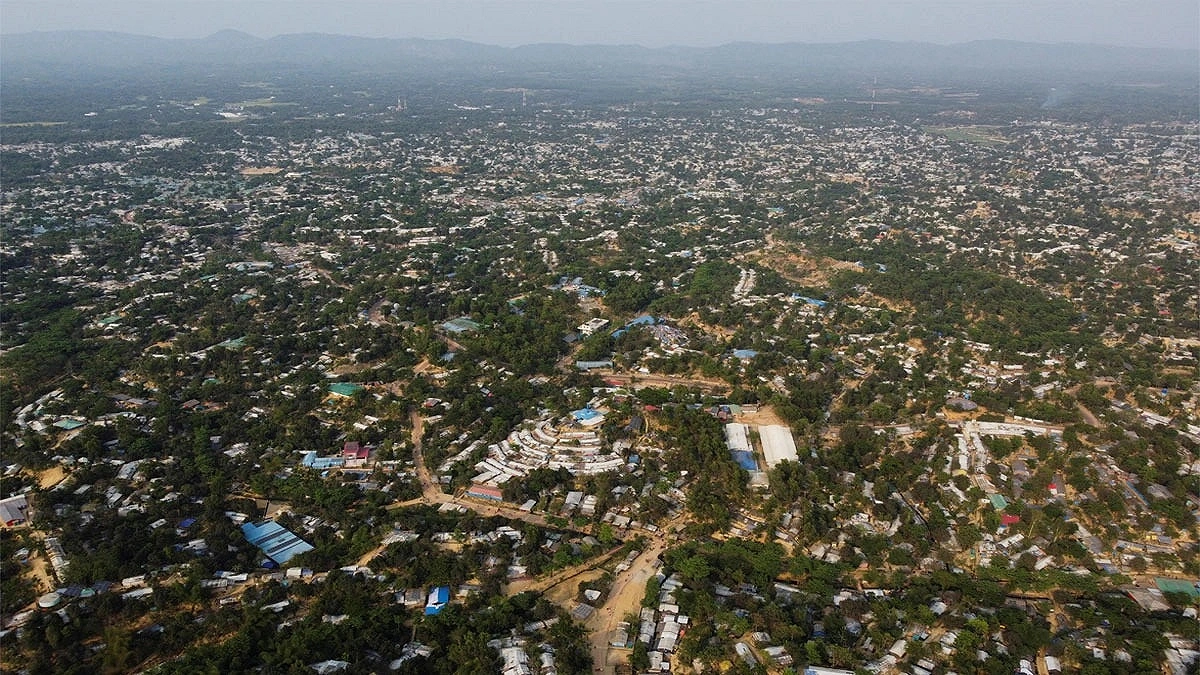
Cox’s Bazar Rohingya Camp Drone View – Reuters
There has long been a need for deeper thought and discussion regarding Myanmar, an important neighbor of Bangladesh. Especially now, the Rohingya crisis is no longer only a humanitarian issue; both countries view it as a security problem. Bangladesh is the country most at risk due to the Rohingya refugee crisis.
The confrontation between the Myanmar junta and the Arakan Army is forcing Bangladesh to think carefully and intensively about its foreign policy. In this situation, what should our foreign policy look like? In this regard, we now need to think carefully about three important issues.
First, on whom should Bangladesh’s foreign policy be centered: the Arakan Army or the junta? To understand this clearly, it is essential to know about the rivalry between these two forces. The Arakan Army’s doctrine of “build while fighting, fight while building” clearly reflects its intent to expand militarily while simultaneously governing the territories it captures. Along with this, understanding their concept of “Rakhita” is also important. This doctrine came into discussion after the declaration of the “Arakan Dream” in April 2014.
The core foundation of Arakanese nationalism is embedded in the concept of “Rakhita.” The term Rakhita refers to a community that possessed its own traditions, ethics, values, and lineage-based dignity, which remained intact until 1784. Arakanese nationalism seeks to restore that lost glory, prosperity, dignity, and the right to self-determination.
Within this Arakanese nationalism, only seven ethnic groups are officially recognized: Rakhine, Kamein, Khumi, Daingnet, Maramagri, Mro, and Thet. Rohingyas or Muslims are not recognized among them. Although the Rohingyas are an old Muslim population of the Rakhine region, Myanmar has not recognized them as citizens. After the 1982 Citizenship Law, they effectively became stateless. Bangladesh provided them shelter on humanitarian grounds, but bearing the responsibility of nearly 1.5 million Rohingyas for a long time has become increasingly difficult for Bangladesh.
The camps in Cox’s Bazar are densely populated, food assistance is decreasing, poverty is rising, and crime, drugs, human trafficking, gang violence, and security risks are increasing. Local communities are also under pressure. Water shortages, declining wages, rising commodity prices, strain on health services, and growing social tensions have intensified. Environmental damage is another major concern, including deforestation, hill cutting, use of firewood, and loss of biodiversity.
Therefore, Bangladesh must now consider multi-level diplomacy. Recently, there has been talk of Prime Minister Tarique Rahman’s visits to Malaysia and China. During this six-day tour, the head of government is expected to meet first with Malaysian Prime Minister Anwar Ibrahim and later with Chinese President Xi Jinping. These visits may include discussions on resolving the Rohingya crisis, relations with Myanmar, and the future of trade with China. There will be hope that the prime minister raises the issue of regional and national security threats. At the same time, Bangladesh will need to pursue a balanced policy between Naypyidaw and Beijing. Since the junta government is officially in power, there is no alternative but to keep them engaged. At the same time, increasing communication with the Arakan Army through backdoor channels should also be given importance.
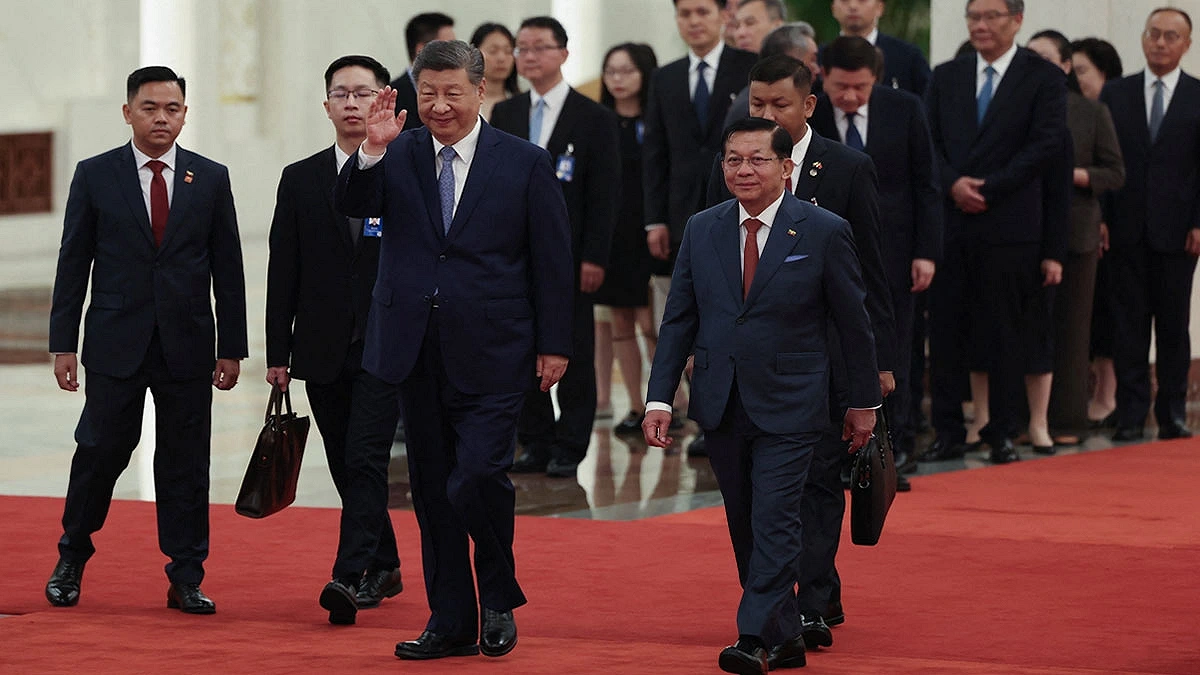
(Myanmar's junta president Min Aung Hlaing with close ally Chinese President Xi Jinping - Reuters)
In reality, it is now clear that repatriating the Rohingyas has become nearly impossible. Regular diplomatic engagement, close relations with major powers, and keeping the Rohingya crisis on the international agenda are unavoidable options for Dhaka.
Secondly, we must consider further deepening agreements with China, India, and the United States. This is because Myanmar—a country of approximately 55.1 million people situated at the crossroads of South and Southeast Asia—is extremely important due to geographical and economic reasons. Because of this unique position, Myanmar plays a major role in bilateral relations, not only with its neighboring countries but also with major powers from other regions of the world.
Due to regional and global superpower competition over Myanmar, Bangladesh finds itself in a dilemma. After gaining independence from British colonial rule, Myanmar adopted a neutral and independent foreign policy. Although this policy has seen some changes over time (such as rejoining the Commonwealth in 1992), they have largely maintained this neutrality. The primary goal of the country's foreign policy is to manage the external environment in a way that fulfills domestic objectives and ensures national security by thwarting any threats—political, military, or economic.
Strategic Value of Myanmar
Positioned right between China and India, serving as a land bridge between South and Southeast Asia, and possessing a 1,930-kilometer coastline along the Bay of Bengal, Myanmar holds immense strategic value as a littoral state of the Indian Ocean. Historically, the country has been a focal point of competition among colonial and superpowers. Due to the economic rise of China and India, coupled with the United States' renewed attention to the region, Naypyidaw remains a constant topic of discussion.
According to Myanmar's 2008 constitution, the military is granted participation in the country's governance. Since 2021, the junta has held control of the country. Neighboring China is making maximum use of this opportunity. Beijing considers Myanmar highly important for sustaining its own economic growth and fulfilling its goal of becoming the world's leading superpower in the twenty-first century. In this regard, China's core interests include ensuring energy security, gaining direct access to the Indian Ocean, and maintaining border security and trade. To reduce dependence on the Malacca Strait, China is building energy pipelines through Myanmar and also constructing a deep-sea port near Kyaukphyu for transporting crude oil.
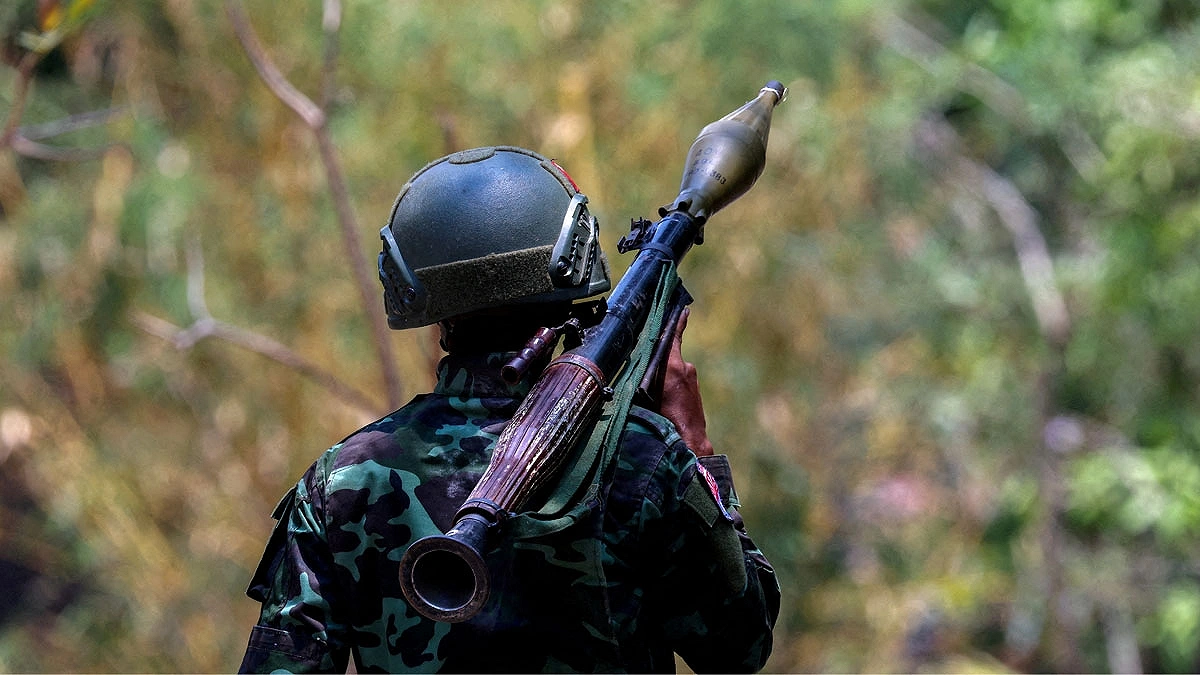
(A member of Myanmar's Karen National Liberal Army rebel group holds an RPG launcher - Reuters)
As part of its efforts to re-establish influence in the Asia-Pacific region, the United States has been strengthening ties with Myanmar under its "Asia-Pivot" strategy. Their main objectives are to counter China's growing dominance in the Indian Ocean and the Bay of Bengal, leverage Myanmar's strategic location and economic potential, and expand their counter-terrorism partnerships.
For India, Myanmar is highly significant due to their 1,600-kilometer land border and maritime boundaries in the Bay of Bengal and the Andaman Sea. The primary goal of India's "Look East" policy is to bolster economic relations with Myanmar, purchase natural gas, and balance China's influence in the region. Additionally, to suppress separatist and extremist activities in India's northeastern states, cooperation with both Myanmar and Bangladesh is essential.
Bangladesh-Myanmar Relations
The roots of Bangladesh's relationship with Myanmar run deep. When the then-Arakan region came under British rule, extensive economic and social connections developed with the Chittagong division. However, Myanmar has always shown a somewhat cautious or conservative attitude regarding economic migration or the movement of people from Bangladesh.
In 1978, when approximately 300,000 Rohingya refugees entered Bangladesh in the first large-scale influx, it created major tensions in bilateral relations. Subsequently, another 250,000 Rohingya arrived in Bangladesh in 1984. Most recently, in 2017, around 700,000 Rohingya took shelter in Bangladesh, and currently, the number exceeds 1.5 million. Since both the Myanmar junta and the Arakan Army refuse to recognize the Rohingya as an ethnic group of their country, resolving this crisis has become even more complicated. Therefore, without good understanding with the superpowers, national security could be threatened. This strategic tussle of superpowers in Myanmar is having a major impact on Bangladesh's security and the strategic balance of the region.
Thirdly, more discussions must be held in regional forums. Issues like the Rohingya crisis and regional security must be kept on the agenda in forums such as ASEAN or BIMSTEC. This requires focusing on restructuring global funding. Recently, funding on this issue has decreased significantly. To resolve the crisis or maintain stability, there is no alternative to restructuring funds, holding sideline meetings, and maintaining balance with all parties involved.
Economic Impact and Border Control
Due to instability in Rakhine State, two major examples of cross-border economic crimes committed against Bangladesh are currency smuggling and kidnapping for ransom. In fact, the conflict in Rakhine is having a significantly negative impact on Bangladesh's economy—an issue that has not yet been properly scrutinized.
The Arakan Army has taken control of over 90 percent of Rakhine State. This Rakhine nationalist organization has seized full control of the 271-kilometer-long Bangladesh-Myanmar border, effectively isolating Bangladesh entirely from the junta-controlled mainland of Myanmar.
Bilateral institutional trade between the two countries has always been limited. It peaked in the 2018–2019 fiscal year at approximately $223.22 million. However, in 2024, trade volume dropped to just $90.1 million, with one of the main reasons being the chaos caused by intense fighting in Rakhine. Over 90 percent of Bangladesh's trade with Myanmar is conducted through two checkpoints in Rakhine State—Sittwe and Maungdaw. Currently, Maungdaw is under the control of the Arakan Army. Sittwe, the capital of Rakhine, has been blockaded and isolated from the rest of Myanmar. As a result, the key to Bangladesh-Myanmar trade now lies in the hands of the Arakan Army.
Following the start of an all-out war between the Myanmar government and the Arakan Army, bilateral trade has significantly declined. The Arakan Army has imposed an indefinite ban on all vessel movements in the Naf River section adjacent to Rakhine State. Additionally, they are arbitrarily seizing cargo ships bound for Bangladesh from the mainland of Myanmar and are collecting extra taxes from Bangladeshi traders for sending goods from Sittwe to Teknaf. These factors are primarily responsible for the collapse in bilateral trade.
Before November 2023, about 50 cargo ships used to arrive daily at the Teknaf land port. However, after the Arakan Army captured Maungdaw district, on average, only three to five ships are now arriving at this port per month. Although the export basket to Myanmar is small, Bangladesh imports several essential consumer goods from its southeastern neighbor. These include rice, frozen fish, dried fish, coconuts, and pickles, as well as spices such as ginger, garlic, and onions.
Notably, despite being the world's third-largest rice producer, Bangladesh has to import large quantities of rice annually due to growing demand and domestic deficits. On the other hand, Myanmar, as the world's seventh-largest rice producer, has been exporting rice to Bangladesh for years. In 2025, Bangladesh decided to purchase 100,000 tons of rice from Myanmar and the United Arab Emirates. Thus, while Myanmar is quite significant for Bangladesh's food security, the ongoing Rakhine conflict has created major challenges for this mutual trade partnership.
Following the launch of Operation 1027, the manpower-strapped Tatmadaw (Myanmar military) applied the 'Four Cut' strategy (cutting off four sources) against the Arakan Army. Under this strategy, Rakhine State was completely blockaded to prevent the armed group from accessing food, funds, information, and the opportunity to recruit new soldiers. As a result, the Arakan Army is now procuring all kinds of essential goods—including foodstuffs, cement, fertilizers, fuel oil, and medicines—from Bangladesh through the black market.
While the volume of goods smuggled from Bangladesh to Rakhine State is enormous, its exact accounts have not yet been fully ascertained, as a large portion of the smuggling remains undetected. Due to this 'informal' trade, the Bangladesh government is losing substantial revenue in customs and excise duties.
Simultaneously, a massive amount of drugs—particularly methamphetamine (known as Yaba), along with opium and heroin—is being trafficked from Rakhine State into Bangladesh. It is known that the Arakan Army is also involved in this drug trade. About 80 percent of these drugs are smuggled into Bangladesh through coastal areas, and poor Rohingyas are being used as couriers. Just a few days ago, the Border Guard Bangladesh (BGB) seized nearly one million Yaba pills from smugglers in Cox's Bazar.
Due to this unimpeded and massive influx of drugs, over 8.3 million people have become addicted. This is giving rise to various socio-economic problems, such as increased poverty and violent crime. To tackle this crisis and rehabilitate addicts, the state and families are having to allocate enormous amounts of money. One report shows that Bangladesh faces a direct economic loss of $481 million annually due to drug trafficking. The indirect economic costs of addiction are far higher.
The full extent of the economic burden of this war on Bangladesh has not yet been properly ascertained or documented. However, if stability is not restored on the Bangladesh-Myanmar border soon, the scale of this loss will increase further. This will permanently damage the economic structure of the border region and further complicate Dhaka's overall economic and security equations.
If multi-level diplomacy fails, Bangladesh must, if necessary, walk the path of Track Two diplomacy. Under no circumstances can the Rohingya crisis be allowed to fade from discussions. Finally, amid this complex competition among superpowers over Myanmar, Bangladesh must navigate with extreme caution. Without falling into any party's trap or becoming a tool of anyone's geopolitical interests, it is prudent for Bangladesh to protect its own national interests and maintain a balanced and cooperative foreign policy with all parties.
