World Refugee Day
The World's Densest Refugee Camps: 64,000 People Per Square Kilometre

Collected Photo
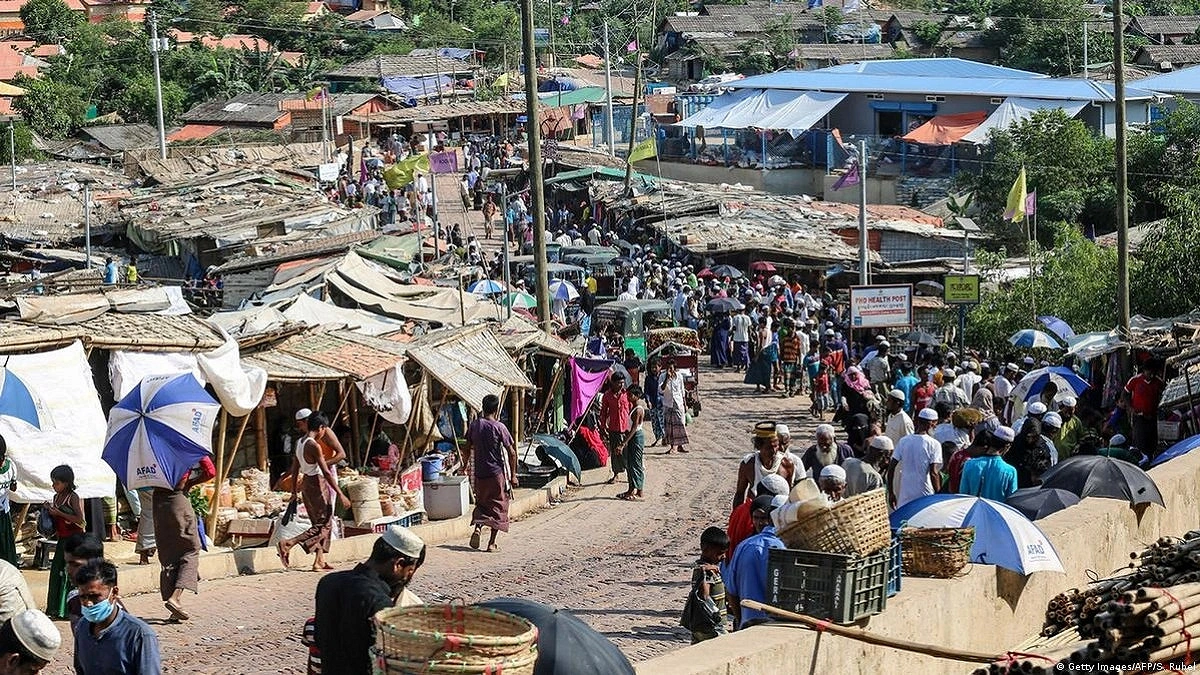
As dawn breaks, the Kutupalong refugee camp in Ukhia, Cox's Bazar, comes alive with frantic movement. Women navigate narrow alleyways to collect food supplies, children rush in groups to learning centres, and men wander in search of work both inside and outside the camp. For nine years, their lives have passed in this aimless manner. Yet, even after all this time, one question remains unanswered: when will they return to their homeland, Myanmar?
On the occasion of World Refugee Day, the Rohingya crisis has once again entered the spotlight. The uncertainty of repatriation, declining international aid, security risks, environmental damage, and concerns over the future of a new generation continue to deepen.
A Long-Standing Crisis, Now Intensified:
Bangladesh's history of hosting Rohingya refugees spans decades. In 1978, during Myanmar's "Operation Nagamin," approximately 200,000 Rohingya sought refuge in Bangladesh. Later, in 1991–92, another 250,000 Rohingya crossed the border. However, the largest influx came after August 25, 2017, when over 740,000 Rohingya entered into Bangladesh within months following a military crackdown in Rakhine State. Earlier, in late 2016, nearly 87,000 Rohingya had also taken shelter.
According to international organisations, a further 152,000 Rohingya have entered Bangladesh since 2024, as a triple-front conflict intensifies in Rakhine.
According to the latest updated data from the Bangladesh government and UNHCR, the number of registered Rohingya refugees in the country stood at 1,194,000 as of April 30 of this year. Of these, 1,160,273 are housed in 33 camps in Cox's Bazar, and 33,850 are in Bhasan Char. Additionally, the number of unregistered Rohingya is estimated to be at least 300,000.
The World's Largest Refugee Settlement:
The 33 camps in Ukhia and Teknaf are now among the largest refugee settlements in the world. Nearly 1.5 million people live in just 23.6 square kilometres, giving an average density of about 64,000 people per square kilometre—one of the highest population densities of any human settlement globally. The Kutupalong–Balukhali mega-camp alone is recognised as the world's largest single refugee camp.
To put this in perspective, Bangladesh's national average population density is around 1,300 per square kilometre, Singapore's is about 8,500, and Bahrain's is around 2,200. Even the world's most crowded cities—Dhaka with 30,000–45,000, Manila with approximately 43,000, Manhattan with 28,000, and Mumbai with around 21,000 per square kilometre—fall far short. By comparison, the Rohingya camps are far denser than Dhaka, more than two and a half times denser than Manhattan, and nearly three times denser than Mumbai.
Even among the world's largest refugee camps, such extreme density is rare. In Kenya's Dadaab, Jordan's Za'atari, or Uganda's Bidibidi refugee settlements, population density typically ranges from a few hundred to a few thousand people per square kilometre. With nearly 1.5 million people packed into such a small area, the Rohingya camps have become one of the most densely populated refugee settlements—and human habitations—on the planet.
Demographic data shows that around 52 percent of the Rohingya population are women, and more than half of the total population are children and adolescents. The average family size exceeds six members.
30,000 Babies Born Each Year:
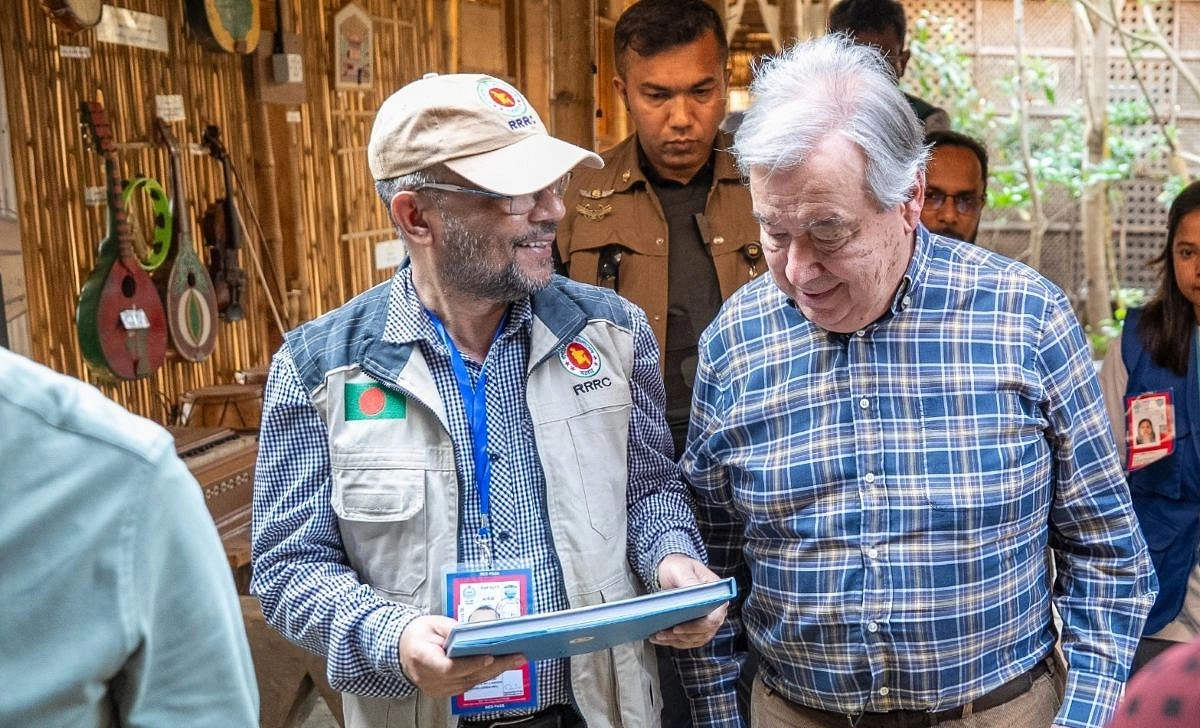
Mohammad Mizanur Rahman, Commissioner of the Refugee Relief and Repatriation Commission (RRRC), said that although family planning services are available at around 120 health centres operating in the camps, between 20,000 and 30,000 new babies are born every year. He noted that while the population growth rate has dropped from 56 percent to 20 percent over the past nine years, the overall population pressure continues to rise steadily.
International Aid Is Declining:
The Rohingya are almost entirely dependent on international assistance. The RRRC said that the average value of food aid received by a Rohingya per day is only Tk 16 per meal.
Although humanitarian aid worth approximately Tk 12,275 crore is spent annually through various UN agencies, funding shortages have become acute in recent years. Due to the war in Ukraine, the Gaza crisis, and conflicts in Sudan and the Middle East, the volume of international aid is steadily decreasing. Humanitarian organisations fear that food, healthcare, education, and protection programmes for women and children may be at serious risk.
Loss of Forest Cover and Environmental Damage:
The Rohingya crisis has taken a heavy toll on the forests of Cox's Bazar. Mohammad Shahinur Islam Shahin, Assistant Forest Conservator (ACF) of Ukhia Forest Division, said that after the massive influx of Rohingya in 2017, camps were established inside reserved forest areas in Ukhia and Teknaf. It is estimated that nearly 12,000 acres of forest land have been damaged. The establishment of the camps has also severely disrupted the natural movement of wild elephants in the Ukhia-Teknaf region. Three important elephant corridors exist in this area; the Ukhia-Ghumdhum corridor has had three camps built right through the middle of it, nearly cutting off the elephants' natural passage. Environmentalist Hossain Sohel warned, "This poses a major long-term threat to biodiversity."
Security Concerns Are Growing:
The security situation surrounding the Rohingya camps has also become alarming. DIG Pralay Chisim of the Armed Police Battalion (APBN) said that between January 2021 and May 2026, operations conducted in the camps seized 4,883,999 Yaba pills, along with nearly one kilogram of heroin, 2.5 kg of crystal meth (ice), 130 kg of cannabis, and large quantities of locally made and foreign liquor. During this period, 2,111 people were arrested in 1,637 drug-related cases.
In the same period, authorities also seized 53 pistols, four revolvers, 395 locally made weapons, 12 assault rifles, 14 hand grenades, and 5,232 rounds of ammunition. A total of 354 people were arrested in arms-related cases.
The most alarming figure is that from 2020 to May 31 of this year, 247 murders have occurred in the camp area. Among these, 74 murders took place in 2023 and 62 in 2024.
Fears of Militancy and Organised Crime:
According to RRRC Commissioner Mohammad Mizanur Rahman, there is always a risk that a population that has been oppressed, unemployed, and deprived of education for so long may be exploited for various illegal activities. However, he claimed that they have no information about the presence of any armed groups inside the camps.
On the other hand, DIG Prallay Chisim said that the possibility of militancy emerging cannot be entirely ruled out. However, he added that due to continuous law enforcement operations and intelligence surveillance, the crime rate has declined somewhat compared to the past.
Security Arrangements and Camp Life:
Most of the 33 camps have gaps in their barbed-wire fencing, allowing Rohingya to move in and out freely. Currently, there are around 150 such points. To ensure security within the camps, members of 22 APBN (Armed Police Battalion) camps, operating under three battalions, remain on duty 24 hours a day.
Waiting for Repatriation – A Million Souls in Limbo:
The Bangladesh government has repeatedly stated that the only sustainable solution to the Rohingya crisis is safe, voluntary, and dignified repatriation. However, despite multiple initiatives, no effective repatriation has been launched to date.
RRRC Commissioner Mohammad Mizanur Rahman said, "There is no progress worth mentioning on repatriation."
The Rohingya themselves continue to demand citizenship, security, and guarantees of return to their homeland. Master Zubayer, chairman of the Arakan Rohingya Society for Peace and Human Rights (ARSPH), an organisation founded by slain Rohingya leader Mohammad Muhibullah, said, "After years of living in these camps, we are mentally breaking down. We want freedom from this long captivity. We all want to return to our country peacefully and safely."
Multi-Dimensional Challenges for Bangladesh:
The Rohingya crisis is no longer merely a humanitarian issue—it has become deeply intertwined with the environment, security, the economy, diplomacy, and regional stability. On one hand, thousands of acres of forest have been lost, and wildlife habitats have been drastically reduced. On the other hand, prolonged uncertainty, lack of employment, and declining international aid are increasing the risks of crime and instability.
H.M. Nazrul Islam, Member Secretary of the Cox's Bazar Citizens' Movement, said, "On the eve of World Refugee Day, the biggest question is—after nine years, will the Rohingya remain refugees forever, or will the international community create an effective path for their dignified repatriation?"