
World Refugee Day
Locals 5 Lakh, Rohingya 15 Lakh – The Alarming Impact on Cox's Bazar

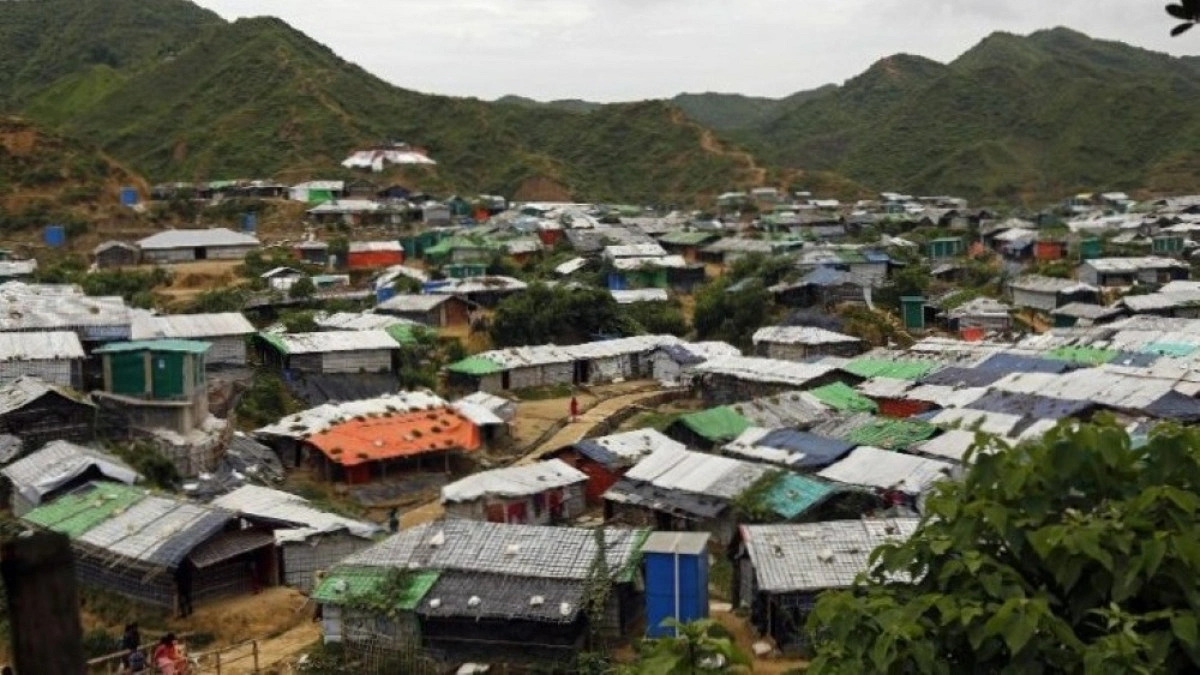
Representational image. Collected.
There is currently no ray of hope for the repatriation of displaced Rohingya from Myanmar. No new dialogue has been initiated on the humanitarian crisis. The repatriation process remains stalled due to various factors, including the unfavourable environment in Rakhine state, the ongoing insurgency by the Arakan Army against Myanmar's junta government, and other complications.
Bangladesh believes that the repatriation process largely depends on the goodwill of the Myanmar government.
Today is World Refugee Day. Ahead of this day, the Rohingya crisis has once again come into the spotlight. Nearly a decade later, no sustainable solution to one of the world's largest refugee crises is in sight. State Minister for Foreign Affairs Shama Obaed Islam has called for stronger global action to ensure the safe and voluntary repatriation of Rohingya. He made this appeal during a discussion at the United Nations headquarters in New York on Thursday. The Ministry of Foreign Affairs confirmed this in a press release on Friday.
There is also no scope for forced repatriation of Rohingya. In this situation, analysts are emphasising building pressure through the international community and resuming dialogue. They believe that the ongoing conflict between the junta government and the Arakan Army in Myanmar, along with ethnic strife, has effectively stalled the repatriation issue.
Experts also suggest that even if the junta government agrees to repatriation, it may not be feasible. In this context, Professor Rahman Nasir Uddin, a researcher on Rohingya issues and a faculty member of the Anthropology Department at Chittagong University, believes that the Bangladesh government is caught in a dual crisis.
He noted that two earlier repatriation attempts had failed. In 2021, the military government came to power in Myanmar, and ethnic conflict erupted between the Arakan Army and the junta. In this situation, even if Bangladesh persuades the junta, it may not be possible due to the Arakan Army's position. Rakhine State is now largely under the control of the Arakan Army, and they also dominate the border areas. Under these circumstances, the international community does not support unsafe repatriation. Therefore, multifaceted dialogue is essential.
Following the Rohingya influx on August 25, 2017, the main repatriation agreement was signed on November 23 that year. A field-level agreement followed on January 16, 2018. The first repatriation attempt was made on November 15 that year but failed. A second attempt on August 23, 2019, mediated by China, also ended in failure.
During the interim government, on March 14, 2025, Chief Adviser Dr. Muhammad Yunus visited the Rohingya camps in Cox's Bazar along with UN Secretary-General António Guterres. At that time, he expressed hope that the Rohingya would return to their homeland within a year. However, that process later stalled. Instead, an additional 150,000 Rohingya entered Bangladesh during that period.
Mohammad Mizanur Rahman, Commissioner of the Refugee Relief and Repatriation Commission (RRRC), said that there is currently no progress on Rohingya repatriation. Although the birth rate has declined compared to previous years, the pressure from the Rohingya population continues to rise steadily.
Foreign Minister on Rohingya Repatriation: Process Depends on Rakhine Security and Myanmar's Goodwill
Foreign Minister Dr. Khaleelur Rahman told parliament on Wednesday that the pace and nature of resolving the Rohingya crisis largely depend on the security situation in Rakhine State, international pressure, and above all, the goodwill of Myanmar's authorities.
The Foreign Minister also informed that Myanmar has recognised 283,000 Rohingya individuals currently residing in Bangladesh as "persons previously residing in Myanmar." He stated, "We consider it important to create a space for effective dialogue between the Myanmar government and the Arakan Army to establish a stable environment in Rakhine State. We are making efforts toward that goal."
If the repatriation process continues to be delayed, the pressure from the Rohingya population will increase day by day. In addition to rising management costs, the negative impact on law and order and various other sectors will become more pronounced. Professor Rahman Nasir Uddin said, "The biggest crisis is the imbalance between the local population and the Rohingya. The local population is 5 lakh, while the Rohingya are 15 lakh. A negative and fearful impact on the local community is already becoming noticeable."
