

Earth’s Black Box Construction Begins After Five-Year Delay

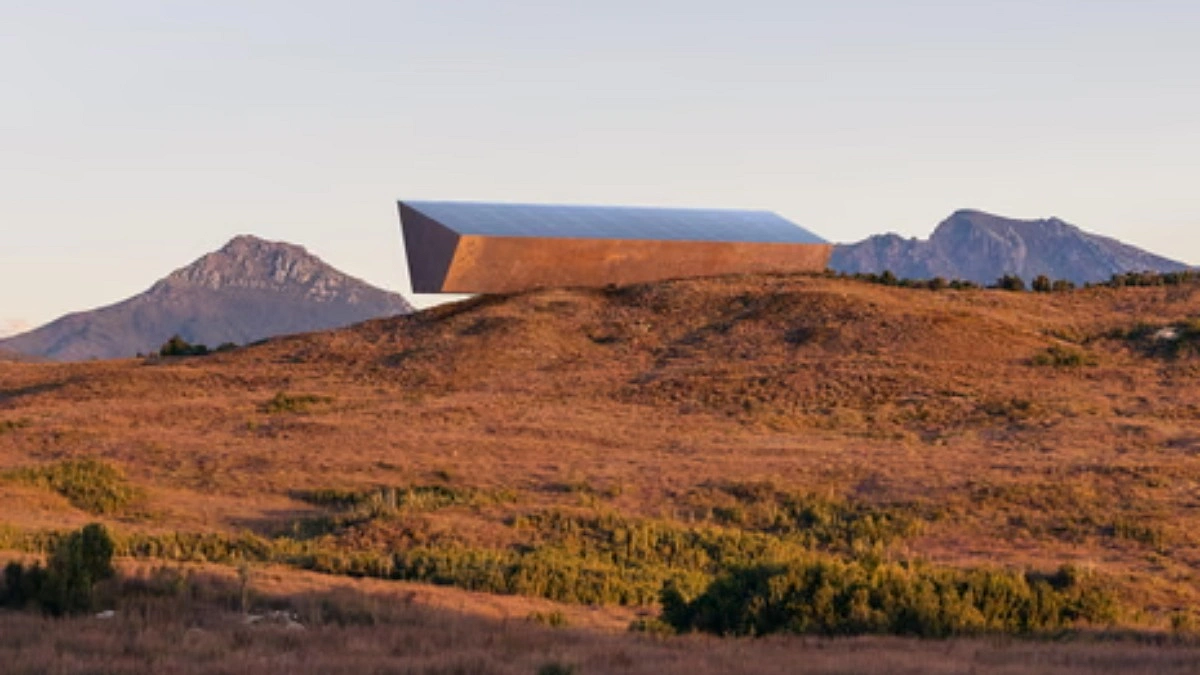
Photo: Earth’s Black Box
Construction is finally underway for Earth’s Black Box, a massive, indestructible monolith designed to serve as humanity’s final testament in the event of a global climate collapse.
Five years after its initial announcement, the creators confirmed that parts assembly has begun, with the full installation scheduled for December at a remote airfield in western Tasmania.
The 16-meter-long, four-meter-high steel structure will feature solar panels encased behind glass. Modeled after an airplane’s flight recorder - an Australian invention from 1954 - the box will document every step humanity takes toward a potential climate catastrophe.
According to the project’s website, hundreds of data sets, measurements and interactions relating to the health of our planet will be continuously collected and safely stored for future generations. How the story ends is completely up to us. Only one thing is certain, your actions, inactions, and interactions are now being recorded.
The project first went viral in 2021 during the UN’s COP26 climate talks in Glasgow. At the time, media outlets like CNET declared, “Earth is getting a black box to record events that lead to downfall of civilization.”
Late-night host Stephen Colbert even joked about the device, whispering, “We’re doomed,” to his audience.
However, the project faced years of ominous silence, leading some to believe it was merely a PR stunt by its creator, Rouser Lab, an experimental environmental communications agency.
Jonathan Kneebone, artistic director of Rouser Lab, explained that the project is now under the coordination of the Earth’s Black Box Foundation.
Kneebone said, “It will be approximately five years to the day that we are finally able to install the work. The team spent that time evolving the design, data storage systems, source materials, web platform - as well as developing funding models to sustain the project into the future.”
While collaborators include The Glue Society and Revolver, the University of Tasmania has officially dropped out of the project since its inception.
Local officials in Tasmania’s West Coast council have welcomed the development, noting the region’s geological and political stability.
West Coast Mayor Shane Pitt remarked, “It certainly is something we can see as a tourist attraction. The west coast is certainly not a place that has got high value for anyone to cause major catastrophes.”
The project resumes as global tensions rise, with the Doomsday Clock currently set at 85 seconds to midnight - the closest it has ever been to apocalypse.
Whether future civilizations will one day trawl through these records to understand humanity’s failure, or if the box will remain a relic of a disaster that was successfully averted, remains to be seen.
Source: The Guardian (adapted)

