


Duane Davis convicted of orchestrating Tupac Shakur’s killing

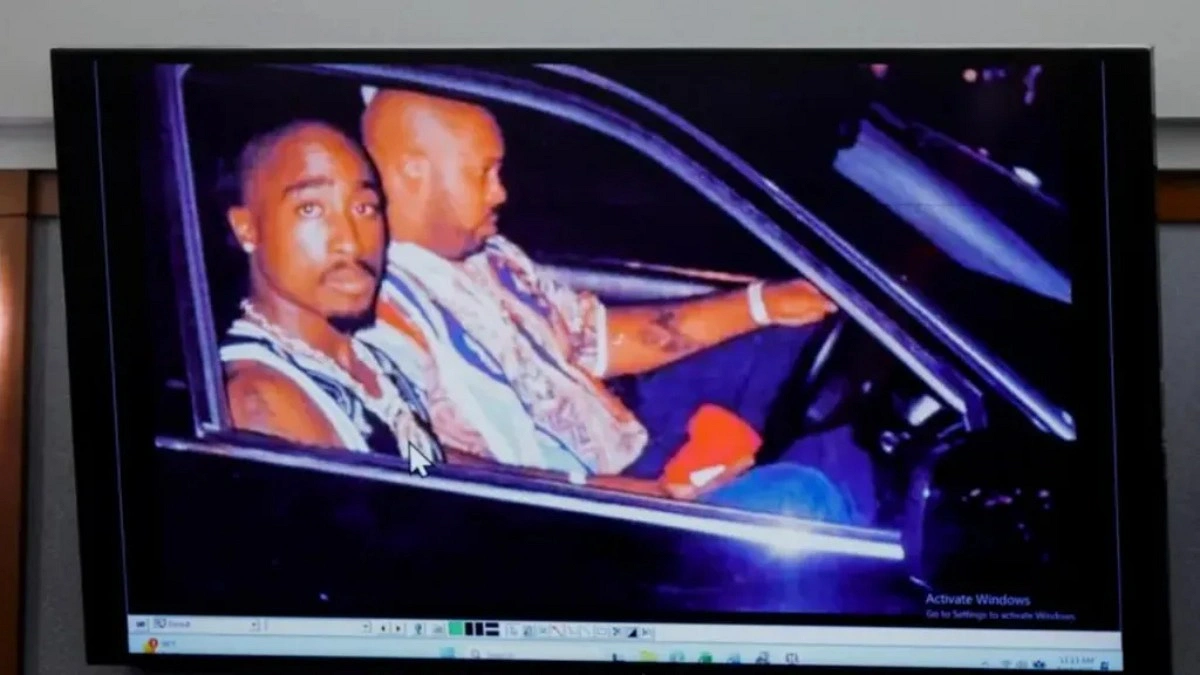
File photo: REUTERS
A Las Vegas jury convicted former street gang leader Duane “Keffe D” Davis on Monday for organizing the 1996 slaying of rap icon Tupac Shakur, securing the first-ever conviction in a cold case that has gripped hip-hop followers for almost three decades.
The jurors declared the 63-year-old guilty of one count of murder with a deadly weapon stemming from the 7 September 1996, drive-by shooting in Las Vegas that claimed the life of the music superstar.
Clad in a black suit, Davis showed no emotion in the Clark County District Court as the clerk read the decision, though he immediately declared his intention to challenge the outcome.
Throughout the trial, the prosecution played a recorded 2008 police interrogation where Davis admitted his presence inside the vehicle during the shooting, though he maintained that he did not pull the trigger himself.
State prosecutors asserted that Davis, who previously led the South Side Compton Crips street gang, commanded the hit and provided the handgun to his nephew, Orlando Anderson, to carry out the shooting.
Anderson repeatedly denied any involvement in Shakur’s death before dying in a separate, unrelated shooting incident in 2008.
Shakur’s family members clasped hands, embraced, and wept openly in court when the jury delivered the verdict on Monday. The legendary rapper was only 25 years old when attackers cut his life short at the absolute pinnacle of his musical career.
Globally, his influential artistry has generated more than 75 million record sales. For three decades, the slaying persisted as one of the most prominent unsolved homicides in the United States, generating numerous conspiracy theories without yielding a single conviction until this week.
During court proceedings, the state revealed that Davis orchestrated the drive-by shooting to avenge his nephew, whom Shakur and his associates had assaulted in a Las Vegas hotel lobby just hours prior to the shooting.
A fierce competition between East Coast and West Coast rap factions and deep-seated street battles between the Bloods and Crips gang rivals framed the artist’s tragic death. Following the verdict, Shakur’s sister hugged a state prosecutor while other relatives cried nearby.
Outside the courthouse, passionate supporters of the late hip-hop icon shed tears and celebrated the judicial victory. The prosecution built its case primarily around Davis’ own public and official admissions, where he repeatedly acknowledged riding inside the white Cadillac used during the attack.
He initially disclosed his involvement in Shakur’s murder during a confidential 2008 police interrogation concerning the death of another rap icon, Notorious BIG., whose real name was Christopher Wallace. Then Davis shared more details regarding his actions in his 2019 autobiography, Compton Street Legend.
However, the publication of this memoir and his numerous television appearances invalidated the non-prosecution agreement he had negotiated with the government, prompting the court to allow the 2008 police confession to serve as key evidence in this trial.
During the final statements to the court, prosecutor Binu Palal urged the jury to hold Davis accountable based on his own statements.
Palal emphasized that Davis spent years bragging to the public “that he is responsible for Tupac Shakur’s murder” across various documentaries, podcast interviews, his book, and police records. Palal told the jury, “He’s the shot caller - in every instance in every iteration he’s the leader of the South Side Crips.”
He asserted, “When you have the shot caller sitting shotgun when shots are fired, there’s no doubt he’s responsible.”
Defense attorneys tried to convince the panel that Davis’ statements were merely tall tales, boasting, and exaggerations designed to generate book sales and revenue. In his closing argument, defense attorney Michael Sanft asked the jurors to reject his client’s words as lies told strictly for commercial gain.
Sanft remarked to the jury, “There’s no proof.” However, the jury deliberated for only a few hours on Monday before returning the guilty verdict. Before adjourning the court, Clark County District Court Judge Carli Kierny scheduled the sentencing hearing for 13 October.
During the reading of administrative steps, Davis raised his hand to interrupt. He addressed the bench, saying, “I would like my stuff,” in reference to his confiscated phone and other personal belongings. He then declared, “I would like to appeal this matter.”
Judge Kierny clarified that he could pursue the appeal process following his formal sentencing.
Source: BBC (adapted)


