

Sand Extraction Scandal Engulfs Matarbari Deep Sea Port Project

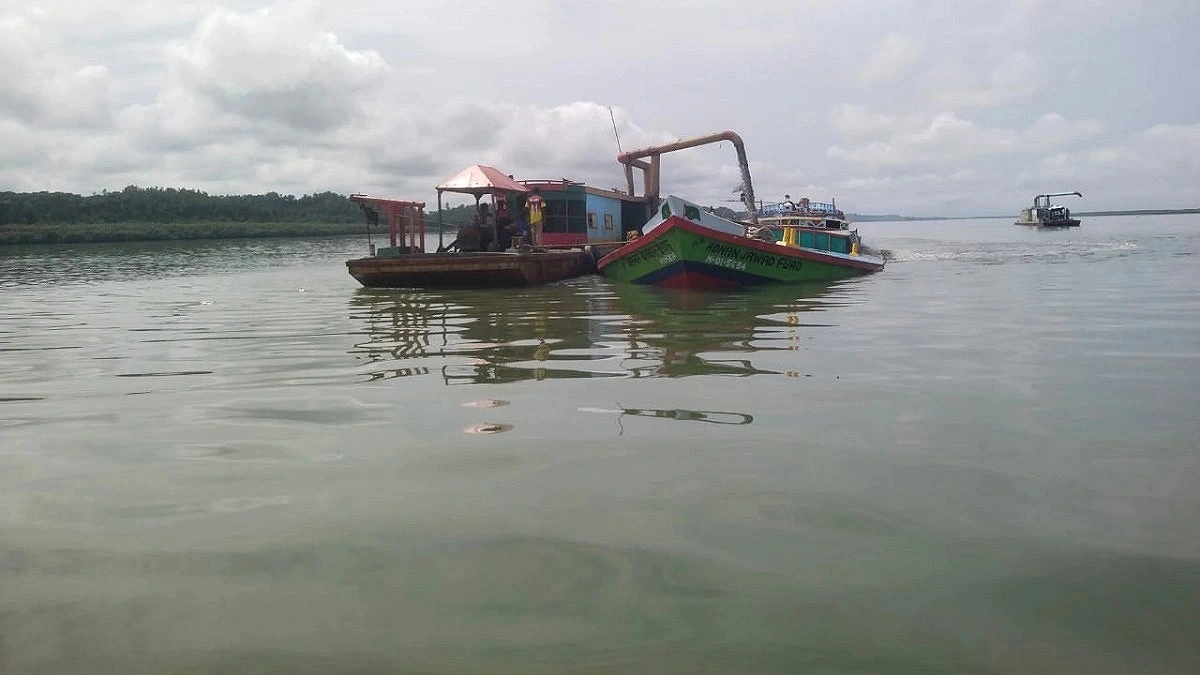
Photo: Agamir Somoy
A sand extraction scandal is engulfing the Matarbari Deep Sea Port project in Moheshkhali, Cox’s Bazar, one of the nation’s largest infrastructure endeavors.
While the Tk 12,942 crore project aims to construct a 27.2 km access road to link the port with the national grid, controversial dredging in the Moheshkhali channel has sparked a firestorm of criticism.
Allegations have surfaced that authorities bypassed legal procedures and environmental regulations to provide undue advantages to a specific joint-venture contractor, Tokyo-Max International Limited (MIL) JV.
Supreme Court Lawyer Sohana Sharmin filed a writ petition in the High Court on 15 June, and the Anti-Corruption Commission (ACC) has officially launched an investigation into the matter.
According to the writ petition, the project received authorization to extract 6.34 crore cubic feet of sand from the coastal and channel areas. Although the government’s fixed royalty for sand is Tk 6.94 per cubic foot, officials set the effective price at just Tk 2.37, justifying the low rate as an adjustment for dredging costs.
This price reduction has led to a significant loss of government revenue. Documents from a sub-committee formed by the district administration show that the Water Development Board and the Roads and Highways Department had recommended prices between Tk 16.70 and Tk 16.80.
By ignoring these recommendations, the state faces an initial revenue loss of around Tk 29 crore. If the total sand demand reaches the projected 33 crore cubic feet, the loss could exceed Tk 213 crore, with locals fearing the final figure could top Tk 450 crore.
Sand and Soil Management Act of 2010 mandates open and competitive bidding for supplying sand to government projects. However, critics alleged that the contract was awarded to a specific firm without any open tender, violating principles of transparency and accountability.
Moreover, the extraction began without a mandatory Environmental Impact Assessment (EIA).
Cox’s Bazar Environment Department Director Jomir Uddin told Agamir Somoy, “No dredging or sand extraction is legal without environmental clearance.” He noted that the contractor failed to even submit a required application to the department.
Technical violations are also rampant. While the permit specified 18-inch cutter dredgers, contractors are reportedly using 12-inch suction dredgers.
BIWTA Cox’s Bazar Port Officer Md Abdul Wakil told Agamir Somoy, “Suction dredgers create deep pits on the seabed that can disrupt coastal balance. This creates a risk of changing current paths, increasing erosion, and damaging the marine ecosystem.”
Environmentalists warn that the continued dredging threatens the Sonadia Island mangroves, Adinath Temple’s Moinak Hill, and the expanded runway of the Cox’s Bazar International Airport.
Youth Environment Society (YES) Chief Executive Ibrahim Khalil Mamun warned that the Moheshkhali channel and surrounding coastal regions face severe damage if the extraction continues at its current rate.
Lawyer Sohana told Agamir Somoy, “According to Article 21(2) of the Constitution, protecting state property and preventing waste is the constitutional duty of the state and its citizens. But in this project, allegations have been raised of giving benefits to a special group by ignoring the law.”
Despite the High Court writ, the ACC investigation, and legal notices from the Bangladesh Environmental Lawyers Association (BELA), extraction remains active.
Efforts to reach Cox’s Bazar Deputy Commissioner Md A Mannan and Project Director Akbar Hossain for comment were unsuccessful.

