
A Plethora of Vehicles at Palash Urea Fertilizer Project
- 40 cars purchased at a cost of Tk10 crore
- High-interest loans taken
- Small flats not suitable for a family
- Low quality bricks used in walls
- Waste of government land by not constructing multi-storey buildings

Collected Photo
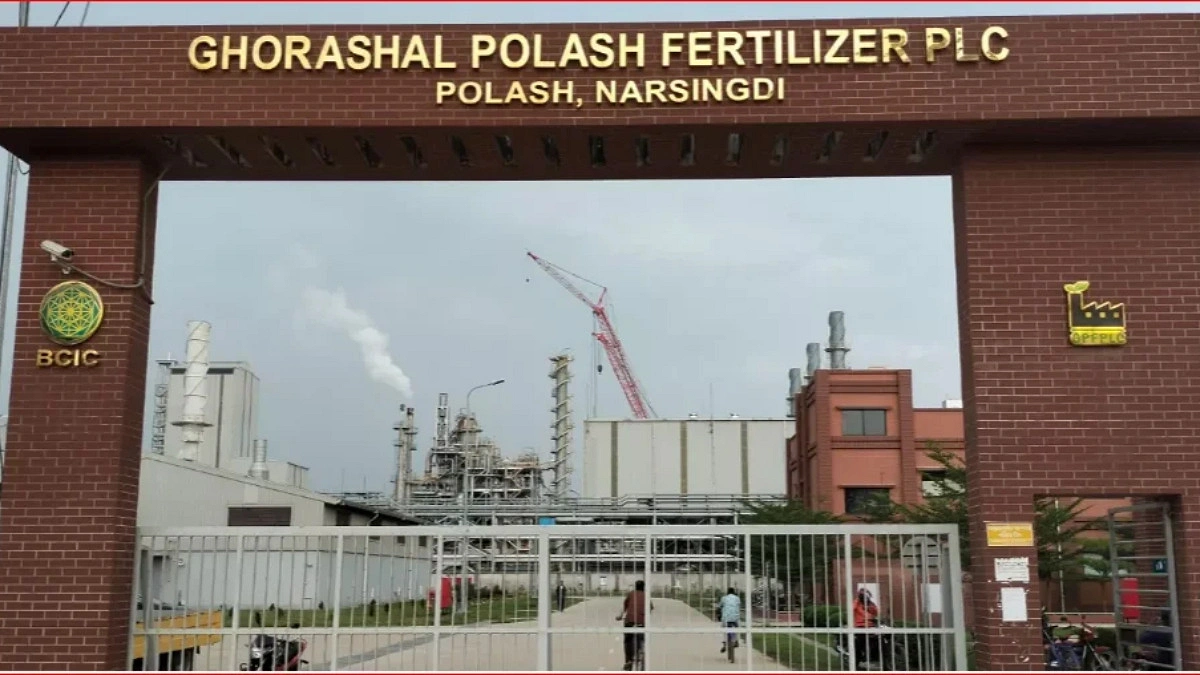
The office and residential quarters of Palash Urea Fertilizer Project are located in the same complex. Despite this proximity, vehicles were requested for both individual and collective use. Consequently, 40 vehicles were purchased for the Ghorashal Palash Urea Fertilizer project at a cost of approximately Tk100 million.
This expenditure occurred despite the fact that a shuttle service could have easily facilitated transportation between the quarters and the factory, which would have required fewer vehicles and significantly reduced costs.
The Implementation Monitoring and Evaluation Division (IMED), a government body, has raised questions regarding this matter. They noted that all these vehicles were purchased through general contractors using "Bidder's Financing" or high-interest loan funds.
Located in the Palash upazila of Narsingdi, the factory spans a total of 110 acres, encompassing both the plant and dedicated housing for officers and staff. Since the distance between the factory and the quarters is minimal, the IMED has questioned the necessity and justification for purchasing so many vehicles.
It was revealed that among the vehicles purchased for Tk100 million.
Six jeeps are being used by the factory's Managing Director, the Project Director, three board members, and local and foreign consultants.
Eight cars are used by departmental heads, with two additional cars kept for project-related needs.
Ten microbuses have been allocated to various groups: two for fourth to fifth-grade officers, three for sixth to tenth-grade officers, three for general staff, one for fuel control room personnel, and one for project officers.
Four pickup vans were purchased for security movement, the maintenance team, emergency needs, and construction inspection.
Three minibuses are used for shift operations, two trucks for transporting goods outside the factory, and five motorcycles for security patrolling and project supervision.
Following the IMED’s inquiry, several project officials stated that the vehicles were purchased in the interest of the project. Since the Bidder's Finance will be repaid by the factory itself, they claim the vehicles will be integrated into the factory’s Table of Organization and Equipment (TO&E) after the project concludes, meaning they will not need to be returned to the central transport pool.
However, Pradip Ranjan Chakraborty, former Secretary of IMED, commented that wasting money under the guise of projects is a long-standing issue. He told Agamir Somoy that a certain class of officials has an intense fascination with cars. He noted that when a project begins, their first priority is often buying vehicles, and concluded that these matters should be scrutinized and appropriate action should be taken.
The preliminary draft of the IMED’s project evaluation report has been obtained by Agamir Somoy. According to the findings, the Ghorashal Palash Urea Fertilizer project is being implemented by the Bangladesh Chemical Industries Corporation (BCIC) under the Ministry of Industries. Originally launched in 2018, the project was scheduled for completion by June 2022. Due to delays, the deadline was extended twice, currently set for June 2026. However, a new initiative is underway to extend the timeline by another two years, which would bring the total implementation period to 11 years. Regardless of the project's overall progress, the procurement of vehicles has been fully executed.
Regarding the project expenditure, the original approved cost was Tk104.60 billion. During the first revision, the cost was increased by Tk481.7 million, bringing the total budget to Tk155 billion. While the goal was to utilize 100% of the funds by last June, expenditure stood at 87.84% as of last March, with physical progress at 94%. The IMED noted that the project duration has increased by 72 months (160%), leading to a 48.17% rise in estimated costs.
The current demand for urea fertilizer in the country is 2.8 to 3 million tons. According to the Ministry of Industries, the project was undertaken to reduce fertilizer imports by approximately 2 million tons, meeting the deficit and saving foreign currency. However, a further two-year extension has been proposed citing reasons such as political shifts, protests, obstacles, excessive rainfall, and delays in rehabilitating the Harijan community residing on the designated housing site.
The IMED draft report highlights that contractors are employing workers without following regulations—specifically operating without safety nets, safety shoes, belts, gumboots, or helmets.
Construction of the administrative, commercial, and fire buildings, as well as other factory-related structures, has been completed. Administrative activities and production are already underway in these buildings, and the quality of construction is reportedly good.
Work on the A, C, D, E, and F-type residential quarters is nearing completion. Roof casting up to the fifth floor and brickwork are finished, with tiling, kitchen cabinetry, and plastering currently in progress.
During the inspection, the IMED spoke with potential beneficiaries of the project. They remarked that the 600 and 800-square-foot flats are not suitable for families, particularly noting that the balconies are too small. They mentioned these issues had been raised in local workshops.
The report also pointed out that a significant amount of government land was used to construct 27 five-story buildings for staff housing. The IMED suggested that building high-rise structures instead would have saved land, which could have been utilized for future plant expansion.
The inspection also revealed the use of poor-quality bricks in some sections of the housing walls, which are unsuitable for modern buildings. Although contractors claimed these bricks were meant for the roof’s weatherproofing (Jalchat), they were found used in the walls. Additionally, the brickwork on the walls was not smooth. The IMED advised ensuring such materials are not used in the remaining construction.
Furthermore, the report mentioned that the railings in the newly built school within the housing area were not installed correctly or at an adequate height.
