
Mandatory Access Ramps: A constitutional imperative for building inclusive Bangladesh

File Photo
For millions of citizens living with physical disabilities, entering a government offices, walk on public places or commercial building is not a routine task—it is an architectural battle.
Such physical barriers continue to prevent persons with disabilities from exercising their fundamental rights and participating fully in public life. Accessibility is not a privilege; it is a constitutional and human right.
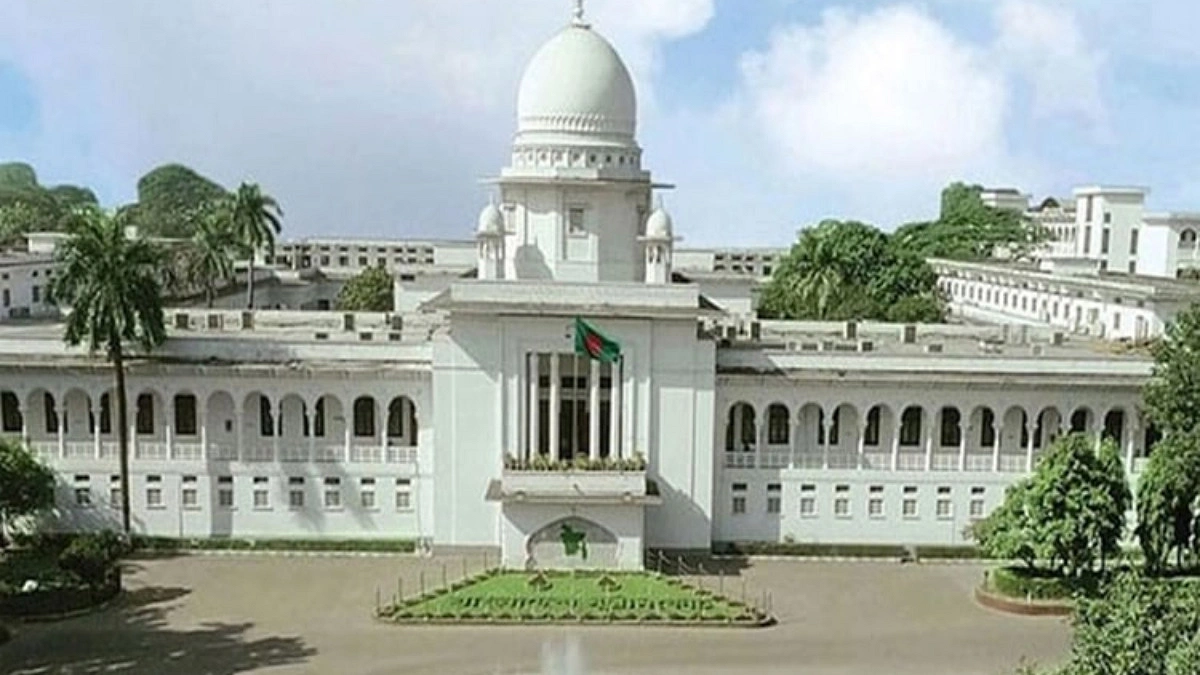
Recognizing this persistent injustice, a public interest writ petition was filed before the High Court on April 20, 2026, by renowned Supreme Court lawyer Barrister Fahmida Akhtar. The petition seeks judicial intervention directing the government to enact, implement, and strictly enforce mandatory access ramps in all public and private establishments to ensure accessibility for persons with disabilities.
As Bangladesh continues to modernize and urbanize at a rapid pace, development must be measured not only by economic growth and infrastructure but also by inclusiveness. Urbanization without accessibility cannot be dubbed development; it is the construction of structural barriers that deny millions of citizens their fundamental rights.
According to the Bangladesh Bureau of Statistics (BBS), more than four million people in Bangladesh live with physical disabilities. A state cannot claim to uphold constitutional equality while permitting architectural barriers that exclude one of its most vulnerable populations from public life.
The legal framework to address this issue already exists. Under the Rights and Protection of Persons with Disabilities Act, 2013, the government is legally obligated to ensure accessibility in public spaces. This obligation is further reinforced by the Bangladesh National Building Code (BNBC), which requires government offices, public institutions, commercial complexes, and other public facilities to provide standardized access ramps and other essential accessibility features.
Despite these clear legal mandates, implementation remains severely inadequate. Although the regulatory framework exists on paper, the reality on the ground reveals a significant enforcement gap. The failure to implement the accessibility provisions of the Bangladesh National Building Code is not merely an administrative lapse; it constitutes a continuing violation of the law and undermines the constitutional rights of persons with disabilities.
Transforming these statutory obligations into practical infrastructure is an urgent constitutional necessity. Legal experts and disability rights advocates consistently emphasize that legislation alone cannot ensure accessibility. Effective implementation requires a comprehensive enforcement mechanism, including regular post-construction inspections, mandatory engineering audits, continuous regulatory monitoring, and meaningful penalties for non-compliance. Without such oversight, accessibility standards will remain symbolic rather than effective, allowing architectural barriers to continue restricting the rights of millions of citizens.
A High Court directive enforcing mandatory access ramps would transform statutory promises into tangible human rights. Such a ruling would directly uphold the constitutional guarantees of equality before the law, human dignity, and freedom of movement as protected under Articles 27 and 32 of the Constitution of Bangladesh. More importantly, it would reaffirm that equal access to public spaces is an essential component of equal citizenship.
The practical impact of mandatory accessibility extends far beyond engineering compliance. Properly designed and standardized access ramps enable persons with disabilities to enter government offices, courts, educational institutions, hospitals, and commercial establishments independently and safely. Such infrastructure eliminates unnecessary dependence on others, promotes personal dignity, and expands opportunities for education, employment, healthcare, and civic participation.
An accessible built environment also strengthens the national economy. When persons with disabilities can move freely and participate equally in society, they are better able to pursue education, secure employment, establish businesses, and contribute productively to national development. Accessibility is therefore not merely a social responsibility; it is an investment in inclusive economic growth.
Although Bangladesh's Constitution guarantees equality and prohibits discrimination, and specific statutory laws exist to protect the rights of persons with disabilities, weak enforcement continues to undermine these legal protections. Consequently, millions of citizens remain structurally excluded from public life, facing systemic discrimination that effectively confines many of them to their homes.
Physical disability is an unchosen reality, and the right to live independently with dignity must never depend on physical ability. Every citizen deserves equal access to public infrastructure and public services. Bangladesh's existing infrastructure. Enforcing mandatory accessibility standards is not an act of charity or welfare. It is the fulfillment of a constitutional obligation and a legal duty.
An inclusive Bangladesh can only become a reality when every citizen, regardless of physical ability, can access public spaces safely, independently, and with dignity. The High Court now has an opportunity to transform legal promises into practical reality and ensure that accessibility becomes a fundamental feature of the nation's development rather than an afterthought.
