Is Nepal's tourism sector at risk again?

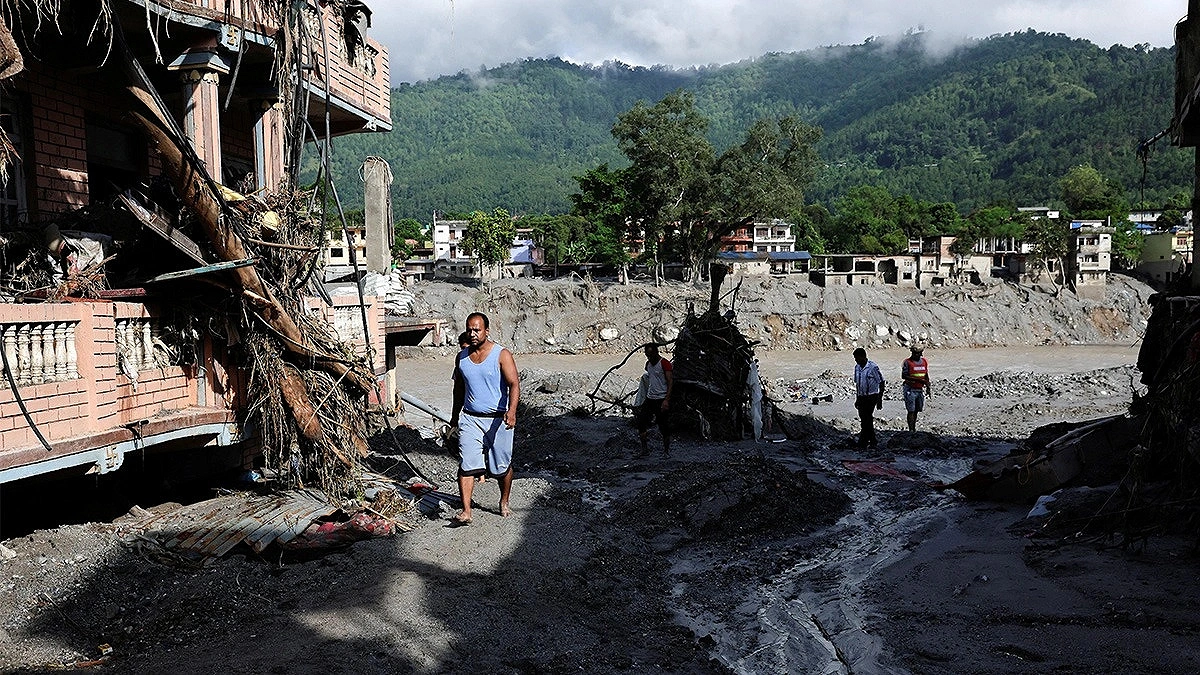
People are moving along a mud-covered road in Trishuli, Nuwakot, Nepal, following flash floods and landslides. Photo: Reuters
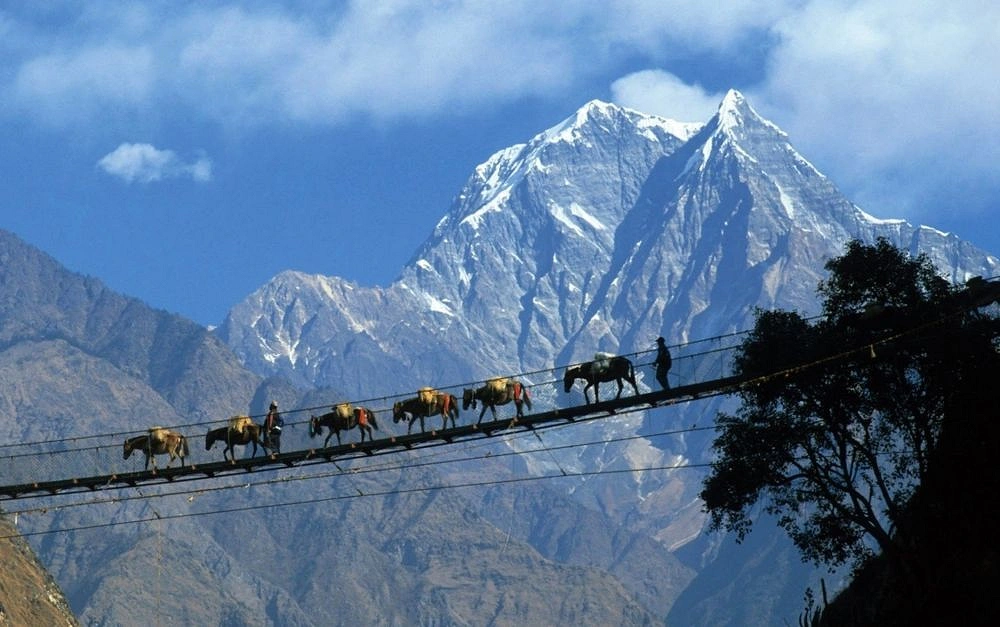
Nepal, highly attractive to tourists for its mountains, snow, and natural beauty, welcomes visitors from around the world every year. However, recent successive natural disasters have cast a shadow of concern over this appeal.
Sudden devastating floods and landslides in Rasuwa have once again highlighted the risks in the mountainous regions. Experts fear that climate change could further increase these risks, posing new challenges to Nepal's tourism sector.
Just as Nepal's tourism sector was entering its peak season last September, Gen-Z-led anti-corruption protests broke out. This suddenly brought tourism activities in the country to a halt.
The Nepali tourism industry has had to endure one blow after another even before this. Devastating floods have wreaked havoc in various parts of the country. Two major plane crashes have raised fresh questions about aviation safety. On top of that, the COVID-19 pandemic had nearly completely stalled international tourism.
In the midst of these challenges, just as the tourism sector was trying to recover, another major disaster struck.
Last Wednesday, a sudden devastating flash flood and landslide in Rasuwa district dealt a severe blow to Nepal's tourism recovery prospects. This has created new uncertainties, particularly regarding the Kailash-Mansarovar pilgrimage. The disaster struck the Rasuwagadhi-Timure area, one of Nepal's most important entry points for pilgrims traveling to Tibet, China.
Efforts are underway to assess the full extent of the damage. However, preliminary reports already reveal extensive destruction. This has made clear the severity of flash floods caused by glacial meltwater. Due to climate change, such disasters could put Himalayan settlements, infrastructure, and tourists at great risk.
Environmental expert Bijay Kumar Singh stated, "Our tourism is primarily mountain-dependent, and there are risks there. To prevent such disasters in the future, it is necessary to properly assess these risks."
In late September 2024, the Kathmandu Valley experienced severe flooding. It was one of the largest urban floods in Nepal. Various assessments indicate that September of that year saw the heaviest rainfall in four decades, causing massive damage. A recent World Bank report noted that the floods killed 249 people and injured 177 others. Additionally, over 10,000 families were displaced.
Adding to this were two major plane crashes.
In January 2023, a Yeti Airlines ATR-72 aircraft crashed while landing in Pokhara, killing all 72 people on board, including 68 passengers and 4 crew members. In July 2024, a Saurya Airlines Bombardier CRJ-200 crashed shortly after takeoff from Kathmandu airport, killing 18 people.
Earlier, the COVID-19 pandemic had brought unprecedented devastation to Nepal's tourism industry. After international tourism was nearly stalled for about two years, the sector slowly began to recover. However, political instability also stood in the way of that recovery.
Now, the Rasuwa disaster has brought the vulnerability of Nepal's mountainous environment to the forefront, creating fresh uncertainty in the tourism sector.
Experts have indicated that due to rapid glacial melting and rising temperatures in the Himalayas, 42 glacial lakes in Nepal are at risk of bursting. Most of these are located in the Everest region, one of the world's most famous mountain tourist destinations.
Scientists warn that global warming is causing glaciers to melt rapidly and glacial lakes to grow progressively larger. If the natural dams of these lakes become unstable and collapse, vast amounts of water and debris could cascade down to lower areas.
The consequences could be devastating. Settlements, roads, bridges, hydropower projects, and tourism infrastructure could be severely damaged.
Nepal's contribution to global carbon dioxide emissions is less than 0.1 percent. Yet, due to its fragile mountainous environment, the country is among those most vulnerable to climate change.
Environmental expert Bijay Kumar Singh said, "This disaster can be used as important evidence in claims for receiving funds from international climate funds."
According to him, such funds could help make Nepal's tourism sustainable for climate-vulnerable communities. Otherwise, similar disasters will recur repeatedly, and loss of life will continue.
The World Bank and the Asian Development Bank have also repeatedly warned that climate-induced disasters are one of the biggest risks to Nepal's economic growth, particularly potentially impacting tourism and agriculture.
According to experts, climate change is also changing the nature of risks to Nepal's most important tourism asset—its mountains.
Former Environment Minister Ganesh Shah has emphasized using more precise technology for the safety of mountain tourists. He stated that adventure tourism interest is growing among the new generation worldwide, and Nepal could become one of their most attractive destinations in the future. Therefore, at least satellite communication systems should be introduced in mountainous regions to enable rapid rescue operations. Nepal needs more advanced and precise technology to make tourism sustainable.
The Rasuwa disaster has also highlighted the international importance of Nepal's mountain tourism.
According to Nepal Police, as of Thursday evening, reports were received of 644 tourists going on the Kailash-Mansarovar pilgrimage in Tibet being missing. Of them, 127 are Nepali citizens. Among the missing, the largest number are Indian citizens—178. Additionally, there are 55 US citizens, 53 Ukrainians, 51 Malaysians, 35 Australians, and 33 British citizens.
These statistics demonstrate how heavily international tourists depend on Nepal's roadways and other communication corridors for access to Tibet.
According to tour operators, demand for the Kailash-Mansarovar pilgrimage had surged significantly this year. Although China had limited the number of Indian pilgrims via Nepal to 24,000, demand exceeded 40,000.
The pilgrimage season officially begins in mid-May. Following that, major transit hubs like Hilsa, Simikot, and Nepalgunj experience heavy tourist pressure.
Basu Kumar Adhikari, Managing Director of Touch Kailash Travel and Treks, noted that one of the reasons for the increased demand this year is the Year of the Horse in the Chinese calendar, which began on February 17, 2026.
In Tibetan astrology and religious beliefs, the Horse Year is considered particularly auspicious for pilgrimage. Devotees believe that completing the circumambulation, or 'kora,' around Mount Kailash during the Horse Year bestows the same religious merit as doing the kora 12 or 13 times in a normal year.
The 52-kilometer kora around Mount Kailash takes pilgrims three days to complete. The entire route passes through some of the world's most rugged and high-altitude mountainous terrain.
After being closed for five years due to diplomatic tensions, the Kailash-Mansarovar pilgrimage for Indian citizens resumed last year based on an understanding between India and China.
India arranges Kailash-Mansarovar travel via the disputed Lipulekh Pass and Sikkim's Nathu La Pass. However, the number of pilgrims on those two routes is capped at roughly one thousand per year.
Consequently, most Indian pilgrims prefer to go to Kailash-Mansarovar privately through Nepal.
This pilgrimage has become a significant business for Nepali tourism entrepreneurs. A 10-day package via the Rasuwagadhi-Kerung route costs approximately 1,700 US dollars.
Tour operators view the Kailash-Mansarovar trip as one of the most profitable packages for Nepali tourism companies. Every year during this season, hotels, airlines, restaurants, guides, and porters see increased business. Additionally, government revenue also rises.
Hotels in Nepalgunj have also seen increased bookings during the pilgrimage season. According to tourism entrepreneurs, the rise in Indian tourists has led to increased investment in hotels and other tourism infrastructure in destinations like Banke and Simikot in the north.
However, Wednesday's disaster could suddenly halt this progress.
Former CEO of the Nepal Tourism Board, Deepak Raj Joshi, said the tourism industry will be affected after the disaster, and the impact could last at least six to seven months.
In his view, a special tourism recovery task force should be formed to communicate that the country's other tourist destinations remain normal and safe.
However, Nepal's tourism industry has the capacity to recover from crises.
Joshi noted that even three decades ago, Nepal's tourism was deeply intertwined with political instability.
From 1996 to 2006, the Maoist insurgency killed more than 17,000 people. This disrupted economic activities across the country. The 1999 hijacking of an Indian Airlines flight and the global decline in international travel following the September 11, 2001 attacks also had a major impact on Nepal's tourism industry. That same year, the assassination of King Birendra and members of his family further heightened political uncertainty.
Even after the 2006 peace accord, frequent strikes and blockades disrupted business and discouraged tourists and investors.
Subsequently, an energy crisis emerged. At times, load-shedding lasted up to 18 hours a day.
The 2015 earthquake was another major blow to Nepal. That earthquake killed nearly 9,000 people and caused several billion dollars in economic damage. Tourism infrastructure and historical sites were extensively damaged, and the number of international tourists declined.
Yet, the tourism industry recovered.
Joshi said that amidst everything, there is room for hope. Nepal has the ability to recover quickly.
The COVID-19 pandemic also tested that resilience. After international tourism activities were shut down for nearly two years, tourists gradually began returning. Recently, tourist numbers have been steadily increasing.
However, Wednesday's disaster is somewhat different in nature. Because behind it lies a risk that cannot be addressed merely through political stability or tourism promotion campaigns.
General Secretary of the Nepal Mountaineering Association, Rajendra Lama, said that just as the tourism industry was beginning to recover from the pandemic shock, this disaster has struck a major blow.
According to the World Travel and Tourism Council, the travel and tourism sector contributes 6.6 percent to Nepal's gross domestic product (GDP). This sector is a major source of employment, especially for people in remote hilly and mountainous areas where alternative economic opportunities are limited.
It is because of this dependence that the tourism sector is more vulnerable to disasters.
Natural disasters can destroy roads, bridges, airports, and hotels, disrupt supply chains, and lead to the cancellation of tourist travel. At the same time, a negative perception regarding the safety of a destination can also develop. However, the Rasuwa disaster has made another issue clear: disaster preparedness can no longer be viewed separately from tourism policy.
For Nepal, the challenge is no longer just about attracting more tourists.
The challenge is to keep the mountains that attract tourists safe enough for their travel.
This requires more advanced early warning systems, robust infrastructure, reliable communication networks, satellite-based monitoring, and rapid rescue capabilities in remote areas. Simultaneously, the risks of glacial lake outbursts and other climate-change-induced disasters around key tourist destinations must be assessed more clearly.
Nepal's tourism industry has weathered a series of successive crises—political instability, terrorism, plane crashes, earthquakes, pandemics, and protests.
But as Himalayan temperatures continue to rise, the country is moving toward a new reality where nature itself could become one of the biggest uncertainties for the tourism sector.
Environmental expert Bijay Kumar Singh said, "Climate change is changing everything, and Nepal has no option to ignore it."
Source: Kathmandu Post