US signs landmark nuclear deal with Saudi Arabia

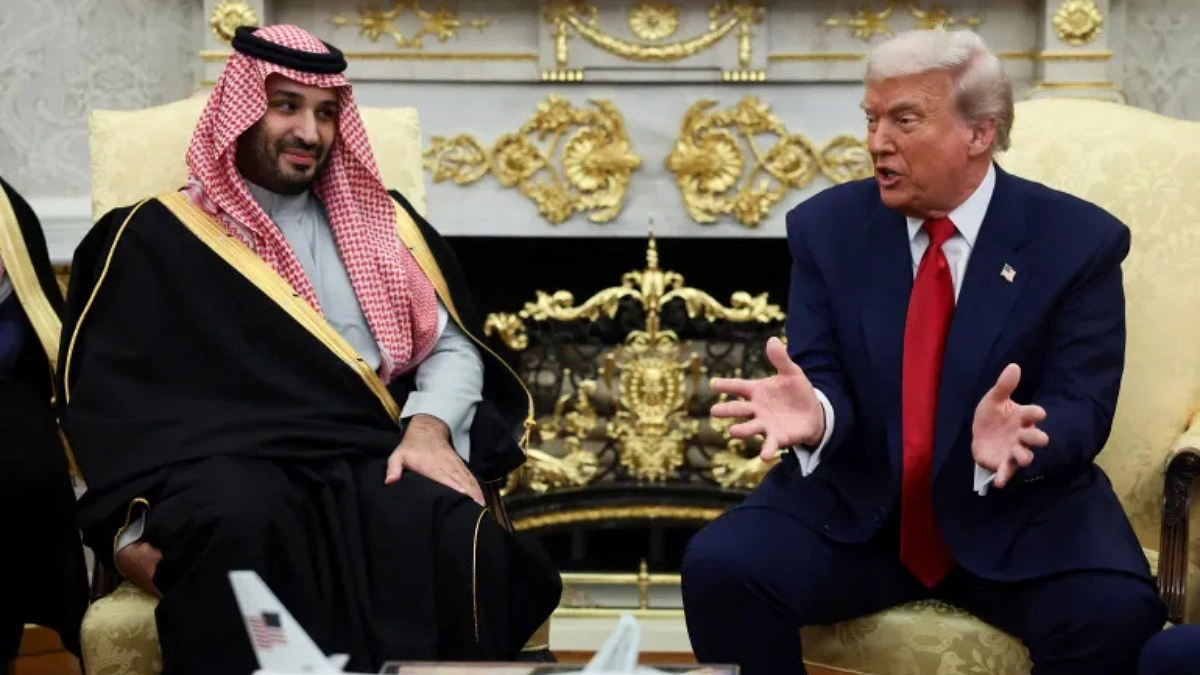
File photo: REUTERS
US and Saudi Arabia recently finalized a historic pact enabling the Gulf kingdom to establish its own civilian nuclear program.
Department of Energy characterizes this “peaceful nuclear co-operation agreement” as a strategic gateway that provides American corporations extensive access to Saudi Arabia’s burgeoning nuclear energy sector.
While the administration has not made the full text public, various US media outlets report that the deal may eventually permit Saudi Arabia to enrich uranium on its own soil - a sensitive process that creates fuel for power plants but also serves as a critical component for manufacturing nuclear weapons.
This potential for domestic enrichment represents a significant shift in American foreign policy, and many experts warn it could trigger nuclear proliferation within an already volatile region.
Alongside the primary cooperation pact, the two nations signed a “bilateral safeguards agreement” to establish the legal framework for a multi-billion-dollar partnership spanning several decades.
US government maintains that these combined agreements will advance essential economic and strategic goals while upholding nonproliferation standards. The Saudi government released a corresponding statement noting that the deal extends existing energy cooperation between the two allies following the Saudi leader’s visit to Washington last November.
This announcement arrives as hostilities between the United States and Iran continue to escalate. Saudi Arabia, a long-standing US ally that hosts multiple American military bases, remains a frequent target of Iranian attacks, and the Iranian-aligned Houthis in Yemen recently declared a “maritime blockade” against the kingdom.
Detailed specifics of the nuclear arrangement remain under wraps, but earlier reports indicate that after a joint study with US officials, Saudi Arabia might receive permission to produce fuel at a US-built enrichment facility rather than relying on external imports.
This arrangement could prove worth billions of dollars to American firms involved in constructing such facilities.
US Secretary of Energy Chris Wright defended the security protocols of the deal, saying, “Rest assured, these agreements uphold the highest standards of nuclear safety and nonproliferation, while relying on the world’s best nuclear technology and scientists, designed right here in the United States.”
Energy Department asserted that the pact enhances both regional and American security while bolstering the competitive edge of the US in civil nuclear technology.
Nevertheless, nuclear experts and former officials in Israel - Washington’s primary Middle Eastern ally - expressed deep concern that the plan might eventually allow Saudi Arabia to develop nuclear weaponry, a process many believe would still take decades and face international resistance.
Rosemary Kelanic, the director of the Middle East programme at the Defense Priorities think tank, described the possibility of the US allowing local enrichment as “quite shocking”.
She emphasized, “The US has never done that before, we have never helped another country enrich on their own soil,” explaining that producing domestic nuclear fuel makes a nation a “much bigger risk” for weaponization.
The agreement now faces a mandatory review by Congress. While some lawmakers from both parties intend to oppose the measure, President Trump’s Republican Party currently maintains control over both chambers.
US Secretary of State Marco Rubio has already dismissed criticisms regarding future weaponization risks, telling reporters in the Philippines, “The US is not going to reach any agreement with any country in the world that leads to the risk of proliferation.”
However, several Democrats pointed out that Rubio previously supported the “No Nuclear Weapons for Saudi Arabia Act,” which demanded congressional approval for such deals.
Massachusetts Senator Edward Markey condemned the administration’s stance, calling it reckless and hypocritical. Markey said, “They are allowing Saudi Arabia, a belligerent and authoritarian nation, to develop nuclear weapons technologies while starting a war with Iran under the guise of preventing an Iranian nuclear bomb.”
If the final deal includes enrichment provisions, it would stand in stark contrast to the 2009 US agreement with the United Arab Emirates, which prohibits the UAE from producing its own fuel. This distinction has already mobilized nuclear non-proliferation campaigners who seek to limit the global spread of nuclear arms.
For years, Washington insisted that Saudi Arabia must recognize Israel and normalize relations as a prerequisite for this deal, but media reports suggest the administration has now dropped that demand. President Trump has consistently worked to strengthen ties with the kingdom, and observers suggest the US moved forward with this agreement partly to prevent Saudi Arabia from striking a similar deal with Russia or China.
This agreement marks a major diplomatic triumph for Saudi Arabia and its de facto ruler, Crown Prince Mohammed bin Salman. Although the shift in power dynamics may not manifest for years, the deal places nuclear technology at the heart of the ongoing US-Israeli confrontation with Tehran.
In 2018, Salman told CBS News that while his nation did not desire nuclear weapons, “without a doubt if Iran developed a nuclear bomb, we will follow suit as soon as possible.”
Source: BBC (adapted)