Global hunger declines but remains above pre-COVID levels

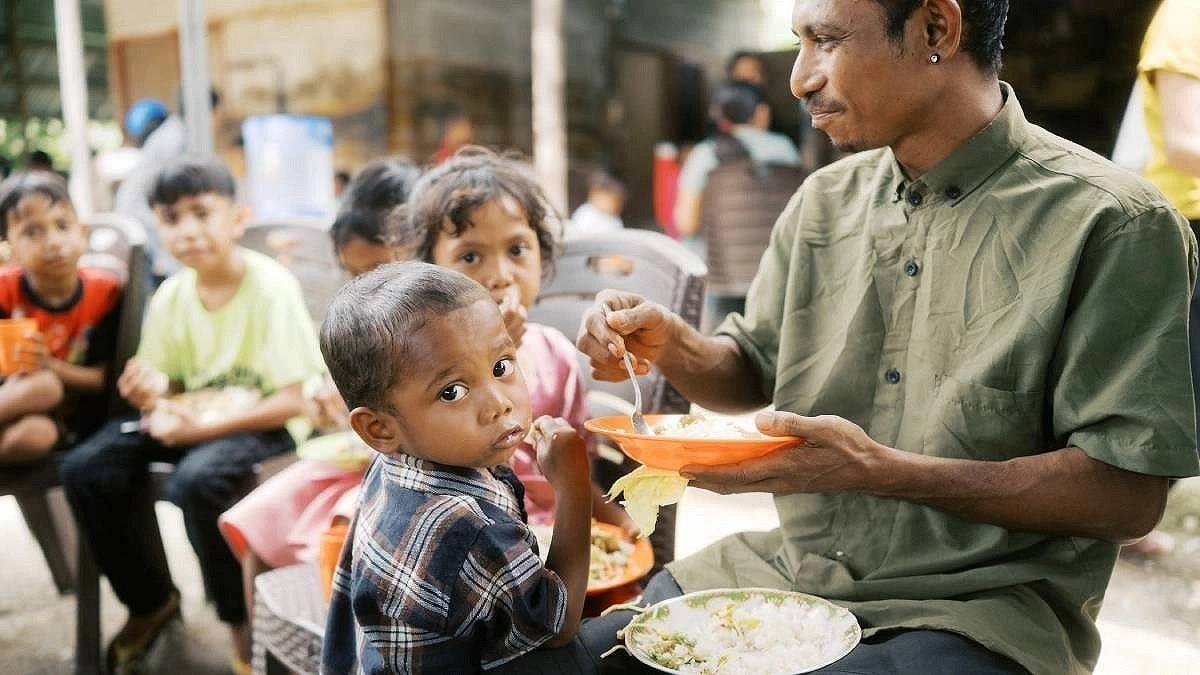
Collected Photo
United Nations report on the State of Food Security and Nutrition in the World reveals a downward trend in global hunger figures.
Around 645 million people struggled with hunger in 2025, which marks a decrease of 14 million from the previous year and 43 million fewer than in 2022. Despite this gradual improvement, the world still battles acute food shortages fueled by climate extremes, economic instability, and ongoing conflicts.
The progress marks the third consecutive year of recovery following the surge in hunger during the COVID-19 pandemic, yet current levels still exceed the figures recorded in 2019. Statistics show that 7.8 percent of the global population experienced hunger in 2025, a steady decline from 8.1 percent in 2024 and 8.6 percent in 2022.
Africa continues to hold the title of the world’s hunger hotspot. In 2025, undernourishment affected 309 million Africans, representing one in five people on the continent and nearly half of the global hungry population.
Meanwhile, Asia accounts for 292 million hungry people (6 percent of its population), and Latin America and the Caribbean report 32 million (4.8 percent).
While Asia and Latin America show consistent progress, hunger in Africa has hit a plateau. Although the prevalence dropped slightly from 20.3 percent in 2024 to 20 percent in 2025, population growth caused the total number of hungry individuals there to rise.
UN anticipates a 20 percent reduction in global undernourishment by 2030, but warns that 510 million to 520 million people - 56 percent of whom reside in Africa - will likely remain hungry by the decade’s end.
Experts further warn that recent crises, such as the 2026 US-Israel war on Iran, threaten to reverse these gains, particularly in Asia and Africa.
Affording a healthy diet remains a Herculean task for many. The number of people unable to afford nutritious food dropped from 2.97 billion in 2021 to 2.69 billion in 2025. This suggests incomes are rising faster than food costs, even though the daily cost of a healthy diet climbed to $4.28 in 2025 from $3.44 in 2021 and $2.94 in 2017.
Asia has the highest raw number of people facing this challenge at 1.4 billion, but Africa sees the highest rate, with 1.03 billion people - nearly two-thirds of the population - unable to afford quality nutrition.
Food and Agriculture Organization (FAO) and the World Bank define a “healthy diet basket” as the lowest-cost combination of local foods that meets daily energy needs. This basket consists of 11 items from six food groups, providing roughly 2,330 kilocalories per person.
At the extreme end of the scale, the Global Report on Food Crises 2026 by the FAO and World Food Programme (WFP) estimates that 1.4 million people face catastrophic hunger. This Phase 5 status on the IPC/CH scale signifies widespread starvation, acute malnutrition, and death.
Gaza reports the most severe situation, with 6,40,700 people - 32 percent of its population - facing catastrophe. The crisis stems from the impact of Israel’s war on the enclave and strict military limits on humanitarian aid.
Sudan follows with 6,37,200 people in catastrophic hunger, representing 1 percent of its population. Other affected nations include South Sudan (83,500), Yemen (41,200), Haiti (8,400), and Mali (2,600).
Source: Al Jazeera (adapted)