Saidpur Railway Workshop: Machines exist, but no manpower

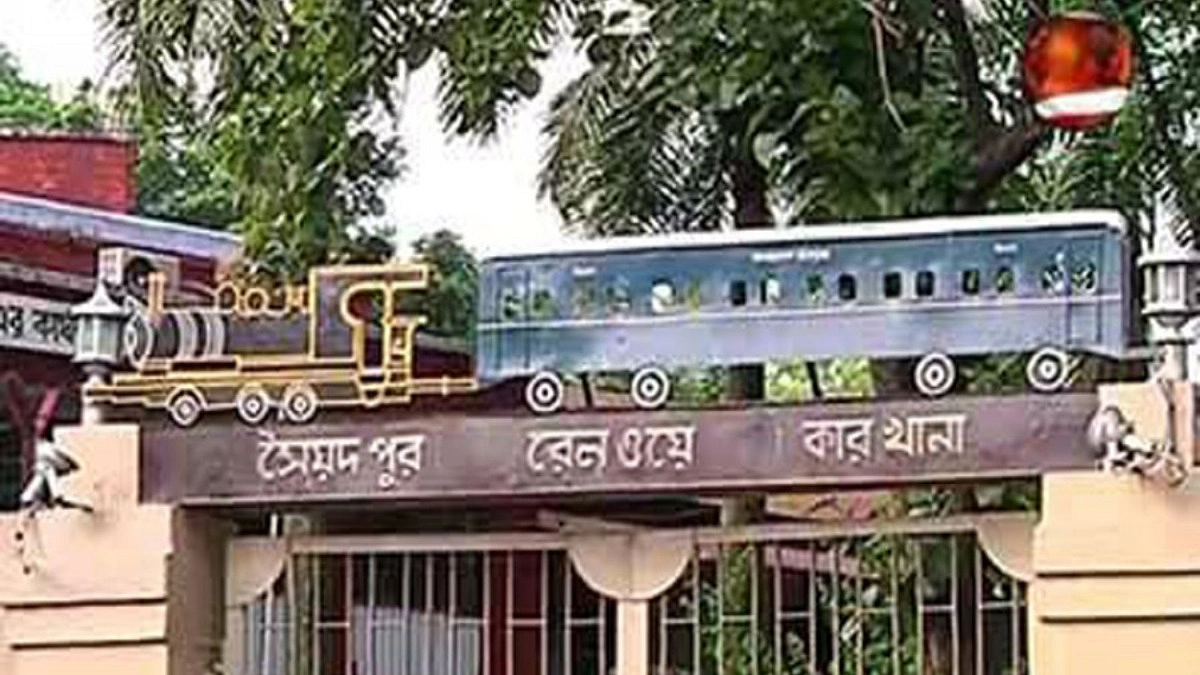
Collected Photo
Bangladesh Railway's second-largest workshop, the Saidpur Railway Workshop, has the capability to produce most of the necessary components for repairing and rebuilding freight wagons and passenger coaches. However, due to a long-standing manpower shortage, a lack of modern machinery, and delays in receiving raw materials, this capacity is not being fully utilised. As a result, every year, a huge quantity of spare parts and heavy components must be purchased from domestic and foreign markets through tenders. This not only increases government expenditure but also raises questions about the quality of the procured parts.
During a recent visit to various production shops of the factory, it was observed that most of the 29 light and heavy machines in the crucial Millwright Shop have been inoperative for a long time. Dust has accumulated on the machines, and in some places, cobwebs have formed. The same scene was visible in the Production Shop and the Tool Room Shop as well. Out of 142 machines in these two shops, only 38 are operational. The rest have been lying idle and non-functional for years.
According to workshop sources, the Saidpur Railway Workshop has 779 machines in total. Of these, 582 are functional and 197 are non-functional. However, even the functional machines cannot be used regularly due to a shortage of skilled technicians. As a result, their efficiency is also declining due to a lack of proper maintenance.
Officials in charge of various shops at the workshop said that currently, only 140 skilled technicians are available to operate the 582 functional machines, compared to the required manpower. Due to the manpower shortage, a large portion of the production capacity remains unused. In their view, if skilled personnel are recruited to fill the sanctioned posts, the need to purchase components from outside markets would be significantly reduced.
Meanwhile, the age of the workshop's machines has also become a major challenge for production. According to data, of the 779 machines currently in use, 482 are over 50 years old. Another 207 are between 20 and 25 years old, and only 82 machines are between 1 and 20 years old. With these outdated machines and limited manpower, an average of about 80 freight wagons and passenger coaches are repaired each month.
Saidpur Railway Workshop Production Engineer Md. Zahid Hasan said, "After 2016, many of the spare parts required for coaches imported from China, India, and Indonesia cannot be manufactured without modern CNC (Computer Numerical Control) machines. Since the workshop lacks such technology (CNCs) , these components have to be purchased from outside. At the same time, the shortage of skilled machine operators has also become a major obstacle to production."
This engineer further said that although approximately 643 types of spare parts are currently produced at the workshop, about 250 types of components worth approximately Tk 2 crore have to be bought from the local market every year. If the required technology and manpower are ensured, this expenditure could be significantly reduced.
Shah Sufi Noor Mohammad, Divisional Supervisor of Saidpur Railway Workshop, commented, "Due to the long-standing manpower shortage, lack of modern machinery, and failure to obtain raw materials on time, the workshop's full production capacity cannot be utilized. Therefore, to meet the demand, various components have to be purchased through tenders."
According to this official, if modern CNC machines are added, skilled technicians are recruited, and a regular supply of raw materials is ensured, the workshop will once again be able to rely on its own production. This would reduce government expenditure, decrease dependence on foreign components, and multiply the production capacity of this important railway workshop.
According to railway insiders, to effectively utilize this century-old heritage workshop, simply reviving the old machines is not enough; what is needed is technological modernization through long-term planning, recruitment of skilled manpower, and consistent investment in production management. Otherwise, despite having the capacity to produce components, dependence on the external market will increase further, which will not only raise railway costs but also waste domestic production capabilities.