
PM Tarique Rahman scraps project proposal over corruption concerns
- Project Worth Tk 685 Crore Meant For Prevent River Erosion Witheld

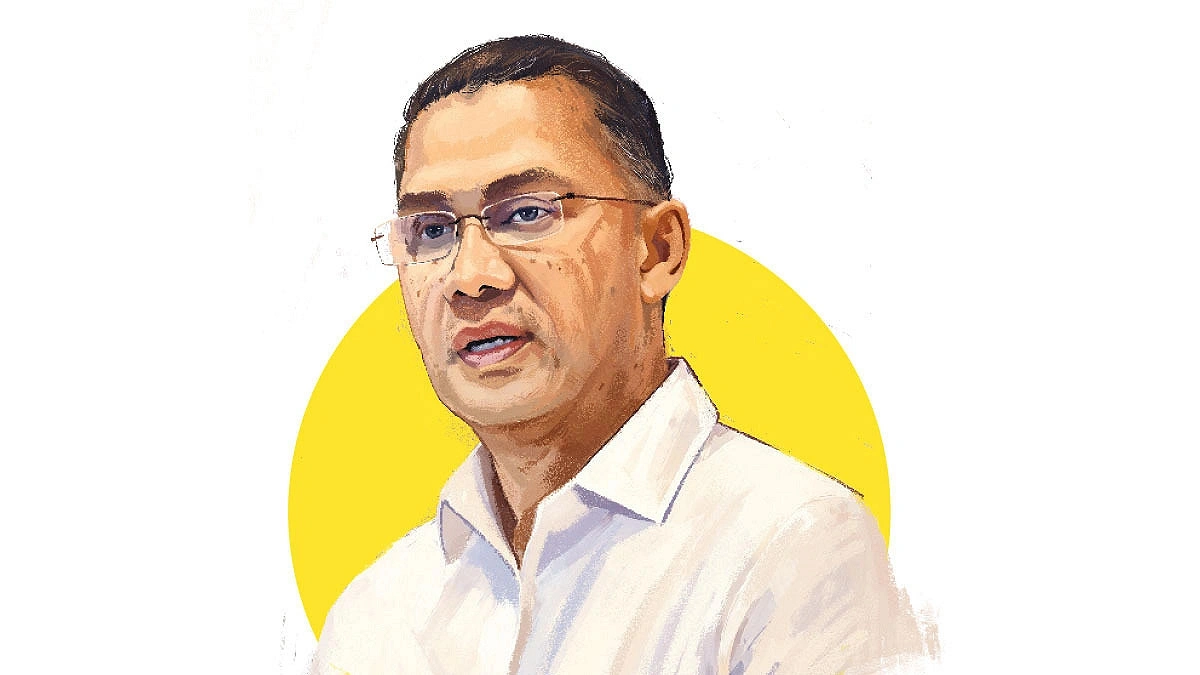
Graphics: Agamir Somoy
The proposal for the Ministry of Water Resources' river erosion prevention project has been temporarily scrapped due to concerns over corruption anticipation during implementation. The decision was made at Wednesday's meeting of the Executive Committee of the National Economic Council (ECNEC), chaired by Prime Minister Tarique Rahman.
ECNEC sources further said that during the meeting, questions were raised about how boulders are manufactured, how many are used, and how the accounting is monitored. The meeting also directed the formulation of a policy framework for monitoring these aspects. Additionally, instructions were given to reduce the proposed excess expenditures in various sectors of the cancelled project.
The meeting was held at the Cabinet Room of the Secretariat, chaired by Prime Minister and ECNEC Chairman Tarique Rahman. A total of nine projects were presented, including the Ministry of Water Resources' project titled "Protection of Shibpur, Dhania, and Medua areas under Bhola Sadar and Daulatkhan upazilas from erosion of the Meghna River." Eight of the nine projects—excluding the river erosion one—were approved. However, the approved Dhaka-Ashulia Elevated Expressway project, despite being 80% complete, saw a 54% cost increase due to some additions of components and a rise in the dollar exchange rate.
Planning Secretary S.M. Shakil Akhtar told Agamir Somoy that the river erosion project was not so much "cancelled" as "sent back," since it is expected to be resubmitted for approval later. He explained that the project was formulated based on the 2022 rate schedule, making many of its cost estimates misaligned with the current context. A new rate schedule for 2026 is currently under approval process and is expected to be finalized within the next 10–12 days, after which the project cost will be revised. When asked about the corruption concerns or excess cost estimations, he declined to comment.
Multiple officials who attended the ECNEC meeting told Agamir Somoy that during the discussion of the Water Resources Ministry project, the Prime Minister inquired about quality assurance mechanisms during implementation and how the number of ripraps positioned along the banks are counted. In response, the Water Development Board said that boulders are tested by a BUET (Bangladesh University of Engineering and Technology) committee during production. The meeting then pointed out that while the portions tested by BUET are fine, the quality of the remaining work needs to be examined. During the meeting, Power Minister Iqbal Hassan Mahmud said, "My hometown is Sirajganj. I know that due to pressure from various quarters, the Water Development Board does not reduce the number of boulders now. But the ripraps are made with poor quality."
Various parties at the meeting recommended approval of the project, highlighting its importance. However, Prime Minister Tarique Rahman stood firm in his decision. Ultimately, the project was temporarily cancelled.
Meeting sources have revealed that the total cost of the project to protect the Shibpur, Dhania, and Medua areas in Bhola Sadar and Daulatkhan upazilas from erosion of the Meghna River was estimated at Tk 685 crore and 86 lakh. If approved, the project was scheduled to be implemented from this year until June 2030. The Bangladesh Water Development Board (BWDB) was supposed to implement it entirely with government funds. Under the project, riverbank protection works would have been carried out to prevent erosion, rehabilitate coastal embankments, and preserve embankment slopes. This would have strengthened flood management in the project area and improved the drainage system through the construction of water drainage structures.
Meanwhile, the ECNEC meeting approved the revised proposal for the Dhaka-Ashulia Elevated Expressway project. With 80% of the Chinese-funded expressway construction already complete, the cost has been increased by a staggering 54%, and the timeline has also been extended. Following the meeting, State Minister for Planning Zonaed Abdur Rahim Saki briefed reporters. In response to their questions, he said the cost increase is largely due to two factors. "One is the significant change in the dollar exchange rate. Apart from the dollar fluctuation, there have also been changes in VAT, taxes, and several other areas. The other reason is that a new intersection component has been added to the project. This addition has also contributed to the cost increase." Additionally, "some utility lines need to be relocated, which were not included in the original DPP. Besides, five other new components have been added," the State Minister added.
The expressway project under the Bangladesh Bridge Authority, launched in 2017, was originally estimated at Tk 16,901 crore, of which Tk 10,949 crore was to come from Chinese financing. With this revision, the cost has been increased by Tk 9,492 crore and 63 lakh, bringing the total to Tk 27,045 crore and 67 lakh. The project, initially scheduled for completion by June 2022, has now been extended to June 2030.
Along with this, the ECNEC meeting approved a total of eight projects at a cost of Tk 14,041 crore. Of this, Tk 10,494 crore and 21 lakh will come from the government's own funds, while Tk 3,550 crore and 44 lakh will be in foreign loans. The other approved projects include: Universal Social Infrastructure Development-2; Integrated Development of Greater Dinajpur (Dinajpur, Thakurgaon, Panchagarh) District; and the Rural Road Maintenance and Employment Project. Additionally, the "Construction, Renovation, and Development of Disaster Shelters," "Power Distribution System Development Project, Sylhet Division," "Evaluation and Development Well (Begumganj-5)," and two "Exploratory Well (Begumganj-6 and Sunetra-2) Drilling" projects were also approved. Also included is the project to "Upgrade existing Kidney Dialysis Centers in Medical College Hospitals to 50 beds and establish 10-bed Kidney Dialysis Centers in District Sadar Hospitals."
