


Malaysia’s Rohingya refugees face rising hostility, fear

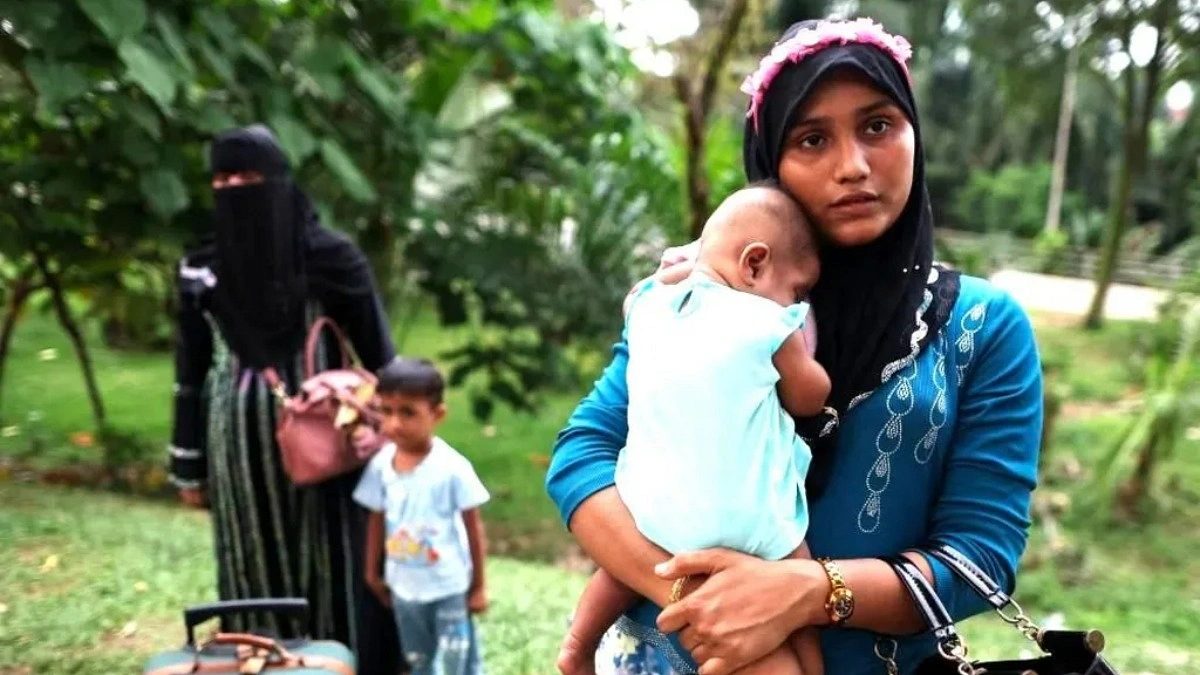
Photo: REUTERS
A bitter tide of animosity is surging across Malaysia, replacing the warm sympathy that once greeted stateless Rohingya refugees fleeing horrific persecution. This sudden shift marks a stark departure from the stance of previous national leaders.
In 2017, then-prime minister Najib Razak supported their cause during a passionate address, urging the public to stand by the displaced minority. “We must defend them, not just because they are of the same faith, but [because] they are humans, their lives have value,” Razak declared.
Nine years later, however, a harsh reality has set in as hostile sentiments sweep the Southeast Asian nation. This growing animosity directly threatens the safety and education of the youngest refugees.
Irhan, a Rohingya refugee who operates a small community school in northern Malaysia for children aged six to fifteen, paints a bleak picture of the current atmosphere. “Going to school has become a dangerous thing,” Irhan reveals.
A crumbling sanctuary
Because the Malaysian government bars Rohingya youth from accessing public education, the community relies entirely on unofficial, locally run learning spaces. These makeshift centers now find themselves squarely in the crosshairs of law enforcement.
Last month, eight officers in uniform abruptly raided Irhan’s school, taking photos of frightened children and ordering several of them to leave immediately. “The students are just here to learn. Now their families are afraid,” Irhan says.
Similar anxiety forced another school in Selangor to halt its operations for an entire month. When classes finally resumed at the end of July, administrators issued strict security guidelines. Children must now travel without uniforms and return home immediately after lessons instead of gathering in groups.
Rohingya educator Farooq explains their defensive strategy, “We’re keeping a low profile to protect our students from getting attacked.”
This pervasive fear, sparked by irregular crackdowns and volatile public mood, has shut down several refugee schools. In multiple regions, locals have evicted Rohingya families from long-term settlements, claiming their presence breeds social issues.
Following one such eviction near Penang, roughly 120 displaced refugees sought refuge outside the United Nations High Commissioner for Refugees (UNHCR) headquarters in Kuala Lumpur, only for authorities to temporarily detain them. More than half of those detained were children.
These developments have forced a highly vulnerable population to live in constant apprehension. “In the early years, the Malaysians were our friends. They cared for our children. But it’s changed,” Irhan notes. Facing a world with no safe haven, he adds, “I would leave if I could, but where else can I go? We are not wanted anywhere.”
Fueled by digital xenophobia
According to official figures from the UN refugee agency, Malaysia currently hosts over 126,000 Rohingya, representing the second-largest refugee population after Bangladesh. However, advocacy groups assert that the actual figure is significantly higher.
Denied citizenship in Myanmar - where successive governments have labeled them illegal immigrants despite their centuries-old roots in Rakhine State - the Muslim minority has endured decades of systemic discrimination and sporadic communal violence. A massive military crackdown in August 2017, marked by widespread massacres, sexual violence, and arson, forced over one million Rohingya to seek safety in overcrowded camps in Bangladesh.
United Nations termed the atrocities “textbook ethnic cleansing,” while the administration of former US President Joe Biden formally classified the actions as a genocide. Myanmar now faces legal proceedings at the International Court of Justice, where the country’s deposed leader, Aung San Suu Kyi, previously testified.
During her tenure, international observers criticized her for downplaying the military’s violent campaign.
Facing deteriorating conditions in Bangladesh, thousands of Rohingya embarked on dangerous sea voyages across the Andaman Sea on cramped fishing boats, with many drowning along the way.
Though Malaysia does not officially recognize asylum seekers, depriving them of legal rights to housing, employment, and education, the Muslim-majority nation historically represented a beacon of economic hope.
However, local hospitality dissolved during the COVID-19 pandemic, when online narratives blamed refugees for spreading the virus and taking local jobs. This year, online misinformation has reignited that hostility with newfound fervor. In May, viral social media posts falsely accused refugees of improperly handling animal remains during Eid al-Adha.
The online outcry quickly escalated into fabricated rumors that the Rohingya were demanding citizenship and trying to seize political control of the country. A digital petition demanding their immediate removal gathered over 420,000 signatures before human rights groups successfully campaigned to take it down.
Karim, a 45-year-old Rohingya activist living in Penang, recalls a much friendlier era when he arrived in 2003. “Life as a refugee is tough. It’s disappointing to be stuck working in construction all these years. However, I found Malaysians to be very friendly and kind, which made feel safe,” Karim says.
Today, that sense of security has vanished. “Now, however, life has become increasingly difficult. I am often afraid to go outside. I’ve been asked several times while on my commute, ‘Why are you making a mess of our city? Why don’t you go back?” he explains.
No way forward, no path back
While most Rohingya express a strong desire to return home, Myanmar’s ongoing civil war makes repatriation deadly. The fierce conflict between the military junta and the Arakan Army has devastated Rakhine State.
Returning refugees face the threat of forced conscription into the junta’s army or direct targeting by rebel forces. On Tuesday, UN High Commissioner for Human Rights Volker Türk highlighted a new report showing that the plight of Myanmar’s minorities has reached an all-time low.
Rohingya are “suffering misery and cruelty on multiple levels and across the country that is heartbreaking” Türk stated.
Meanwhile, Malaysia no longer offers the safe harbor they envisioned, as rising living costs turn the stateless population into convenient scapegoats. “I’m not saying that all Rohingya are good. There are good and bad people in every community. So why should a few individuals’ actions be used to typecast a whole community?” Farooq asks.
He adds, “I escaped the genocide in Myanmar hoping to find safety. Instead, many Rohingya today continue to live with fear of simply being who we are.”
In a campaign address in July, Prime Minister Anwar Ibrahim announced that Myanmar had agreed to take back 5,000 refugees, citing cooperative bilateral ties.
However, he issued a stern warning to the community, “This is our country. Malaysia is our country. Let no one else interfere.” This hostile rhetoric has permeated mainstream politics. Nurulhidayah Zahid, daughter of Deputy Prime Minister Ahmad Zahid Hamidi, drew heavy criticism after comparing the refugees to wild animals on social media. “Enough of using religious and humanitarian sentiments. Do good in moderation. Don’t let the monkeys in the forest be fed, [while] the children at home die of hunger,” she wrote on Threads.
Similarly, former deputy police chief Ayob Khan Mydin Pitchay labeled the refugee influx a “cancer”.
As Malaysia approaches its next general election - which must occur before February 2028 - analysts expect this political pressure to intensify. “[Refugees and migrants] are once again being turned into convenient political scapegoats to divert attention from deeper domestic challenges,” warns Yap Lay Sheng, a local researcher with Fortify Rights.
Yap points out the international contradiction: “For years, the Malaysian government has sought to present the country internationally as a humane and compassionate Muslim nation. Its treatment of the Rohingya exposes the hollowness of that claim.”
Amidst these geopolitical shifts, Irhan remains focused on his students’ immediate survival. “I don’t know where to get help, or who can get us registered as a school,” he confesses. “I hope the Malaysians can understand that the children just want an opportunity to learn.”
Source: BBC (adapted)


