
Tarique Rahman Meets Li Qiang in Beijing; 15 MoUs to Be Signed

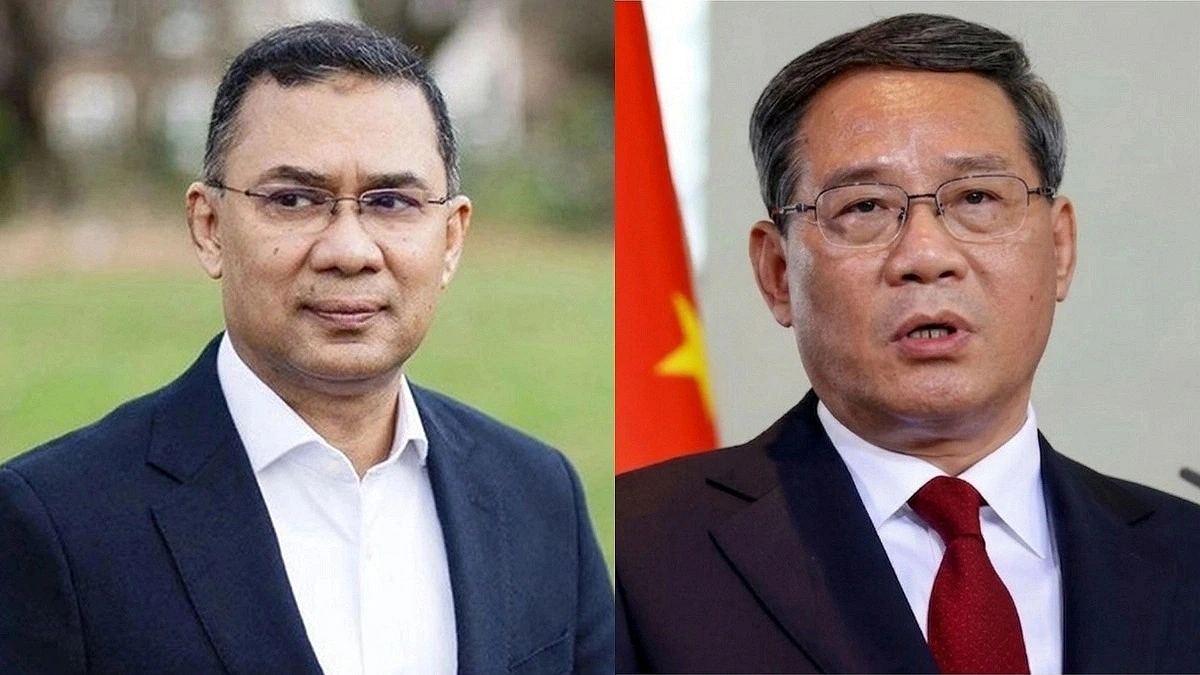
Prime Minister Tarique Rahman and Chinese Premier Li Qiang
Bangladesh Prime Minister Tarique Rahman and Chinese Premier Li Qiang held bilateral talks at the Great Hall of the People in Beijing on Thursday.
The meeting began at 5 pm local time. Following the talks, Bangladesh and China are expected to sign 15 memorandums of understanding (MoUs) covering cooperation in various sectors in the presence of the two prime ministers.
Speaking at a press briefing on Thursday, Prime Minister's Office spokesperson Mahdi Amin said the visit was being made at the invitation of the Chinese premier.
He said the objectives of the visit include strengthening Bangladesh's geopolitical and strategic position, maintaining a balanced foreign policy, increasing Chinese investment in Bangladesh, creating employment opportunities, expanding bilateral trade, enhancing people-to-people ties, and promoting cooperation in education, culture, information technology, healthcare and other areas of public interest.
Amin said the Chinese premier will host a state banquet in honor of Prime Minister Rahman and his delegation.
He also said Prime Minister Rahman is scheduled to meet Chinese President Xi Jinping at the historic Great Hall of the People at 10:30 am local time on Friday.
According to the PMO spokesperson, the prime minister will raise a range of issues related to Bangladesh's national interests during both meetings.
“We hope these discussions will produce positive outcomes that will further strengthen Bangladesh's development and progress,” Amin said.
Earlier on Thursday, Prime Minister Rahman met Chinese Minister of Water Resources Li Guoying.
During the meeting, the two sides agreed to expand cooperation on the Teesta Master Plan and a range of water-resource management issues, including flood-risk mitigation, river dredging, erosion control, irrigation and inland navigation development.
The Chinese minister expressed interest in working closely with Bangladesh in these areas and pledged support for research, training and institutional capacity-building initiatives.
