


76% acquittal rate plagues Dhaka CMM Court cases

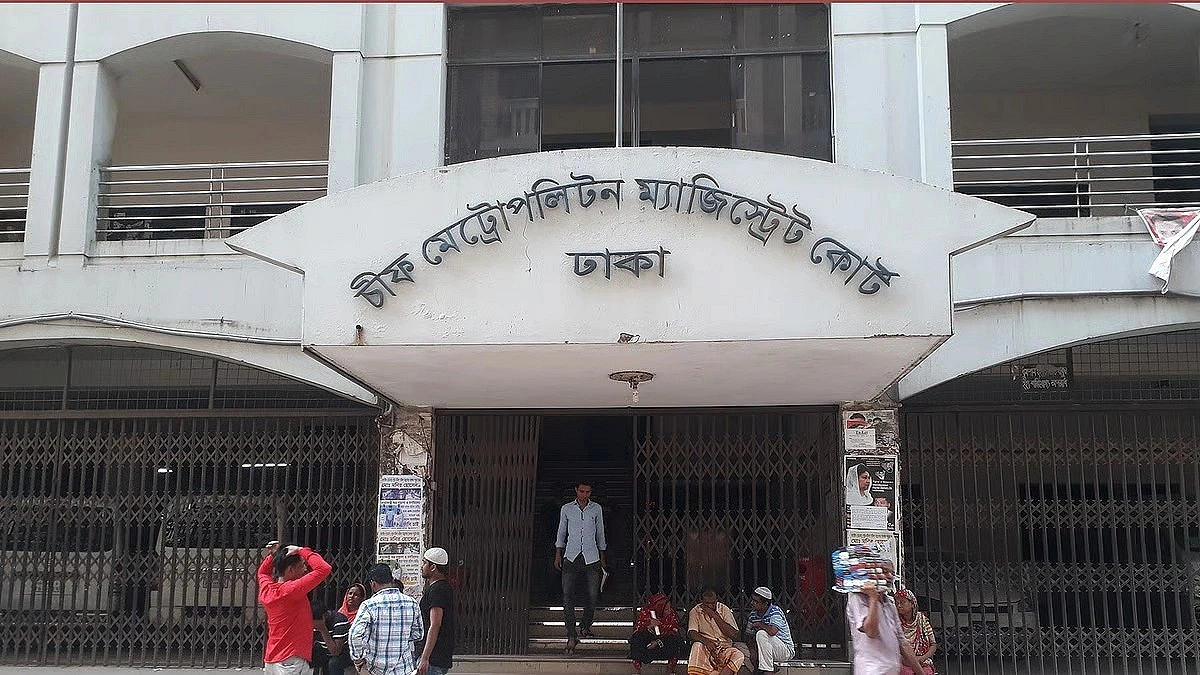
Photo: Agamir Somoy
In Dhaka Chief Metropolitan Magistrate (CMM) Court, among every 100 defendants whose cases are resolved by a verdict, 76 are ultimately acquitted, while only 24 are convicted.
This scenario has changed slightly in recent times. Compared to the final period of the Awami League government and the tenure of the interim government, the rate of convicted defendants has increased during the first six months of the BNP government.
Now the charges were proven against around 36 out of every 100 defendants, leading to their conviction.
These findings were obtained by analyzing data from 41,672 cases resolved in the CMM Court over a 47-month period from September 2022 to July 2026. A total of 41,915 individuals were accused in these cases, and following the trials, 31,807 defendants were acquitted, whereas 10,108 defendants were convicted.
This means that the charges against nearly 76 percent of the defendants could not be proven after the trial. An analysis of the case documents revealed various reasons why such a massive number of defendants are being acquitted despite investigators finding truth in the allegations during the inquiry.
In some instances, witnesses came to court and testified that they knew nothing about the incident. In other cases, only one witness out of multiple could be produced before the court. Other major factors contributing to the high acquittal rates include negligence in preserving evidence from the time of filing the case to the submission of the charge sheet, inconsistencies in forensic reports, a lack of digital evidence, weak investigations, and the failure to produce witnesses.
An example of this is a robbery case in Dhaka’s Jatrabari. On 27 July 2020, five members of a robber gang were arrested during a police drive. Following the investigation of the case, the police submitted a charge sheet in court on 28 December 2020.
The trial of the accused began on 17 August 2021, with the framing of charges. During the trial, four witnesses, including the plaintiff and the investigating officer, were produced in court. However, two of them testified that they knew nothing about the incident of the case.
Ultimately, noting that the prosecution had failed to prove the charges against the defendants beyond a reasonable doubt, the judge acquitted all five defendants on 4 May 2026. Many other such examples exist.
According to the data, 6,576 cases were resolved in the CMM Court during the first seven months of 2026. In these cases, there were 6,690 defendants, of whom 4,281 were acquitted and 2,409 were convicted.
Prior to this, 5,717 cases were resolved from September to December 2022, resulting in 1,030 convictions and 4,691 acquittals. In 2023, 11,470 cases were resolved, with 2,629 defendants convicted and 8,956 acquitted.
In 2024, 8,409 cases were resolved involving 8,418 defendants, of whom 1,920 were convicted and 6,479 were acquitted. In 2025, around 9,500 cases were resolved, and out of 9,520 defendants, 7,400 were acquitted and 2,120 were convicted.
Meanwhile, analyzing the 47-month data across the tenures of three different governments clearly highlights the differences in the rates of conviction and acquittal.
During the interim government’s 18-month tenure from August 2024 to January 2026, nearly 14,000 cases were resolved. There were 14,137 defendants in these cases, of whom 10,987 were acquitted and 3,150 were convicted, meaning the charges against 77.71 percent of the defendants could not be proven.
In contrast, during the first six months of the BNP government - from February to July - 5,582 cases were resolved involving 5,644 defendants. While 3,588 of them were acquitted, 2,056 defendants were convicted, meaning more than 36 percent of the defendants were convicted, which is higher than the rates under the previous two administrations.
During the last 23 months of the Awami League government - from September 2022 to July 2024 - 21,096 cases were resolved. Out of the 22,153 defendants involved, 17,232 were acquitted and 4,921 were convicted, meaning that charges against 77.79 percent of the defendants could not be proven.
An analysis of the acquitted cases and conversations with individuals revealed that if weaknesses exist from the very beginning of an investigation, it becomes difficult to sustain the case in court.
In many cases, evidence was not properly preserved, forensic reports contained discrepancies, and there was a deficit in collecting digital evidence. There are also allegations that some investigating officers submit nominal charge sheets without conducting a sufficient and effective investigation.
Moreover, the failure to properly record witness statements and the subsequent inability to produce them in court represent major problems. In some cases, a compromise or settlement is reached between the plaintiff and the accused. Many witnesses cannot be located later. Due to the immense backlog and pressure of cases, the prosecution is also unable to properly monitor every single case.
Exploiting these weaknesses, the defendants are ultimately acquitted as the charges against them are not proven beyond a reasonable doubt.
Former District and Sessions Judge Md Shahjahan Saju told Agamir Somoy, “About 80 percent of the cases in the country are false. And even in the case of the remaining 20 percent of cases, there are various weaknesses in the investigation. As a result, even in cases of genuine complaints, it is not possible to prove the crime in court, and the defendants get acquitted.”
He added, “No negligence can be allowed in the investigation. If necessary, the number of investigating officers must be increased. At the same time, effective initiatives must be taken to reduce the tendency of filing false cases.”
Dhaka Metropolitan Sessions Judge Court Public Prosecutor (PP) Omar Faruk Faruki said most of the under-trial cases of dowry and fraud in the CMM Court later go down the path of settlement through compromise. In many cases of drugs and robbery, floating people are made witnesses, who later can no longer be found or could not be produced in court.
He added, “Police must be more conscious in selecting witnesses. If possible, local and easily identifiable people should be made witnesses. Then it will be easy to produce witnesses during the trial and it will also be helpful in proving the charges.”


