

Rabies Threat Grows in Haor and Hill Areas

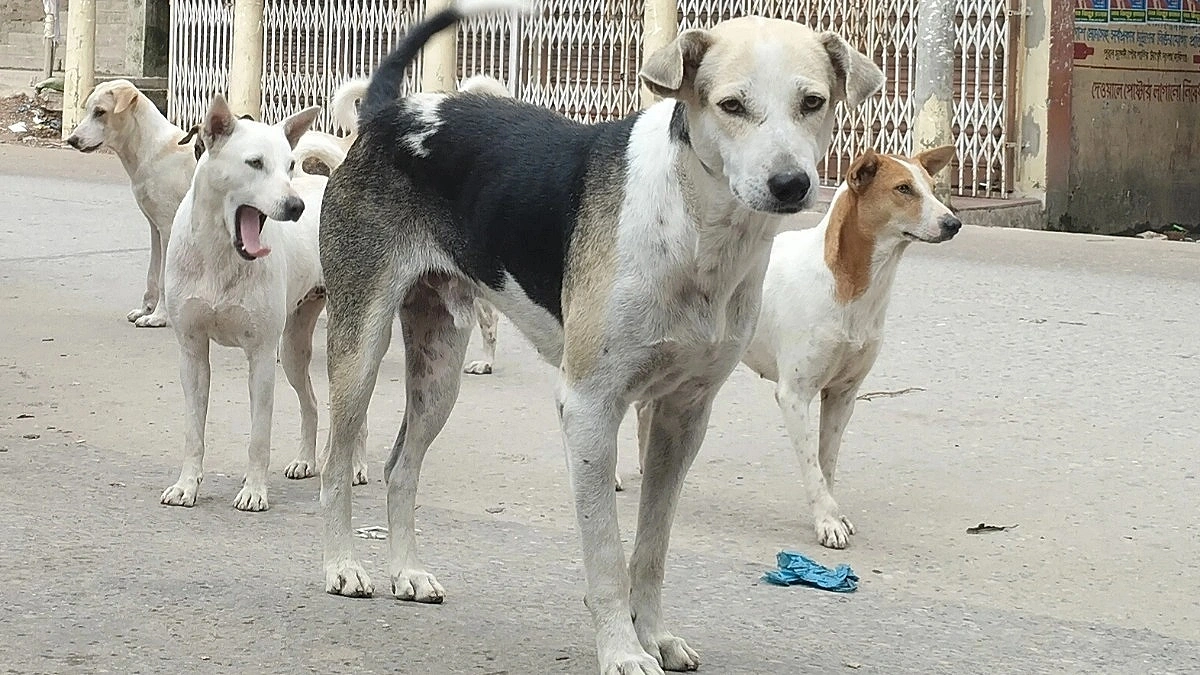
Photo: Agamir Somoy
As Bangladesh continues to grapple with a surge in measles-related child deaths, a new public health concern is emerging in the country's haor and hill regions: a shortage of rabies vaccines.
Patients bitten by stray dogs during the monsoon season are reportedly being turned away from government hospitals due to a lack of anti-rabies vaccines. Although official records show limited stocks are available, residents allege that vaccines are often unavailable when needed and are not being provided free of charge.
In Habiganj, the seven upazila health complexes require 10,680 vials, or 42,720 doses, of rabies vaccine this year. Official records indicate only 227 vials, equivalent to 904 doses, are in stock. However, patients and local residents say the vaccines are rarely available at hospitals, forcing them to purchase doses from private pharmacies.
Last week, Al Nahian, the son of graphic designer and media worker Nur Islam, was bitten by a stray cat and taken to Habiganj's 250-bed district hospital. Staff at the emergency department reportedly told the family that no rabies vaccine was available. Nur Islam said he later purchased a dose from a pharmacy for 500 taka.
Similar incidents were reported this week by schoolteacher Shamim Ahmed and resident Saifur Rahman Rimon, who said they were also forced to buy vaccines privately after bringing relatives to the hospital for treatment.
Shamim expressed frustration over the situation.
“Hospital staff initially exchanged gestures before telling us to buy the vaccine from outside,” he said. “I had no choice but to purchase it from a pharmacy.”
Hospital Superintendent Dr. Aminul Haque Sarkar said rabies vaccines are distributed through the outpatient department rather than the emergency unit.
“If patients are being turned away, we will instruct emergency staff to keep vaccines available there as well,” he said.
The shortage is not limited to Habiganj Sadar. At Nabiganj Upazila Health Complex, the annual requirement is 1,200 vials. Although official records show 10 vials in stock, residents say vaccines are unavailable in practice.
Mithu Ahmed, a resident of Kamalpur village, recently criticized the situation on social media.
“Floodwaters surround our villages during the monsoon, and stray dogs often bite people, especially children,” he said. “Poor farmers go to hospitals but cannot get vaccines.”
According to Nabiganj Upazila Health and Family Planning Officer Dr. Abdus Samad, the facility has been without vaccine supplies for nearly a year. A fresh request for vaccines has recently been sent to the Civil Surgeon's Office.
The highest demand in the district is in Chunarughat, a tea-growing and hilly area, where 2,880 vials are needed. Official records show only 132 vials in stock.
Dr. Mozammel Hossain, the upazila health officer, said four to five dog-bite victims sometimes arrive at the hospital in a single day.
“Most of the victims are children from tea worker communities,” he said.
Other upazilas also face severe shortages. Baniachong and Ajmiriganj each have only 20 vials, Madhabpur has 10, Bahubal has 25 and Lakhai has 10. Yet annual demand in these areas ranges from 400 to 1,500 vials.
Rabies vaccines manufactured by Incepta and Popular Pharmaceuticals currently sell for about 500 taka per dose. Rabies immunoglobulin (RIG), required for severe exposures, costs about 1,000 taka. No district hospital in Habiganj currently has RIG in stock.
Residents say aggressive stray dogs have become a recurring problem during hot weather and the monsoon season. Early last year, more than 150 people were bitten by a rabid dog in Habiganj town, with 20 requiring hospitalization. On the same day, another 15 people were bitten by dogs in Madhabpur Upazila.
According to local pharmacist Jubayer Ahmed of Baniachang's Gyaningganj Bazaar, families frequently leave hospitals and come directly to pharmacies to purchase vaccines.
“Every year, more than a hundred people buy rabies vaccines from my shop and take them back to hospitals for administration,” he said.
Bahar Uddin, vice president of the local chapter of Citizens for Good Governance (SHUJAN), warned that the shortage poses a serious risk to low-income families.
“Many poor patients cannot afford to buy vaccines on their own,” he said. “Without timely treatment, they face the risk of dying from rabies.”
He added that stray dog attacks typically increase further during the Bengali month of Bhadra and warned that the disease could spread more widely if preventive measures are not taken soon.
Habiganj Civil Surgeon Dr. Ratnadeep Biswas said the shortage stems from a long-term disruption in vaccine supplies from the Directorate General of Health Services.
“As a result, we have been unable to distribute vaccines to upazila hospitals,” he said.
According to Biswas, the issue was recently discussed at a district commissioners' conference. Local authorities are now exploring options to purchase limited quantities of vaccine using development funds allocated to upazila administrations.
Medical experts warn that rabies remains one of the deadliest infectious diseases once symptoms appear.
Dr. Mukut Roy, an assistant professor at the Combined Military Hospital in Chattogram and a native of Habiganj, said rabies can be transmitted through bites or scratches from infected dogs, cats, foxes, bats and other animals. The virus may also spread if infected saliva comes into contact with open wounds or the eyes, nose or mouth.
“The virus gradually attacks the nervous system and brain,” he said. “Anyone bitten or scratched should immediately wash the affected area with soap and running water for at least 15 minutes and seek medical attention as quickly as possible.”
He stressed that patients with severe bites should receive rabies immunoglobulin when recommended by physicians and warned that treatment should never be delayed while waiting for symptoms to develop. “Once symptoms begin, rabies is almost always fatal,” Roy said.

