

China Dethrones US to Top the World's Fastest Supercomputer Ranking

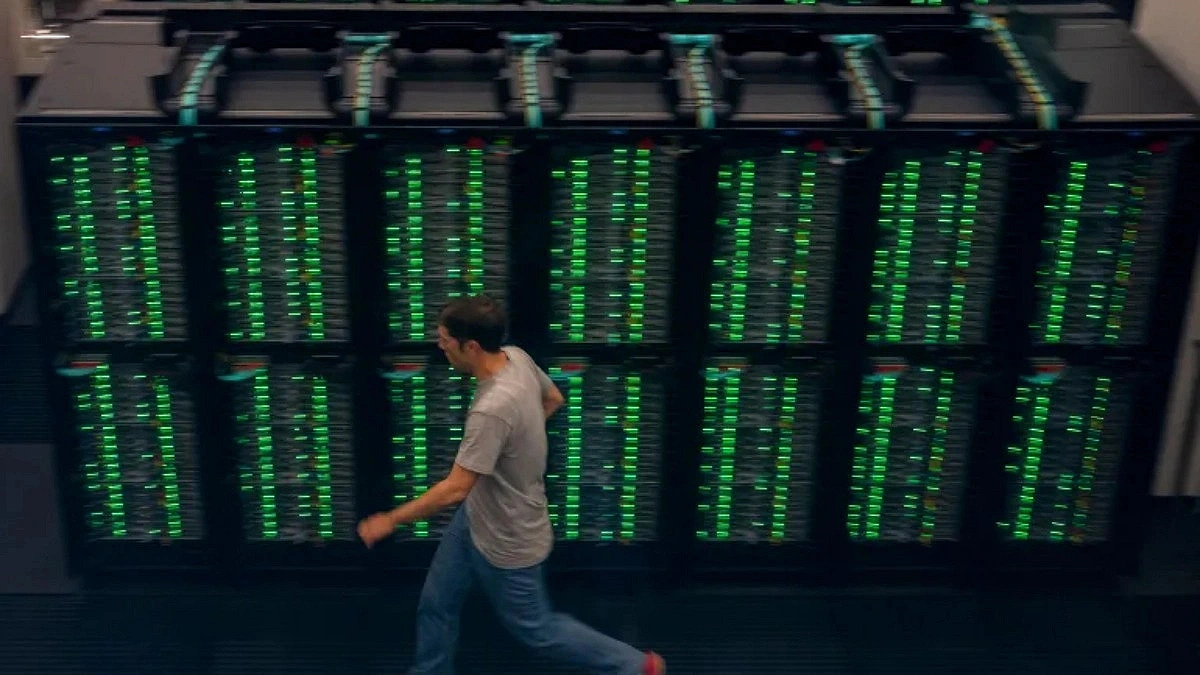
A worker walks past the Mare Nostrum 5 supercomputer at the Barcelona Supercomputing Center in Barcelona, Spain. Photo: Collected.
China has once again risen to the top of the list of the world's fastest supercomputers. In the new ranking, China's Linxing has overtaken the United States' El Capitan. This is being viewed in Beijing as a major success in the ongoing battle for technological supremacy.
This information comes from the latest edition of the world's top 500 supercomputers list, released on Tuesday local time in Hamburg, Germany.
Linxing, installed at the National Supercomputing Center in Shenzhen, China, achieved a performance of 2.198 exaflops. This means it is capable of performing over 2 quintillion calculations per second. According to the latest TOP500 list, its performance is approximately 20% higher than that of El Capitan.
This marks the first time since 2017, when China's Sunway TaihuLight held the top spot, that a Chinese supercomputer has returned to the number one position on the world's fastest computers list.
El Capitan, located at the Lawrence Livermore National Laboratory in California, USA, had held the top position since November 2024. In the latest ranking, it has dropped to second place.
In third place is the United States' 'Frontier' at the Oak Ridge National Laboratory in Tennessee. Following them are the US's 'Aurora' in fourth place and Germany's 'Jupiter' in fifth.
The top 20 list also features supercomputers from the United Kingdom, Japan, South Korea, Italy, the Netherlands, and Switzerland.
According to experts, the most notable feature of Linxing is that it is powered entirely by standard Central Processing Units (CPUs). Currently, most high-performance supercomputers and Artificial Intelligence models utilize Graphics Processing Units (GPUs).
According to TOP500 data, Linxing is the world's first and only supercomputer to achieve over 2 exaflops of performance using a solely CPU-based design.
This TOP500 list of the world's top supercomputers has been published twice a year since 1993. Computer scientists Erich Strohmaier and Hans Meuer were the first to compile the list.
The list evaluates supercomputer performance using the LINPACK benchmark. This measures how quickly a computer can solve complex mathematical equations.
However, in the age of artificial intelligence, many experts believe the significance of this ranking has diminished somewhat compared to the past. This is because the forefront of AI development is currently occupied by tech giants like Microsoft and Amazon, whereas most of the projects participating in the TOP500 list are government or academic initiatives.
Meanwhile, the competition between China and the United States over technological dominance is intensifying. To gain an edge in various strategic technologies, including artificial intelligence, both countries have been imposing a series of sanctions and export control measures against each other.
According to Stanford University's 2026 AI Index Report, China has effectively narrowed the capability gap with the United States in AI models.
The report states that while the US still leads in producing high-quality AI models, China holds a significant advantage in patent filings and the deployment of robots in factories.
Source: Al Jazeera

