
Venezuela Tremor: 'Sister, I thought we were going to die.'

Collected Photo
When an earthquake struck Caracas, the capital of Venezuela, a woman living in the United States received a WhatsApp message from her sister Veronica. The message read, “The houses are shaking terribly, it’s still shaking.”
Being in the United States, the woman had not yet fully grasped the situation in Caracas. After receiving the message, she repeatedly called her sister and her mother, who was with her, for the next two hours, but no one answered.
After some time, she learned about the earthquake from a chat group of journalists in Caracas.
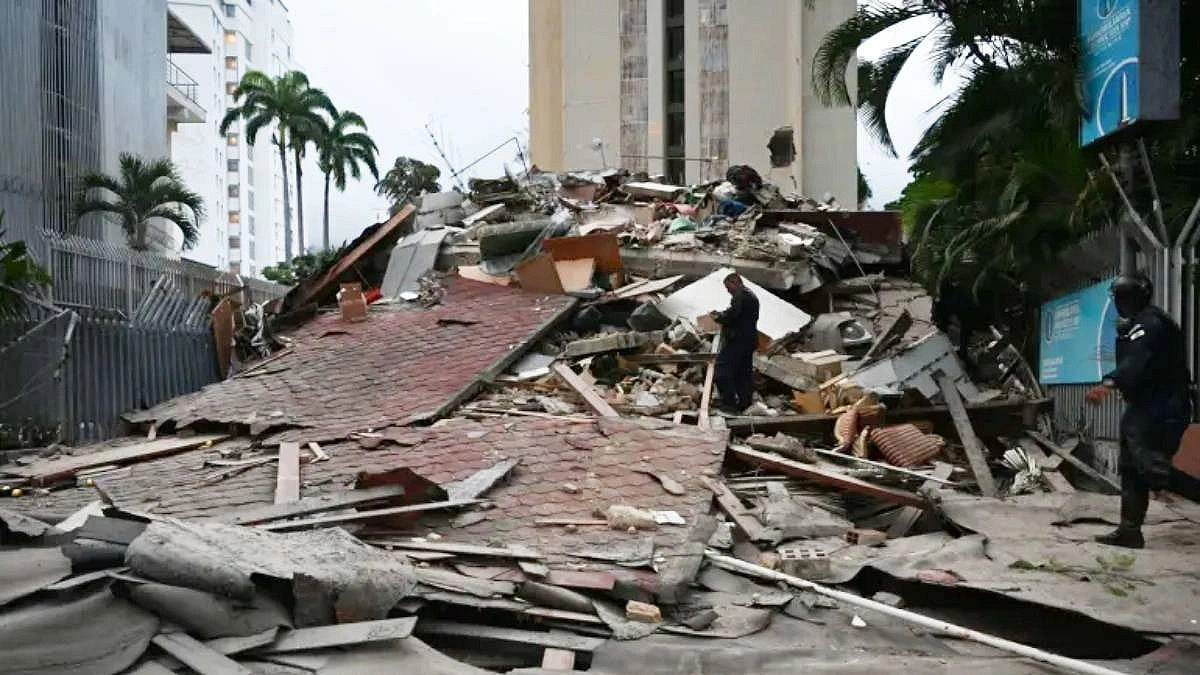
Soon afterward, a friend sent her a video clip showing a collapsed building in the Los Palos Grandes area of Caracas. In the video, buildings could be seen crumpling and collapsing. Watching it, she was overcome with fear, because the collapsed building was only a few meters away from where her mother and sister were located.
By then, a steady stream of updates about the damage in Caracas was arriving on her phone. Each update intensified her anxiety.
After two hours of extreme distress, she was finally able to make contact with Veronica. As soon as internet connectivity was restored in the area, Veronica called her.
On the phone, Veronica managed to say only this: “Sister, I thought we were going to die today.” Then the call disconnected.
According to local time, two powerful earthquakes struck Venezuela on Wednesday afternoon within less than a minute of each other. Following the tremors, a nationwide state of emergency was declared by the government led by President Delcy Rodríguez.
The British news outlet BBC reported that the first earthquake measured 7.2 in magnitude and had its epicenter in Carabobo state, about 20 kilometers from the capital, Caracas.
Just 39 seconds later, a second, stronger earthquake with a magnitude of 7.5 struck, according to the United States Geological Survey (USGS).
According to the USGS, the second major earthquake carries a high risk of widespread casualties and damage. It estimates a 44 percent probability that more than 10,000 people could die, and a 30 percent probability that fatalities could exceed 100,000.
Source: BBC
