

3,000 Patients Overwhelm 1,000 Bed Hospital

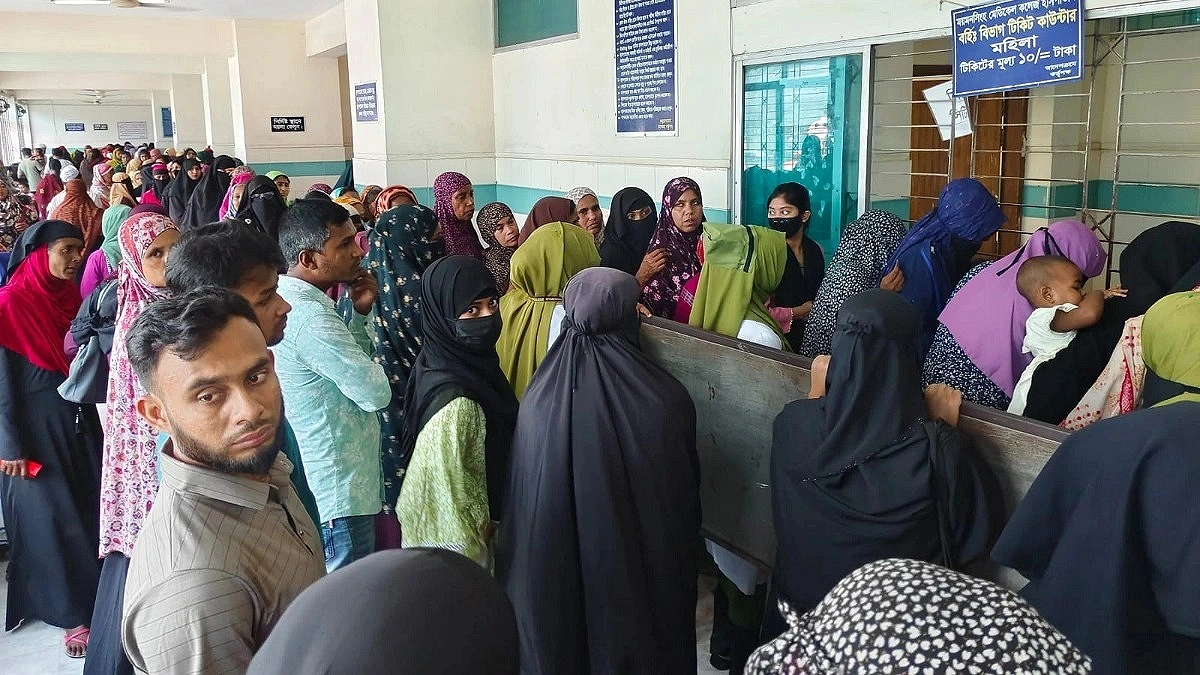
Photo: Agamir Somoy
Mymensingh Medical College Hospital is treating an average of 3,500 inpatients every day despite having a capacity of only 1,000 beds, leaving the facility overwhelmed and struggling to provide adequate care.
Hospital officials say the severe shortage of doctors, nurses, support staff and infrastructure has made it increasingly difficult to maintain the quality of medical services.
While patients and their families have complained about long delays and overcrowding, the hospital administration says meaningful improvements will not be possible without additional manpower and expanded facilities.
According to hospital officials, patients travel not only from the greater Mymensingh region but also from Gazipur, parts of Sunamganj and Rowmari in Kurigram district to seek treatment. The hospital's reputation for experienced physicians continues to attract patients, further increasing the burden on its limited resources.
Although the hospital has 1,000 authorized beds, an average of 3,500 patients remain admitted each day. Many approved staff positions have remained vacant for years despite the growing demand for healthcare services.
A visit to the medicine ward found patients occupying not only hospital beds but also floors and corridors. Crowded wards have left little room for movement, while long lines of patients and relatives were seen waiting for nursing care.
Hospital Service Supervisor Khadija Begum said the hospital has 1,197 approved nursing positions, but only 1,030 nurses are currently employed, leaving 167 vacancies.
She said each nurse works an eight-hour shift, but caring for more than 150 patients in a single ward makes it nearly impossible to provide timely attention to everyone.
“If a ward had only its designated 24 patients, the quality of care would be much better and nurses would not face such overwhelming pressure,” she said.
Cleanliness has also become a major concern. Patients and visitors reported foul odors and poor sanitation in wards, toilets, drainage systems and other parts of the hospital.
Hospital administrators said only 65 of the 135 approved sanitation worker positions are currently filled, leaving 70 vacancies. Because workers are divided into three shifts, only about 20 to 25 cleaners are available during each shift, making it difficult to keep the hospital clean.
The hospital also faces shortages among other support staff. Of 494 approved fourth-class employee positions, only 240 are filled, while 254 remain vacant. Overall, 405 positions remain unfilled out of 2,296 approved posts across all staff categories.
The shortage has forced many patients to receive treatment on the floor or in hallways while waiting for beds. In some cases, patients must be moved simply to allow hospital trolleys to pass through crowded corridors.
The outpatient department is under similar strain. Between 3,000 and 4,000 patients seek treatment there each day. Many wait at least 30 minutes to obtain registration tickets, followed by another 30 minutes to an hour before seeing a physician. Doctors often examine between 100 and 150 patients daily, with some seeing as many as 200 in a single day.
The overwhelming patient load has also delayed diagnostic services, including X-rays and ultrasound examinations, while administrative procedures have become increasingly difficult to complete on time.
Assistant Director (Administration) Dr. Mohammad Main Uddin Khan said hospital authorities have informed higher officials about the staffing shortages, overcrowding and infrastructure challenges. He said a proposal has been submitted to the government recommending construction of a new hospital building to help address the growing crisis.

