

Swiss Bank Deposits and the Story of Jeffrey Archer

Collected Photo
It is being said that Bangladeshis have deposited more money than ever in to the Swiss banks in 2025. After this news spread, there has been juicy discussion all around for the past few days.
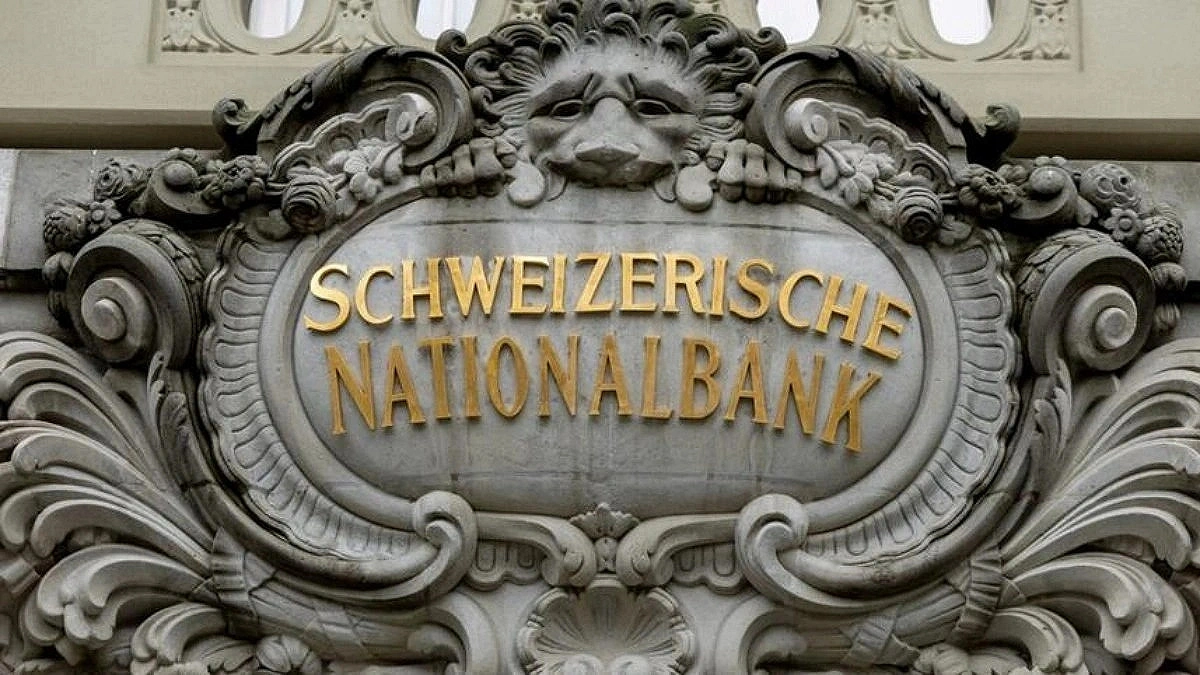
Every year, Swiss banks prepare a summary of their annual accounts. And every time, it creates an uproar in Bangladesh. But this time, the uproar is greater. Because according to the latest statistics from the Swiss National Bank (SNB), the central bank of Switzerland, deposits related to Bangladesh in Swiss banks increased by 41 percent in 2025. The amount is now said to be 834 million Swiss francs, which converted into Bangladeshi taka is approximately 12,700 crore taka. The previous year, 2024, also saw an increase, which was 33 percent.
This news has raised many eyebrows. For 2024, one could find a relatively easy explanation. The fugitive corrupt individuals from the Awami League government would naturally keep their laundered money in that safe haven. But the entire year of 2025 fell under the tenure of Dr. Yunus's interim government, whose primary task was to root out corruption and embezzlement within the country and to make arrangements to bring back money laundered abroad. How did a record deposit in Swiss banks occur during the Yunus era?
Whenever the topic of depositing money in Swiss banks comes up, I am reminded of a story by the popular British author Jeffrey Archer. The story, published in 1988, is titled 'Clean Sweep Ignatius'. I find many similarities between that story and our current situation. I had noticed a parallel once before, in 2006-07. Back then too, the One-Eleven caretaker government came in and took a tough stance against corruption.
Let me tell the story briefly. But before that, everyone should know one thing: the most attractive feature of keeping money in Swiss banks is that these banks enjoy legal protection to keep depositor information confidential. No state agency can ask for any information about any depositor. Even if they ask, the bank will not provide it. Not only that, the depositor's information is kept so secret that even the bank manager does not know the depositor's name or identity. Some code numbers are used instead of names, much like how a student's identity is kept hidden from the examiner in public examination answer sheets.
The events of Jeffrey Archer's story take place in the African country of Nigeria. There, government ministers are constantly accused of corruption and money laundering. Once, a cunning politician named Ignatius Agarbi took office as the Minister of Finance. Upon assuming power, he began a jihad against corruption. As soon as allegations of bribery arose, he started arresting low-ranking officials, peons, and orderlies and sending them to jail. Even senior police officers began to find handcuffs on their wrists.
Ignatius himself was a paragon of honesty. He did not take a salary from the government. No one in his family rode in government vehicles. He showed no arrogance of power anywhere. All around, people began to praise him with 'Bravo! Bravo!' He was given the name 'Clean Sweep Ignatius'. Even the country's top leadership was charmed by his integrity and resolve.
One day, President General Otobi called Ignatius and said, "Honorable Minister, vast amounts of money from bribes and corruption are still leaving the country! And they are ending up in Swiss banks. You do something. Find out who is depositing money there."
Minister Ignatius asked the President for special powers to investigate money laundering. He said he would embark on a difficult mission to uncover the ring of launderers. But for that, the entire mission had to be kept secret. It was so ordered.
The Minister of Finance prepared for several months without anyone's knowledge. He searched, searched, and searched. Then one day, leaving his family in the United States, he secretly set foot in Geneva, the capital of Switzerland, with a briefcase in hand. After spending the night in a hotel, he appeared early the next morning at one of the Swiss banks. At the reception desk, he said he wanted to meet the bank's chairman. The Nigerian Minister of Finance himself had arrived. The bank chairman rushed over and, with great hospitality, took the minister to his private chamber.
When the two were alone in the room, Minister Ignatius politely requested that he be given the list of names of all Nigerian citizens who had accounts in that bank. The bank chairman, maintaining the same courtesy, replied that he did not have the authority to do that. The minister then opened his briefcase and showed him a letter from the country's head of state. The President himself had requested this information. The bank chairman remained unyielding. He stated that maintaining client confidentiality was their supreme, inviolable policy.
This time, Ignatius changed his tone. He began issuing one diplomatic and economic threat after another in harsh language. That did not work either. The bank authorities would not bend in any way.
Now, what the reckless Ignatius did was unbelievable. He opened the compartment of his briefcase again. He took out a pistol. It was loaded. He pressed it against the chairman's jaw. If he did not provide the information, he would shoot and blow his head off. The chairman remained unwavering even then. Let his life go if it must. The bank would not deviate an inch from its policy.
The exhausted finance minister lowered the pistol. This time, he opened a secret compartment in his briefcase. Out came bundles of several million dollars in notes. He placed them on the table and told the bank chairman, "Here, now open an account in my name and deposit this money."
So, it turns out that Ignatius was actually testing how impenetrable the wall of Swiss bank secrecy really was. The tale of how Third World countries fall into the vicious cycle of corruption, and how those in power tasked with curbing corruption become the very engines of it, is all too familiar in our country as well.
Many see the news of this record increase in Swiss bank deposits as a clear sign of "Ignatius-like" behavior among the supposedly "clean" ministers of the Yunus government. On the other hand, those loyal to the Yunus government argue that this money actually belongs to the fugitive corrupt ministers and businessmen of the fallen Awami League government, which is being deposited in installments.
However, with a little inquiry, anyone can understand that there is no need for so much fuss over Bangladeshi deposits in Swiss banks. Because the fact that money belonging to Bangladeshis is in a Swiss bank account does not necessarily mean it is laundered money. Firstly, any expatriate Bangladeshi can legally open an account in a Swiss bank and deposit money earned through legitimate means there. Many do. Moreover, any Bangladeshi company involved in exports can legally keep money in Swiss banks as a retention quota account. Furthermore, many of the Swiss bank rules and regulations have already changed under pressure from the OECD, the United States, and the European Union. Swiss banks are now not as secretive as they were in the old days. To deposit money there now, one must show the bank authorities the legal source of those funds. Even if a foreigner keeps money there, they have to submit proof that the money came through legal channels and was not laundered.
For these reasons, there is little reason to immediately assume that any money seen in Swiss banks belonging to Bangladeshis is directly laundered money. The Swiss bank is turning into an old, obsolete myth.

