

Iran Strikes Ship in Strait of Hormuz

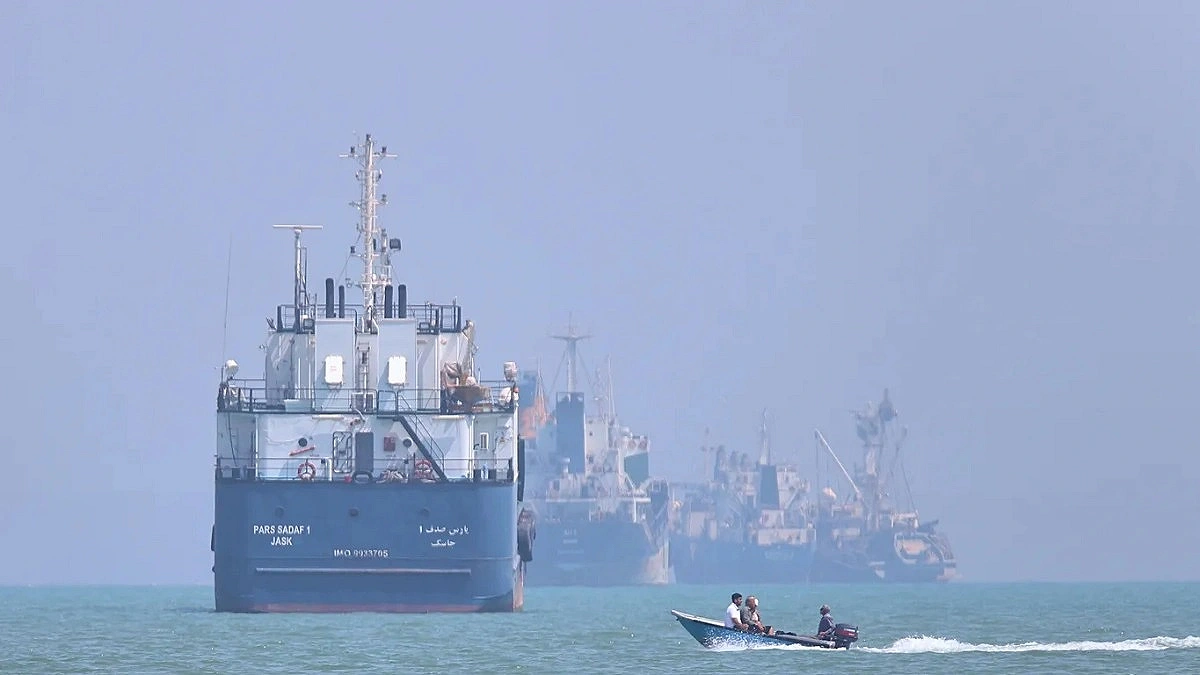
Collected Photo
Shipping through the Strait of Hormuz was thrown into turmoil on Thursday after Iran launched a drone strike on a commercial container ship, escalating tensions in one of the world’s most strategically important maritime corridors and casting doubt over recent efforts to restore safe navigation.
US and Iranian officials confirmed that the vessel was struck while transiting the strait, only hours after Iran warned that ships must use routes under its supervision. The attack disrupted the fragile recovery of maritime traffic following months of conflict and renewed concerns about the security of global energy supplies.
A US official, speaking on condition of anonymity, said the ship was hit by an Iranian drone. The United Kingdom Maritime Trade Operations (UKMTO), operated by the British Royal Navy, reported that an ‘unknown projectile’ struck a cargo vessel about 7.5 nautical miles southeast of Dahit, Oman, damaging the ship’s bridge. Maritime databases identified the vessel as the Ever Lovely, owned by Taiwan-based Evergreen Marine.
The attack forced the International Maritime Organization (IMO) to suspend plans to evacuate crews from hundreds of ships that had remained stranded in the Persian Gulf during the conflict.
Global energy markets reacted immediately. Brent crude oil prices climbed more than 2% to around $75 per barrel, while US benchmark West Texas Intermediate (WTI) crude also rose more than 2% to approximately $72 per barrel, reflecting investor concerns over possible disruptions to one of the world's busiest oil shipping lanes.
Earlier Thursday, Iran’s Islamic Revolutionary Guard Corps (IRGC) Navy warned commercial vessels that they must coordinate with Iranian naval authorities before passing through the strait. The warning appeared aimed at ships using routes closer to Oman’s territorial waters rather than Iranian-controlled channels.
“This route is unacceptable and extremely dangerous,” the IRGC Navy said in a statement carried by Iran’s Tasnim News Agency, adding that vessels failing to follow its instructions could face action.
The latest escalation has complicated ongoing diplomatic efforts between Washington and Tehran over maritime security and Iran’s nuclear program. US Secretary of State Marco Rubio met Gulf Arab leaders in Bahrain on Thursday, seeking to reassure regional allies that any future agreement with Iran would protect their security interests.
“We want to ensure that in any decisions made throughout this negotiating process, the interests of our partners and allies are always taken into account,” Rubio said. He also rejected Iran's assertion that it controls passage through the Strait of Hormuz, declaring that ‘international waterways do not belong to any nation state.’
Analysts say the attack highlights unresolved disagreements over who will oversee navigation through the strategic waterway. Iran has continued to insist that commercial shipping operate under its terms despite a recent framework peace agreement with the United States.
Maritime traffic had been steadily increasing this week after months of near-paralysis. According to maritime data firm Kpler, approximately 70 vessels, including 29 oil tankers, transited the strait on Wednesday, marking the busiest day since early March. Before the conflict, more than 130 ships typically passed through the waterway each day.
Major shipping companies continue to monitor the situation closely. Danish shipping giant Maersk said two of its vessels safely exited the Persian Gulf following extensive security assessments, while three additional ships remain in the region awaiting safe passage.
The latest attack underscores the continued vulnerability of one of the world’s most vital energy routes and raises fresh questions about whether diplomatic negotiations can prevent further military escalation in the Gulf.
Source: The New York Times (Adapted)

