

What this Indian state does to prevent old age loneliness

Collected Photo
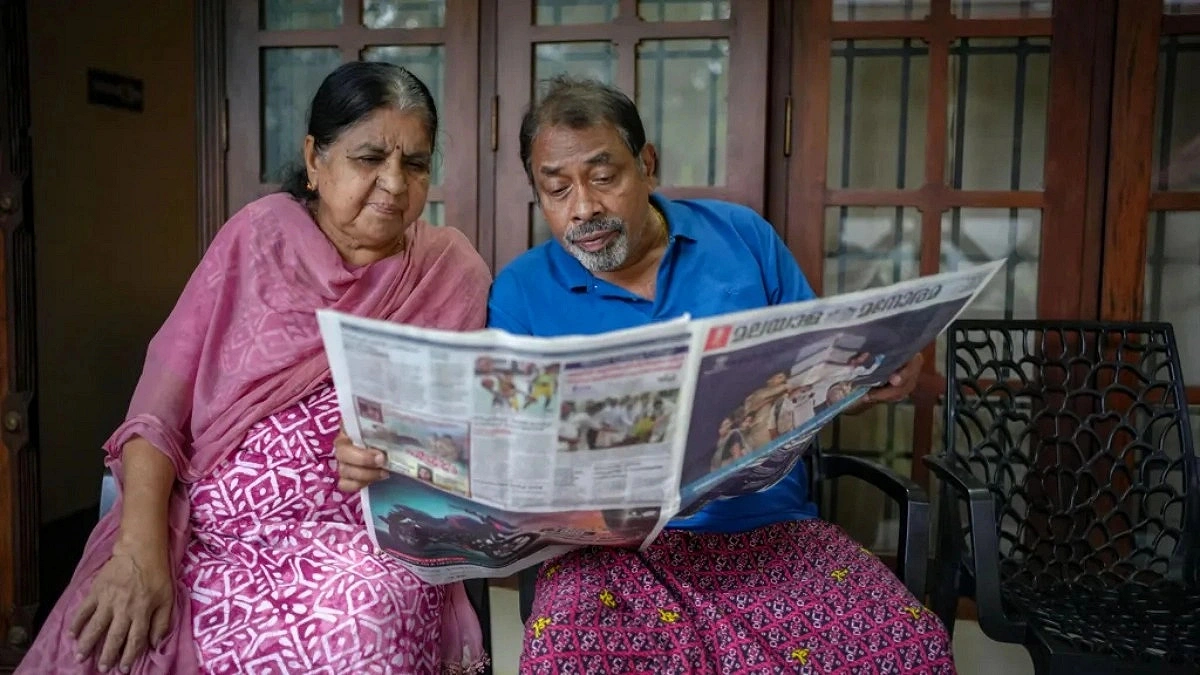
T.O. Dominic, a 70-year-old elderly man from Kerala, a southern state of India, begins each day with a phone call to his children. One of his sons lives in the neighboring state of Karnataka, while the other has moved far away to the Middle East. The sons left their home many years ago in search of better jobs, leaving Dominic and his wife, M.J. Martha, to manage everything on their own in their old age. Their phone conversations are usually limited to checking on each other's health and casual chats about the weather. But when the couple needs urgent help at home, their sons living abroad simply cannot provide it.
These days, this scene of loneliness is increasingly common in homes across Kerala. The state has now become the fastest-aging region in India, where a growing number of elderly people are spending their days completely alone due to the migration of their children. To address this major social issue, the Kerala government last month announced the creation of a completely separate and dedicated department for senior welfare. Officials say this is the first-of-its-kind initiative in India aimed at tackling these new challenges of an aging population.
Sitting on the sofa in his silent house, Dominic laments that he now has to rely entirely on his neighbors for all his daily needs. The home that was once filled with the joyful noise of children is now often enveloped in a heavy silence. This mass migration of children leaving their elderly parents behind is gradually weakening the ancient tradition of the joint family system in Indian society.
Dr. Rathan Kelkar, the head of this new department, has stated that their core strategy revolves around "Aging in Place." This means helping the elderly stay in their own homes and familiar communities, rather than sending them to institutions or old-age homes. This master plan includes expanding community and home-based care services and introducing "Social Prescribing," which involves connecting senior citizens with various meaningful social activities. The state is also planning to launch a certified caregiver training program to build a professional workforce, as well as rapidly constructing parks, day-care centers, and fitness facilities specifically for the elderly.
Through a statewide survey of elderly citizens, they will create a long-term 'Silver Economy' roadmap.
Dr. Kelkar further stated, "Ageing is no longer just a general social welfare issue. It is intrinsically linked to healthcare, housing, transportation, local governance, technology, employment, security, financial services, and social life."
Among India's major states, Kerala has the highest proportion of elderly residents. According to a recent report by the Reserve Bank of India, by 2036, nearly one in four people in the state, or 22.8%, will be over 60 years old, compared to the national average of just 14.9%.
This aging population in the state reflects both social progress and migration. Improved healthcare, longer life expectancy, and lower birth rates have made it one of India's oldest states. On the other hand, the younger generation has migrated to the Middle East, Europe, and elsewhere for employment, often leaving their parents behind alone.
While remittances sent by expatriates significantly increase parents' income and standard of living, they have also created a new and growing challenge. Many elderly people are spending their final days hundreds of miles away from their children. For those living abroad, this separation always carries a heavy mental burden.
An IT professional working in Sydney, whose parents live in Kerala, expressed his helplessness, saying, "I send money home regularly, but financial support alone is never enough. Being physically present during critical moments—especially medical emergencies—or simply providing emotional support is something that money cannot replace." When his parents were ill, he had to rely on phone and video calls from thousands of kilometers away, which made him feel utterly helpless.
The Kerala government is currently striving hard to tackle this major challenge. However, the government does not have to start from scratch, as the state already has various welfare schemes, including pensions and caregiver support.
Kelkar, the head of the department, noted that previously the problem was that there was no single system or institutional structure to oversee all these good initiatives. As a result, coordinating between different sectors, identifying gaps, and making long-term plans for the future was not easy. Now, that work of coordination is being carried out.
However, Kelkar admits that infrastructure or services alone cannot solve all age-related problems. He stated that the major issue for the elderly in Kerala is loneliness and isolation.
To address this, their new department is considering forming volunteer teams and launching various social programs. Their primary goal is that no elderly person in Kerala should feel alone or abandoned, regardless of where their children are in the world.
Doctors say that the fear of growing old alone is increasingly becoming common across the entire country. Due to losing a life partner or children living far away, many elderly people in the country are now alone. They are haunted by fears such as who will take them to the hospital if they suddenly fall ill in the middle of the night, or who will care for them in the future.
Moreover, India has a very limited number of specialist geriatric doctors to treat the elderly. As a result, the elderly are not receiving proper medical care. An integrated system, including day-care centers and social networks, is needed.
Alongside all these plans, questions remain in the public mind about whether this new department of Kerala has sufficient funding aligned with its ambitions. The state has allocated 100 million rupees (10 crore rupees) for elderly welfare this year—an amount that some have described as largely "symbolic." According to the government, while this fund may seem small, its purpose is for initial coordination, launching pilot projects, and collecting data. They view it not as a temporary project, but as a long-term plan.
Some experts, however, feel that these policy measures alone are not enough. They point to the need for private facilities and their acceptance. Sriniwasan Govindaraj, CEO of 'Atulya Seniorcare,' which operates elderly housing facilities in Kerala and several other states, stated, "A properly regulated market for elderly care has still not developed. There are many small establishments and workers, but there are no uniform standards or quality benchmarks."
He further added that Kerala's elderly population will not only need welfare projects, but also a trusted and regulated service ecosystem that can support families who cannot afford the high costs of private facilities.
For 82-year-old retired scientist M.S.R. Dev, the question boils down to something simpler—whether elderly individuals remain connected to the world around them. He believes Kerala can learn from developed countries like Sweden, where community support systems greatly help the elderly stay active and independent.
He said, "Communication and association are extremely important for the elderly. Not just food or healthcare; as social beings, humans desperately need spaces to connect with one another."
Back in their own home, Dominic and Martha, however, are not waiting for government policies to take effect at all. They rely on their neighbors, just as they always have.
According to Martha, what they want is not complicated at all—simply someone to call who can actually rush over in times of need. In a state where families are often separated by vast oceans and time zones, we will have to wait a bit longer to see if Kerala's new department can provide this kind of emotional and social support.
(Source: BBC)