

Fur Babies Replace Infants as Japan’s Pet Industry Booms

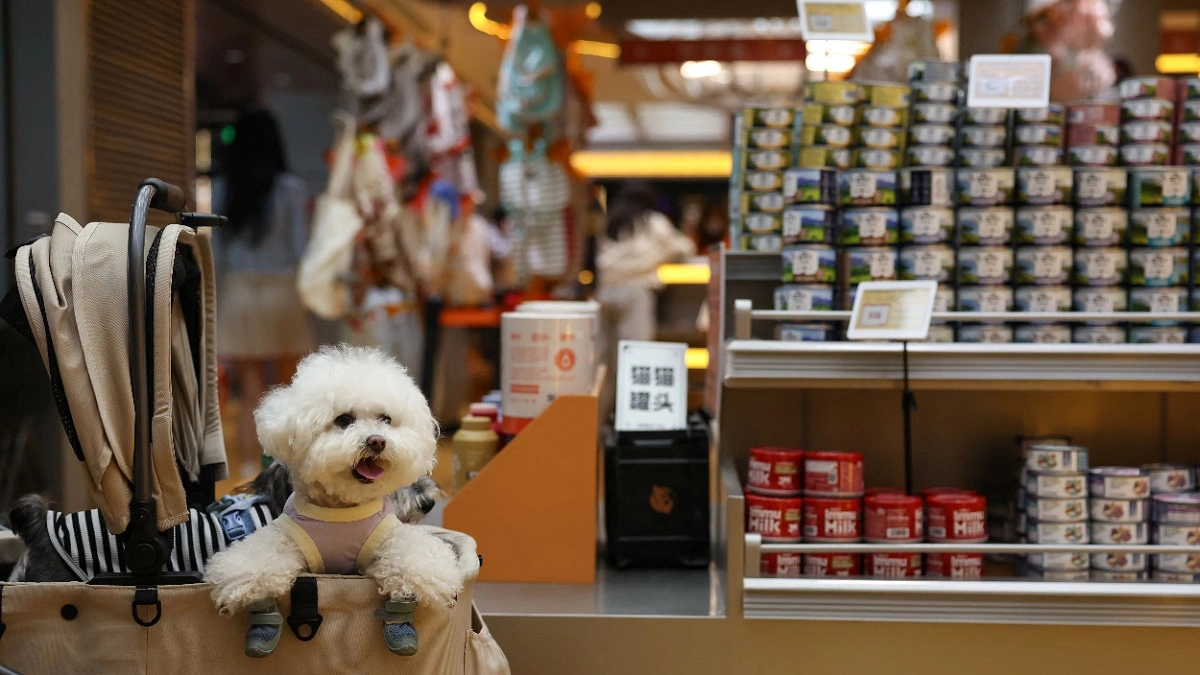
Photo: REUTERS
In a country where the cries of newborns are becoming increasingly rare, a different kind of nursery industry is exploding.
As Japan’s birthrate continues its historic decline, companies that once built empires on strollers, diapers, and baby carriers are now aggressively pivoting toward a new, more lucrative demographic: fur babies.
The shift is visible in parks across the nation. While walking his toy poodle near his home in Ikeda, Gifu Prefecture, Shin Ohta realized the physical toll of his pet’s aging. “My dog often stops walking during our strolls. I would carry him every time, but his weight of nearly 5kg [11lbs] started to become a real burden,” Ohta said.
Ohta is not just any pet owner; he works in sales for Lucky Industries, Japan’s oldest manufacturer of baby carriers. Since its founding in 1934, the firm has produced over 40 million carriers for infants.
However, Ohta’s personal struggle sparked a corporate revelation. After consulting with a veterinarian to ensure the design was safe for canine anatomy, he helped Lucky Industries launch Nu-i in 2022 - a specialized line of dog hip carriers.
From Baby Slings to High-End Dog Strollers
The magnitude of this market shift was on full display at Tokyo’s annual Interpets conference held at the Big Sight convention center.
During the first weekend of April, the venue was packed with brands showcasing the latest in pet humanization. Attendees did not just see leashes; they saw stalls selling walk-in pet dryers, organic cat treats, and elaborate doggy versions of baby slings.
Many pets at the event were treated more like toddlers than animals, sporting colorful outfits, fur clips, and even diapers. Market data underscores this obsession. According to the market intelligence firm Euromonitor, Japan’s pet care market surged to 880 billion yen ($5.4 billion) in 2025, a significant jump from 689.6 billion yen ($4.2 billion) in 2020.
As the population of children shrinks, businesses are following the money. Lucky Industries CEO Hiroyuki Higuchi noted that the company’s pivot was born out of necessity.
“When the company started, Japanese families had many children, and mothers needed carriers to be able to work around the house,” Higuchi said. Today, however, the landscape has changed. National surveys on fertility trends show that between 2002 and 2021, the percentage of households with only one child nearly doubled, rising from 10 percent to almost 20 percent.
Higuchi added, “Compared to the baby goods market, the pet sector is doing better. Companies see it as a reliable sector… In Japan, dogs are seen as babies, as part of the family. Just like many Japanese carry their babies in slings or carriers, so can dog owners.”
Higher Profits in Pet Diapers than Human Care
The financial incentive for this transition is stark. Unicharm, a Tokyo-based giant known for feminine hygiene products and disposable diapers, has become a pioneer in the pet care boom. After launching its first pet diapers in 2001, the company recently debuted its “Mannerware” line at the Interpets conference.
While the market for human personal care remains larger in volume, the pet sector offers far more attractive returns. Unicharm’s financial results for 2025 revealed a profit margin of 15.4 percent in its pet care division, significantly higher than the 10.7 percent margin seen in human personal care.
Isshu Uehara, a spokesperson for Unicharm, explained that the pet business now accounts for 17 percent of the company’s total sales. They aim to push that figure to 20 percent by 2030. “Japan’s birthrate is declining,” Uehara said.
“Lifestyle changes, such as remaining single, marrying late, and the growth of childless, dual-income households, have led to a greater number of people seeking emotional connections through pets.”
This trend, known as pet humanization, means customers are no longer looking for basic supplies. Uehara noted, “Customers want to buy premium products to extend pets’ lifetimes, and share experiences with them, like dining together or going out to cafes and friends’ houses.”
Other major brands like AirBuggy (strollers) and Sweet Mommy (clothing) have made similar leaps, repurposing their expertise in infant care to cater to four-legged family members.
The Rise of the Multi-Species Family
Sociologists argue that the phenomenon goes deeper than just corporate profit. Barbara Holthus, director of the German Institute of Japan Studies, suggests that the concentration of focus on animals is a direct result of shrinking human families.
“Before, a dog or cat might have just been an additional family member, but with fewer other family members and fewer children in the house, the focus becomes very concentrated on this animal,” Holthus explained.
She described Japan as a leading example of the “multi-species family,” where pets take on diverse roles - sometimes replacing a child, a partner after a divorce, or providing companionship for the widowed.
In a society grappling with loneliness and intense urbanization, the emotional bond with a pet provides a vital connection. For companies like Lucky Industries, the shift is a survival strategy.
Shin Ohta summed up the new reality: “With fewer babies around, it has been harder to come up with new ideas for baby products. Now, my life is centered around my dogs, as are the lives of many of my friends. When we meet up, we talk about our pets”.
As Holthus noted, the corporate logic is simple: “Of course, companies want to make money, and due to demographic change, their market is getting lost”. In modern Japan, it seems the sound of strollers on the sidewalk is more likely to be accompanied by a bark than a cry.
Source: Al Jazeera (adapted)

