Argentina-England rivalry generates red and yellow card system

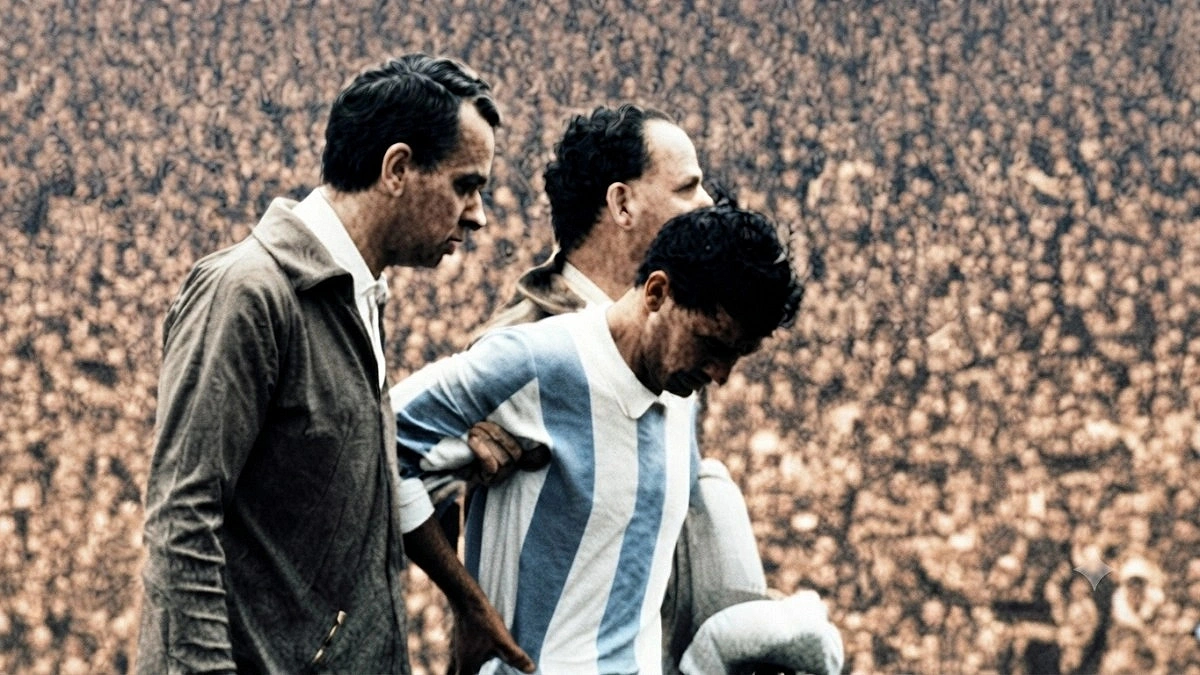
Antonio Rattin's Infamous Exit in the 1966 World Cup Match. The image quality has been enhanced using AI.
Red and yellow cards are now an inseparable part of modern football. At the slightest infringement, referees reach into their pockets to issue a caution or a dismissal. Few, however, know that the card system was born out of one of the most controversial matches in World Cup history—between Argentina and England.
The two sides will meet again in the 2026 FIFA World Cup semi-final on Wednesday, making it the perfect time to revisit the historic encounter that changed the Laws of the Game forever.
Argentina and England have faced each other several times over the years, but it was their quarter-final clash at Wembley during the 1966 FIFA World Cup that left a lasting impact on football. At the centre of the controversy was the late former Argentina captain Antonio Rattin. In tribute to Rattin, Argentina wore black armbands during their quarter-final victory over Switzerland following his recent death.
The incident unfolded in the 34th minute of the match when German referee Rudolf Kreitlein ordered Rattin off for dissent. Because of the language barrier, Rattin refused to leave the pitch, insisting he had not understood the referee's decision. The situation quickly descended into chaos.
As he finally walked off the field, an angry Rattin famously bent and damaged the England corner flag. The drama did not end there. Once off the pitch, he sat down on the red carpet reserved for Queen Elizabeth II, further inflaming tensions.
England manager Alf Ramsey later described the Argentine players as "animals," a remark that intensified the football rivalry between the two nations for decades.
The controversy exposed a major problem in international football: players often failed to understand referees' verbal instructions because of language differences. FIFA recognised the need for a universal, visual method of communicating disciplinary decisions.
The solution came from Kenneth George Aston, chairman of FIFA's Referees Committee. Inspired by traffic lights, he proposed a simple system using yellow and red cards—yellow as a warning and red as an immediate dismissal.
The card system was officially introduced at the 1970 FIFA World Cup. Today, every yellow and red card shown by a referee is more than just a disciplinary tool—it is a lasting reminder of the chaotic afternoon at Wembley in 1966 that transformed football forever.