


Nepal flood kills 903, thousands trapped in tunnels

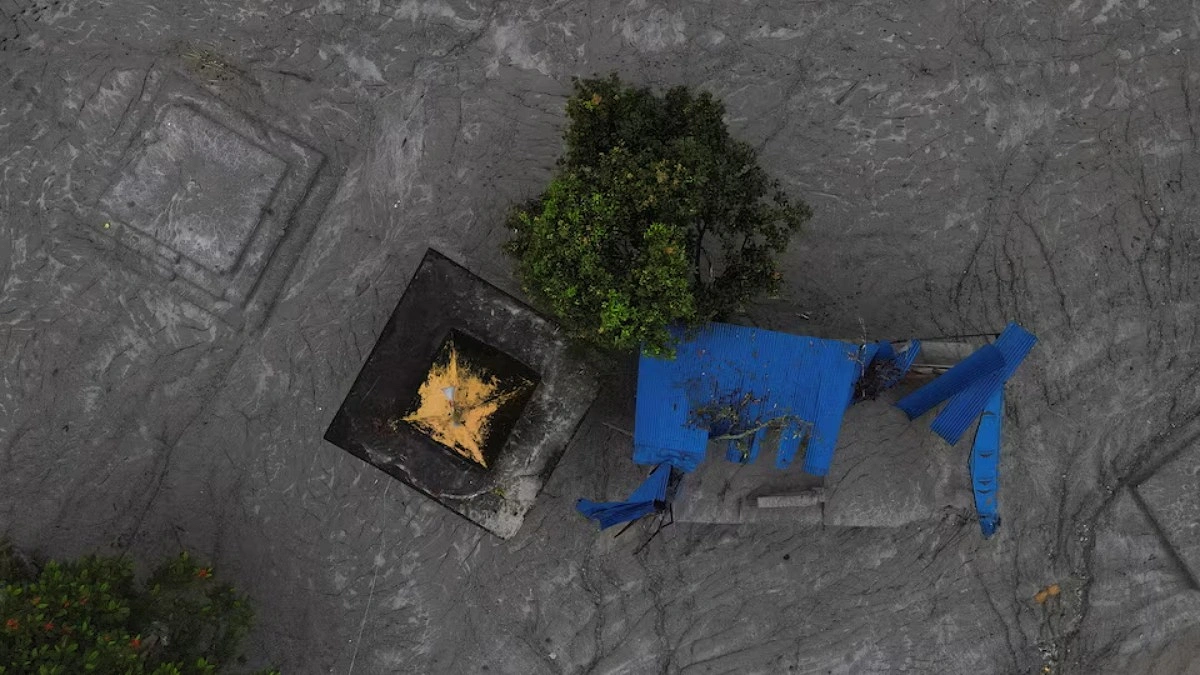
Photo: REUTERS
Nepalese rescue teams, with support from Indian and Chinese experts, struggled to save hundreds of workers trapped inside blocked hydropower project tunnels.
The devastating Himalayan flood, which originated at the Nepal-Tibet border on 26 August, swept through valley towns and villages, leaving behind a trail of catastrophic destruction on both sides of the frontier. Officials attribute the unprecedented deluge of ice, rock, mud, and debris to a sudden glacier collapse.
National Disaster Risk Reduction & Management Authority (NDRRMA) said the disaster has killed 903 people, while more than 4,200 individuals remain missing on Monday.
Down in the humid plains, workers are burying hundreds of rapidly decomposing, unidentified bodies in shallow graves. Meanwhile, up in the mountains, responders are focusing their efforts on reaching laborers trapped within around six blocked power tunnels.
Rescuers are using heavy earth-moving machinery to dig through thick mud and rock piles under spotlight beams through the night, while soldiers search for entry points with flashlights.
NDRRMA reported that 933 people are missing from the affected hydropower sites alone. The Red Cross estimates that the tragedy has upended the lives of more than 90,000 residents. While China points to climate change as the driver, rescuers face massive blockages.
Nepal Army spokesperson Raja Ram Basnet told Reuters, “A large amount of debris has been deposited and that is posing us a big challenge to open the tunnels. Our main focus is on opening the tunnels.”
Prime Minister Balendra Shah characterized the deluge as an “unprecedented and devastating natural disaster” and acknowledged the extreme difficulty in assessing the full scale of the destruction.
In a late Sunday Facebook post, Shah declared, “Despite the adverse weather, difficult terrain and continuing risks, we are moving forward with determination to save the lives of our citizens,” noting that nearly 21,000 security personnel, alongside civilian workers and volunteers, are spearheading the operation.
By Sunday night, Nepalese officials confirmed 788 deaths and 2,500 missing people, including the hydropower workers. Across the border, Chinese authorities reported 16 deaths and 546 missing persons in Gyirong County.
Moreover, Beijing announced that 261 foreign nationals representing 23 countries remain missing in Tibet near the main border crossing. To support relief, China mobilized over 2,100 rescue workers, allocated ¥ 220 million ($33 million), and deployed soldiers with life-detection equipment, while airdropping vital supplies.
Though Nepal generally declines external aid for search and rescue operations, the government specifically requested the specialized tunnel rescue expertise of India and China.
Fears of a worsening crisis have repeatedly halted operations since Friday. Rescuers paused work due to inclement weather and warnings that an overflowing border lake could unleash secondary floods.
However, weather conditions improved on Monday, allowing teams to accelerate their pace, according to Narendra Pariyar, the district administrator of the hard-hit Rasuwa district. Meanwhile, in the devastated pilgrimage town of Devighat on the banks of the swollen Trishuli River, survivors sifted through the ruins of their former homes to recover what few possessions they could salvage from the mud.
Chinese state broadcaster CCTV reported that the disaster stemmed from glacier instability driven by long-term global warming, classifying it as a new pattern of cryosphere hazards on the Tibetan plateau.
However, two unnamed Nepalese officials expressed frustration to Reuters, revealing that China had withheld critical data on glacier hazards and water levels despite a recent bilateral pact to enhance cooperation. They warned that this lack of data sharing could severely undermine future disaster preparedness.
China’s foreign ministry declined to comment on the matter. Experts noted the rapid speed of the disaster, with CCTV reporting that the mudslide took only six to seven minutes to strike the Gyirong border post, as worldwide surveillance footage captured terrifying moments of massive torrents of water and debris swallowing entire structures while desperate residents fled.
Source: Reuters and BBC (adapted)


