
FBCCI Administrator Says
'Avoid Traditional Industry, Seek Investment in Alternative Sectors'

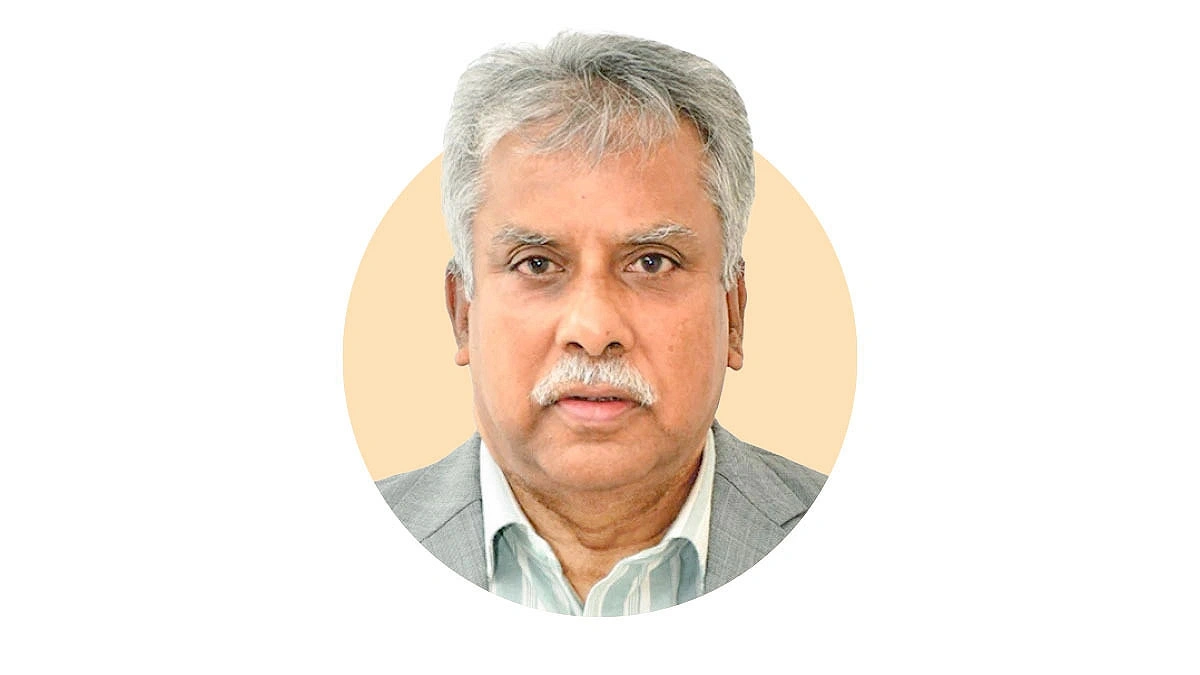
Md. Fazlul Haque, Administrator of the Federation of Bangladesh Chambers of Commerce and Industry.
Md. Fazlul Haque, Administrator of the Federation of Bangladesh Chambers of Commerce and Industry (FBCCI), has advised businesses to refrain from investing in traditional industries over the next two to three years and instead focus on alternative sectors. In an exclusive interview with Agamir Somoy, he spoke about the energy crisis, investment, inflation control, non-performing loans, and other issues. The interview was conducted by Business Editor Mizan Chowdhury.
Question: To achieve the target of a $1 trillion economy by 2034, investment's contribution to GDP must rise to 40%, compared to the current 29%. How realistic is it to bridge this gap in such a short time?
Fazlul Haque: It is a simple arithmetic that we need to sustain 10% GDP growth over the next seven to eight years. Ambitious targets are good because they create pressure to perform. Though it seems difficult in today's reality, it is not impossible. I firmly believe that if we can quickly overcome the current mess in the energy and banking sectors, reaching that desired goal is certainly achievable.
Question: During this time of energy crisis, what steps or decisions do you think should be taken over the next two years to accelerate investment?
Fazlul Haque: When we talk about investment, we only think of factories and industries. But setting up new factories amid the gas and electricity crisis would be reckless. So, for the next two to three years, instead of seeking investment in traditional industries, we should focus on alternative sectors—those that require less energy, such as solar power, IT, AI, the services sector, or bay terminals. Additionally, we must make alternative arrangements for coal extraction before coal use is banned globally.
Question: The government is offering various incentives and holding summits, but on the other hand, there is a gas and electricity shortage at home. In such a situation, will foreign investors come?
Fazlul Haque: Investment will not come just by holding investment summits. The industries that are currently suffering from gas and power shortages must first be ensured smooth operations. If existing investors can do business without hindrance, new investors will naturally gain confidence. From investment summits, we might get new contacts, but it is extremely important to follow up on a one-to-one basis afterward.
Question: Interest rates have been raised to control inflation, which is increasing business costs. How can investors invest with high interest rates? What is your view on this?
Fazlul Haque: High interest rates multiply business costs many times over, causing our traders to fall behind in international competition. Raising interest rates is not the only solution to control inflation. Our supply chain has many inefficiencies. If we can stop extortion in the transport sector and the dominance of middlemen from production in the villages to the hands of consumers, inflation can be brought under control quite easily.
Question: The banking sector is now burdened with a mountain of non-performing loans. If bank capital remains stuck, how will loans be available for new investment?
Fazlul Haque: Non-performing loans are a long-accumulated problem. Recovering money laundered abroad is a very time-consuming matter. However, for defaulters who are still in the country, the government has provided exit facilities or one-time interest waiver routes—despite bankers' objections to this, a consensus must be reached. Otherwise, the liquidity crisis in banks will not ease, and new lending will not be possible.
Question: What steps can be taken in the future to increase foreign investment or FDI?
Fazlul Haque: Providing land or electricity to foreign investors is not enough; we must ensure a completely safe environment for them. Providing security through police alone actually makes investors anxious—it is more important to make them feel safe. The red tape of Bangladesh Bank regarding the repatriation of profits to their home countries must also be eliminated. The current government's political stability is highly conducive to investment.
Question: The budget has offered various tax breaks for investment. But how effective will that be given the lack of policy reforms at the NBR?
Fazlul Haque: The tax breaks in the budget are a strong sign of the government's positive political will. However, there is a lack of sincerity among the bureaucracy or the NBR officials who will implement it. To make bureaucrats pro-business, politicians must increase their oversight over them.
Question: Recently, investment delegations from the United States and India have visited the country. What were your discussions with the Indian delegation during the meeting?
Fazlul Haque: The visit of the US delegation is a very good beginning. As for the Indian delegation, they proposed forming two excellent task forces. The first is to bring in domestic and foreign private funds for infrastructure development. The second is to identify investment opportunities in modern "sunrise industries" such as AI or semiconductors.
Question: Finally, what is your overall message regarding the country's overall investment climate?
Fazlul Haque: I am not pessimistic at all. We need to identify the ongoing crises precisely and address them separately. We must ensure that these temporary crises do not in any way harm other promising sectors of the economy.
