
Why images of floods in Nepal and Tibet are not being shown in China

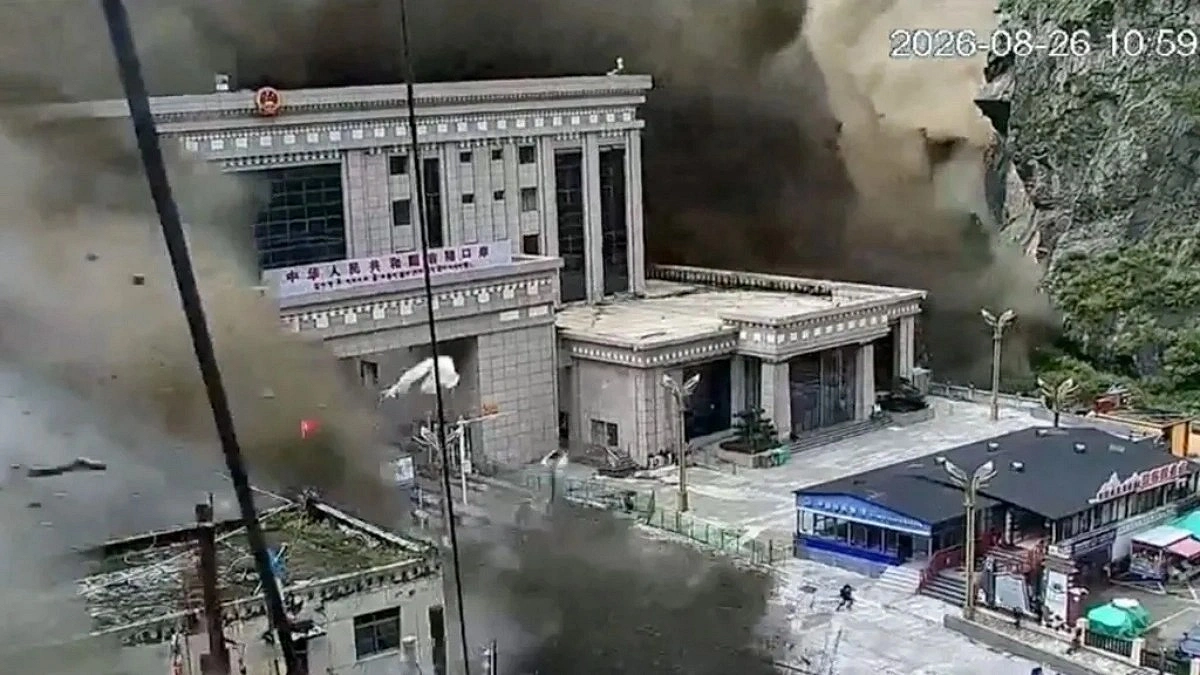
A powerful surge of water rushes through the Gyirong Port in Tibet. Photo: Reuters
At least 633 people have died so far in floods caused by Wednesday's glacial landslide in Nepal and Tibet. More than 2,000 people are still missing.
Many scenes of landslides and flooding were captured by CCTV cameras. They quickly spread across social media. People in different countries around the world are also watching these viral videos.
One of the videos is from Tibet. It shows a powerful surge of water rushing through Gyirong Port. Everything in its path is swept away. Hundreds of people are seen running to save their lives. Border security personnel are also rushing to safety.
But in China, most videos like this are hardly being seen.
Chinese state media has so far shown only one still image. Finding videos of the devastating floods is also difficult on the country's tightly controlled internet.
Even posts by ordinary people about the deaths and disappearances of hundreds of people in the floods are rarely being seen.
China is carrying out a major rescue operation. Hundreds of rescuers are working there. President Xi Jinping has also held an emergency meeting with officials.
However, what is visible on the Chinese internet is very different from the images spreading across other parts of the world. The floods in Tibet appear to have made China's strict internet controls even more apparent.
China took control of Tibet in the 1950s. Since then, protests against the rule of the Chinese Communist Party have taken place in the region at various times. These protests have been suppressed harshly. China has also been accused of human rights violations in Tibet.
Because of this history, even the name “Tibet” is subject to censorship in China. The situation becomes even more apparent when a major disaster occurs.
Chinese state media is reporting the number of deaths and missing people and rescue efforts every day. It is also reporting the risk of a reservoir created by the floods overflowing.
On Saturday, state media released several new videos. They showed rescuers searching for trapped people in areas covered with mud and rocks.
But beyond this, there is very little information. There are no accounts from survivors in Tibet. Videos recorded by ordinary people showing the devastating moments of the floods or the aftermath are also almost nonexistent.
There has also been little information from the relatives of those who are missing. Even during normal times, it is difficult to communicate with people in Tibet.
Foreign journalists are also not allowed to enter Tibet without government permission. As a result, after such a major disaster, it is necessary to gather as much information as possible within a very short period. Many videos are later removed and many people's accounts are no longer available.
As a result, people are largely having to rely on Chinese state media to learn about the situation in Tibet. The focus there is on dramatic scenes from the rescue operation.
Rescuers are climbing mountains and steep rock walls. They are also trying to cross raging rivers to reach affected areas. However, very little information is available about what happened afterward or how many people were rescued.
This does not mean that Beijing is unconcerned about the situation. Rather, China is deeply concerned about it.
Chinese Premier Li Qiang, the country's second highest ranking leader, quickly traveled to the affected area. He was seen inspecting efforts to clear debris.
Within hours of the floods, the local Communist Party office instructed its members to stand by the affected people. They were also told to provide psychological support.
However, the main message of the directive was to “make every effort to maintain social order and ensure stability and public confidence” in the affected areas.
Those who perform their duties well will be rewarded. There was also a warning that those who fail in their responsibilities would be held accountable.
Human rights activists claim that Tibetans could be detained or arrested for posting online anything that does not match the official account. As a result, even relatives living outside Tibet are finding it difficult to learn what has happened there.
The International Campaign for Tibet praised rescuers working in the affected areas but accused Chinese authorities of removing videos and important information from social media. The organization called for the publication of “complete and verifiable information” about casualties and damage.
China denies allegations of violating the rights of Tibetans. The country says it has made major investments in Tibet to increase tourism and further integrate the region with the rest of the country.
However, the devastating floods now taking place in Tibet are making it increasingly clear that ordinary people inside China may not be able to learn much about the true picture of what is happening there.
Source: BBC (Adapted)
