


US, Iran trade strikes as MQ-9 Reaper shot down

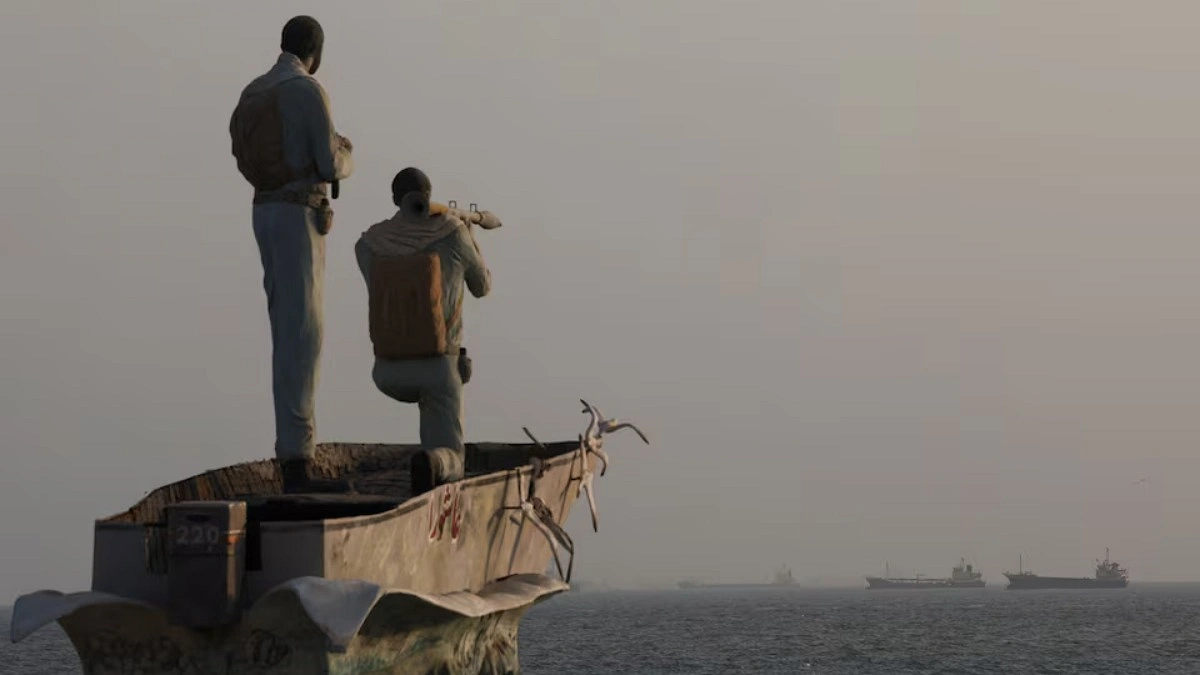
Photo: REUTERS
Iran’s Islamic Revolutionary Guard Corps (IRGC) said they launched a retaliatory missile and drone strike targeting two military bases hosting US forces in Jordan on Sunday.
The strike followed a US strike that bombed two rocket launchers situated on Iran’s Larak Island. US Central Command (CENTCOM) claimed those launchers were preparing to deploy naval mines directly into the Strait of Hormuz.
While IRGC declared the strike, Jordan added that its air defenses intercepted eight missiles over its airspace.
According to Iran’s state broadcaster IRIB, IRGC reported that the US attack on Larak Island killed and wounded several Iranian fighters and civilian bystanders. Amidst these escalating trades of strikes, which broke a month-long period of relative calm, IRGC also claimed they shot down an American MQ-9 Reaper drone over the Strait of Hormuz.
Iranian news agencies Fars and Mehr published an IRGC statement confirming that their air defenses intercepted “a long-range American MQ9 drone” over the Strait of Hormuz, which subsequently crashed into the Gulf.
In defending its strike on Larak Island, CENTCOM declared that its forces “took limited, precise action against IRGC minelaying forces posing an imminent threat in the Strait of Hormuz.”
A statement from CENTCOM on the social platform X asserted, “In essence, Iran created the threat, and the US military eliminated it to protect civilian mariners, commercial shipping, and the free flow of global commerce.” CENTCOM dismissed the Iranian characterization of the strikes as “an act of aggression.”
Iranian President Masoud Pezeshkian broke his silence regarding the US strike on Larak Island. As he departed for Bishkek, the capital of Kyrgyzstan, to attend the summit of the heads of state of the Shanghai Cooperation Organisation countries, Pezeshkian noted that Tehran “is not looking for war,” but warned that they would “never sit still in the face of any aggression.”
According to the Fars news agency, Pezeshkian insisted that Iran “will give a decisive response to the aggressors” if attacked. He cautioned that “Instability and unrest in the region are not in the interest of any country and will challenge everyone.”
A US official told Al Jazeera that American forces successfully intercepted Iran’s retaliatory attacks against Jordan after Washington struck Tehran’s minelaying operations on Larak Island.
Commenting on the situation, the official remarked, “The missile attack on US forces in Jordan proves that Iran is no longer the power it once was,” adding that Tehran had fired medium-range ballistic missiles toward Jordan.
In an interview with Fox News, US President Donald Trump reiterated his stance that Iran must never obtain nuclear weapons. Trump declared, “You cannot let them have a nuclear weapon, and they won’t have a nuclear weapon,” while characterizing Iran’s leadership as “very violent, evil people.”
He maintained that Tehran would have deployed such a weapon already had they successfully acquired it, warning that the Middle East “would have essentially been gone” and that Israel, the US, or Europe would face imminent destruction.
Labeling Iran a “failing nation,” Trump expressed surprise at Tehran’s actions targeting Gulf nations at the onset of the war. He remarked, “Everybody was shocked. I was surprised,” and added, “I thought it was a real good thing because they lost all the support that they had.”
The regional conflict has heavily impacted commercial maritime trade. Shipping data indicates that the daily count of visible commodity vessels crossing the Strait of Hormuz plummeted to just five over the weekend.
However, the actual tally of transiting vessels might be higher, given that several ships deactivated their automatic identification systems to dodge potential attacks.
UK Maritime Trade Operations (UKMTO) reported a delayed notification concerning an attack that struck a tanker while traveling “inbound in the Strait of Hormuz,” around 12 nautical miles (22km) north of an Omani port.
Prior to the outbreak of the war in late February, nearly 20 percent of the world’s oil supply transited through this critical strait.
Source: Al Jazeera (adapted)


