
Australian woman urges tech firms to share data to find partner missing in Nepal floods

Picture: Reuters
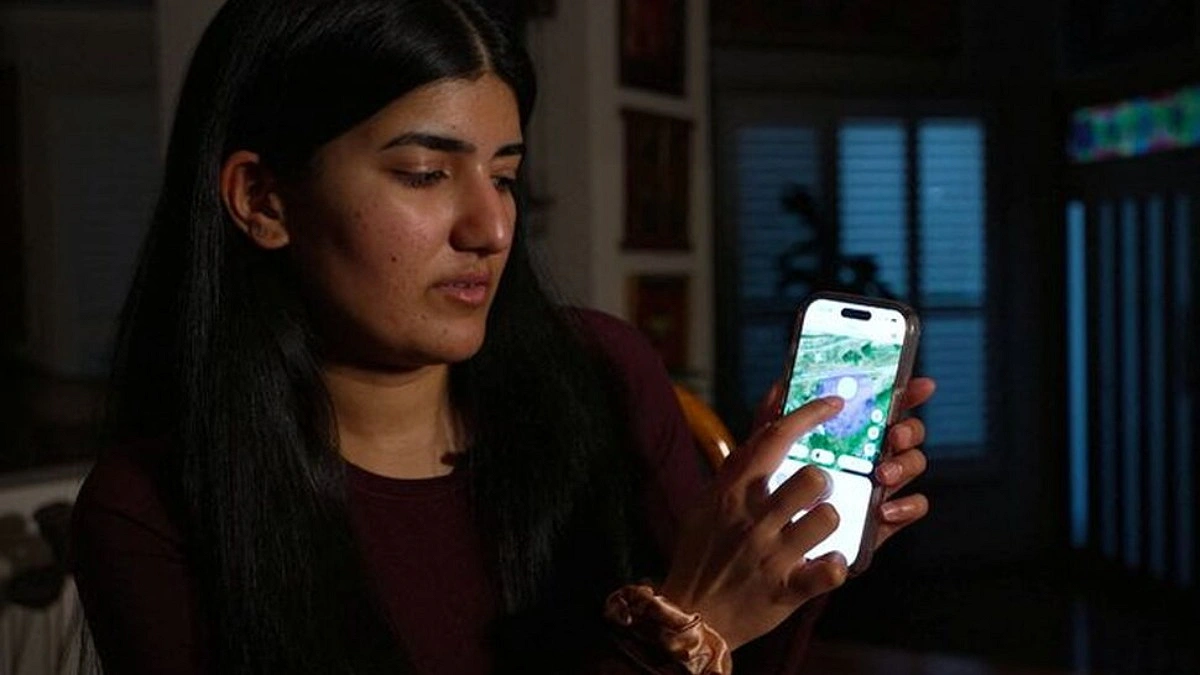
An Australian medical student whose partner has been missing since devastating floods hit Nepal has urged technology companies to share location data that could help rescue teams narrow their search areas.
Sarada Viswanathan (23), has spent the past eight days trying to trace the last movements of her boyfriend Rishab Iyer and his family. They disappeared near the border between Nepal and China’s Tibet after a glacier collapse triggered a destructive torrent in the region.
Working from her home in northwestern Sydney, Viswanathan said it has been difficult to obtain information from Nepal. She said Apple, telecommunications company Optus and tracking app Life360 have denied her requests for location data that could help determine where the Iyers are.
“We’re all just scrambling to try and put the pieces together ourselves,” Viswanathan said.
“Their phones are most likely dead. They have no way of contacting us. We’re really just begging for help.”
The disaster on August 26 has killed more than 1,200 people. More than 4,200 people remain missing including hundreds of foreign nationals and 38 Australians.
Iyer (23), is in his final year of medical school. He had traveled with his parents and younger brother on a pilgrimage to the holy site of Mount Kailash.
Viswanathan said she last heard from Iyer on the morning of August 26. The family’s last known location on Apple’s Find My service and Life360 showed them near their hotel close to the Nepal Tibet border about 30 minutes before the floods struck.
Relatives of another member of the Iyers’ tour group who had a local phone number later obtained information through Nepali authorities showing that a phone signal was detected farther north later that day, Viswanathan said.
However, similar data was not available for those using Australian phone numbers. Optus, Life360 and Apple cited privacy and security concerns when declining requests for the information.
“We want every single signal we can possibly get after the flood hit. We know where they were before, but we have no idea within that 30-minute period of before the flood hit to now,” Viswanathan said.
“There should be a much bigger effort to try and help us, because it’s not just some random situation where I’m just trying to see where my partner is. I’m trying to save his life.”
Petition for help to Australian government
Optus said in a statement that it could not comment on matters involving individual customers. Apple did not immediately respond to a request for comment.
Life360 said it was inappropriate to comment on the ongoing situation. The US company said people in a user’s “circle” can access the latest location information. The information relies on phone tower signals.
People outside the circle who have not been authorized by the user to track their location must make a request through local authorities, the company said.
Viswanathan has also launched a petition urging the Australian government to send more people to help with the search. Australia has already deployed drone specialists, consular officers, police and defense personnel to Nepal.
Australian Foreign Minister Penny Wong said on September 3 that Australia would share telecommunications data with Nepali authorities.
Viswanathan warned that delays could cost lives as the window for survival continues to narrow.
“Some companies are releasing it now, but it feels like a bit of a too-little, too-late situation, and we don’t want it to get to that point where it is actually too late.”
Smriti Bhandari, a police officer coordinating information about foreigners in need of rescue, said rescue crews had searched the area where the Iyers’ tour group disappeared.
“So far, we have no Australian tourist rescued. We have no data of any Australian who has been rescued so far,” she said.
“If there is any report of any tourists trapped there, rescue officials will go there again.”
Viswanathan said she would continue searching for Iyer and his family until she gets answers.
“Our efforts have not dimmed at all. I think a lot of people think that they would have by now because we would have lost some kind of hope. But I think if anything, we’re still working harder than ever.”
Source: Reuters (Adapted)


