

West Bengal
Mamata Removed, Arup Roy Appointed Chairman of New Committee as Rebellion Splits TMC

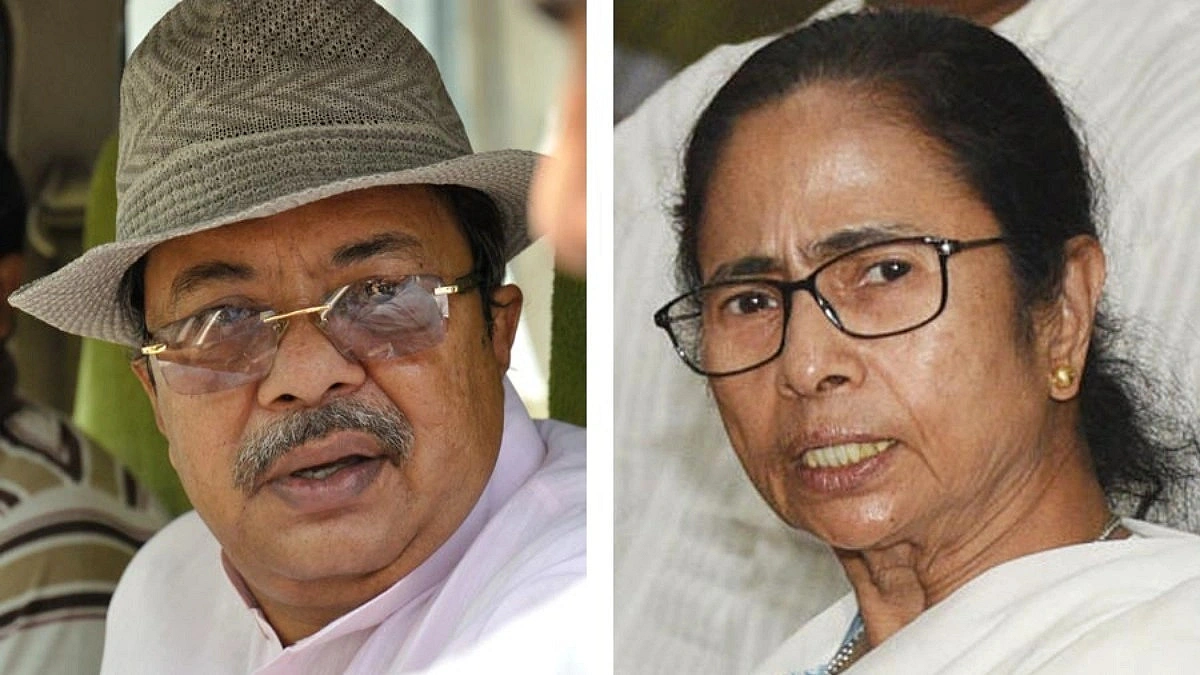
Collage: Arup Roy and Mamata Banerjee. Collected.
The fracture within West Bengal's principal opposition party, the Trinamool Congress (TMC), has become significantly more pronounced. The rebel faction within the party has officially announced the formation of a new National Working Committee, removing party chief Mamata Banerjee and All India General Secretary Abhishek Banerjee from the leadership.
Howrah Madhya MLA Arup Roy has been appointed as the Chairman of this new 30-member committee.
According to reports, the rebel camp held a meeting at a hotel in New Town on Monday, immediately following the conclusion of the West Bengal Legislative Assembly's budget session. The faction claimed that approximately 60 MLAs and about 70 former councillors from the Kolkata Municipal Corporation participated in the meeting.
The New Leadership Structure
Following the meeting, the rebel leaders announced the formation of their new committee, citing Clause 20 of the TMC's party constitution, which mandates that the National Working Committee must meet every three years. They argued that no such meeting had been convened since 2022, and thus declared the previous committee dissolved.
The key office-bearers of the newly formed committee are as follows:
Chairman: Arup Roy
Vice-Presidents: Former minister Arup Biswas, MLA Firhad Hakim, and MLA Rathin Ghosh.
General Secretaries: Ritabrata Banerjee, Javed Khan, Sandipan Saha, and Sabina Yasmin.
Treasurer: Akhruzzaman.
The Rebellion's Claims
The rebel faction has declared themselves to be the "real Trinamool Congress." Notably, the banners used at their meeting did not feature Mamata Banerjee's image. Instead, they displayed portraits of Mahatma Gandhi, B.R. Ambedkar, Rabindranath Tagore, and Kazi Nazrul Islam.
Background of the Infighting
Internal discontent within the TMC began to escalate following the party's massive defeat in the recent state assembly elections. Subsequent disputes over the appointments of the Leader of the Opposition, Deputy Leader, and Chief Whip further fueled the rift. Several MLAs alleged that signatures on a letter sent to the Speaker were forged—an accusation first brought to light by Ritabrata Banerjee and Sandipan Saha.
Over time, a significant number of MLAs joined the rebel camp. Even Firhad Hakim, a former minister and previously considered a close associate of Mamata Banerjee, eventually sided with the rebels. The split was not confined to the assembly; the parliamentary party also fractured, with 20 Lok Sabha MPs leaving the TMC to join a newly formed political party, the Nationalist Citizens Party of India (NCPI). Several Rajya Sabha members also resigned from the party.
The rebellion is reportedly not just limited to the top leadership but has also affected the grassroots organizational structure, with workers and leaders from various districts aligning with the rebel faction.
Mamata Camp's Reaction
The Mamata Banerjee-led camp, however, has refused to acknowledge the rebels' move. TMC leader Kunal Ghosh dismissed the development, stating, "Trinamool Congress and Mamata Banerjee are synonymous. According to the party's organizational structure, the rebels do not have the jurisdiction to take such decisions."
What Lies Ahead?
With the party now effectively split into at least three distinct groups—the original Mamata-led faction, Ritabrata Banerjee's "real TMC," and the NCPI faction—a major political and legal battle is likely on the horizon. The immediate question looming over West Bengal politics is who will retain control over the party's official name and its iconic election symbol (the grass flower), raising the prospect of a fierce legal contest over the party's legitimate leadership.

