
Trump Criticizes NATO Allies Over Iran Issue on Sidelines of G-7 Summit

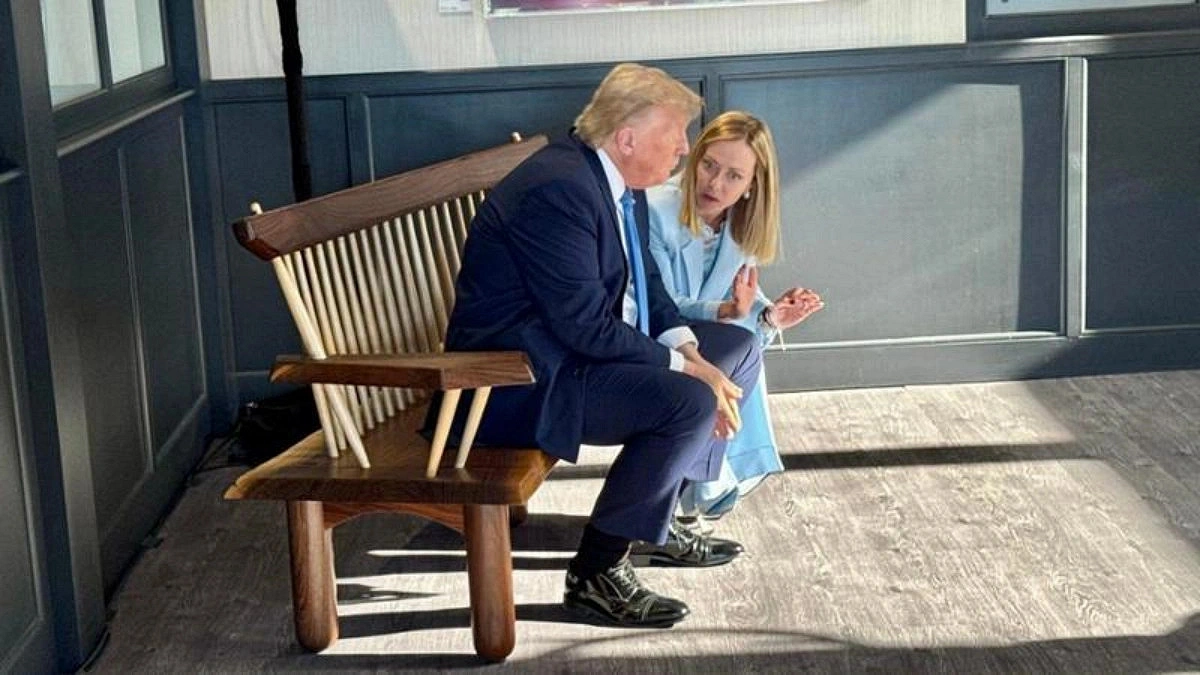
Italian Prime Minister Giorgia Meloni and US President Donald Trump on the sidelines of the G7 summit. Photo: Collected.
US President Donald Trump has criticized NATO member countries for not standing alongside the United States and Israel in confronting Iran's nuclear threat. At the same time, the reciprocal stances of Iran, the United States, and various European countries have created fresh tensions surrounding the situation in the Strait of Hormuz.
In a message posted on social media, Trump said that despite spending vast amounts of money on NATO, Italy and its Prime Minister Giorgia Meloni showed no interest in joining efforts to counter Iran's nuclear threat. He stated, "We have protected them for decades, but when put to the test, they are not by our side. This is not good."
The US President accused Western countries of failing to stand by the United States when needed, even though they have been protected by it.
According to Article 5 of the NATO treaty, if any member state becomes the victim of an armed attack, the other members are obliged to come to its defense.
Meanwhile, Turkish Foreign Minister Hakan Fidan warned that the technical complexities of the recently signed memorandum of understanding will not be easily resolved quickly. He stated that deadlocks may sometimes arise in the negotiations and that one must be prepared for such situations. At the same time, he expressed concern that Israel might try to derail the negotiation process if given the opportunity.
On the other hand, German Defense Minister Boris Pistorius blamed US President Donald Trump's policies for the Hormuz crisis. He said the root cause of the problems in the Strait of Hormuz is Trump's decisions, even though Europe's interest lies in ensuring safe passage through this vital waterway.
He added that secure navigation through the Strait of Hormuz is extremely important for Europe, both for energy supplies and economic recovery.
Meanwhile, US Republican Senator Lindsey Graham claimed that Trump is planning to seize control of the Strait of Hormuz if diplomatic efforts with Iran fail. If necessary, the US could take control of the waterway and collect tolls from users.
According to analysts, Trump's tough anti-Iran rhetoric is largely a strategy to maintain domestic political support. Georgetown University professor Paul Musgrave said Trump's statements are aimed at his supporter base. However, this could weaken the US position in diplomatic negotiations.
He added that Iran has long been a major adversary in the US political imagination. While Trump's stance may politically strengthen him domestically, it could also place the US in a controversial position internationally, potentially leaving Iran in a somewhat more advantageous diplomatic position.
