
Iran strikes Gulf allies as US bombardment enters week two

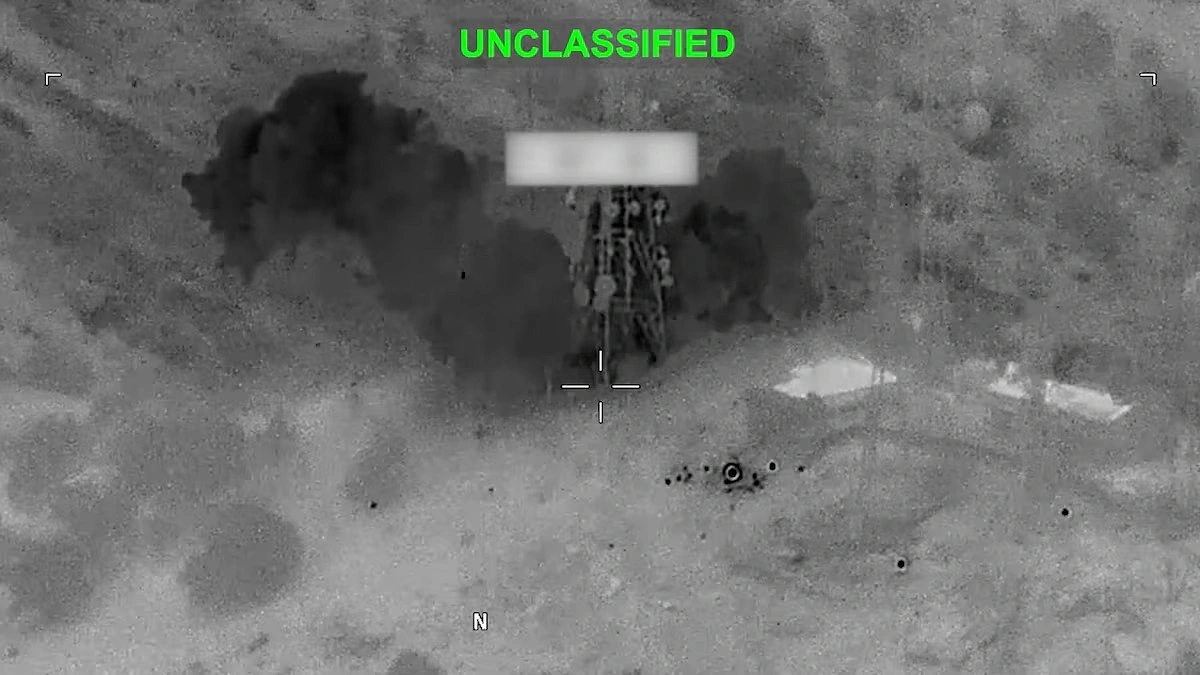
Photo: REUTERS
Iran launched fresh attacks against US allies in the Gulf on Saturday, marking a sharp escalation exactly one week after a fragile ceasefire collapsed.
This follows seven consecutive nights of US airstrikes that targeted Iranian military positions and logistics infrastructure.
Both nations have turned the region’s waterways into a battlefield. While the United States enforces a naval blockade, Iran targets vessels in the Strait of Hormuz, a critical passage for 20 percent of the world’s oil.
US forces recently redirected four commercial ships, disabled one, and boarded another to maintain the blockade. Conversely, Iran’s Revolutionary Guard Corps (IRGC) used missiles and drones to stop four vessels that they claimed violated navigation rules.
Conflict also flared near Yemen, where armed men seized a vessel at the mouth of the Red Sea. Amid these tensions, Iranian state media reported that two oil tankers exploded south of the strait, though the US military labeled that report as false.
US military’s Central Command confirmed it used fighter jets, drones, and warships to strike surveillance sites, weapons storage, and maritime capabilities.
In a statement, Central Command declared, “US forces employed fighter aircraft, aerial drones, and warships in addition to other assets. More than 50,000 American service members are operating across the Middle East and remain vigilant, lethal, and ready.”
These strikes caused significant damage within Iran. In the southern city of Jask, missiles hit power facilities and desalination pumps, cutting off drinking water for local villages.
In Hormozgan Province, strikes killed three people, wounded eight, and damaged two bridges and a road tunnel. Additional Friday attacks destroyed five bridges in the south, including those in Bandar Khamir, where a train station was also hit.
The violence has spread to multiple Gulf nations hosting US bases. Kuwait reported that an Iranian attack damaged a power and water desalination station, sparking a fire and disrupting electricity units. The Kuwaiti army is currently responding to these drone strikes.
In Bahrain, the Revolutionary Guards claimed they used ballistic missiles and drones to destroy a US drone depot and a major artificial intelligence center. Meanwhile, Iran fired a cruise missile at a US vessel in the northern Indian Ocean, claiming the move forced the “hostile” ship to retreat.
The escalating war has sent oil prices climbing more than 4 percent, reaching a one-month high.
This surge adds political pressure to President Donald Trump as his party prepares for November’s congressional elections. Trump has threatened broader air strikes on Iranian infrastructure and has not ruled out a ground assault on the coast.
In response, Mohsen Rezaei, an adviser to Iran’s supreme leader, warned against any attempts to seize Iranian territory.
State television quoted the IRGC saying until US “aggression” ceases, they will prevent the export of chemical fertilizers or even a “single drop of oil and gas” from the region.
International Concern UN Secretary-General Antonio Guterres expressed deep concern regarding the attacks on civilian infrastructure.
While the US maintains its targets are military in nature, the destruction of bridges, power plants, and water facilities has heightened the humanitarian risk across the region.
Source: Reuters (adapted)
