

There is no scope to downplay extremist activities

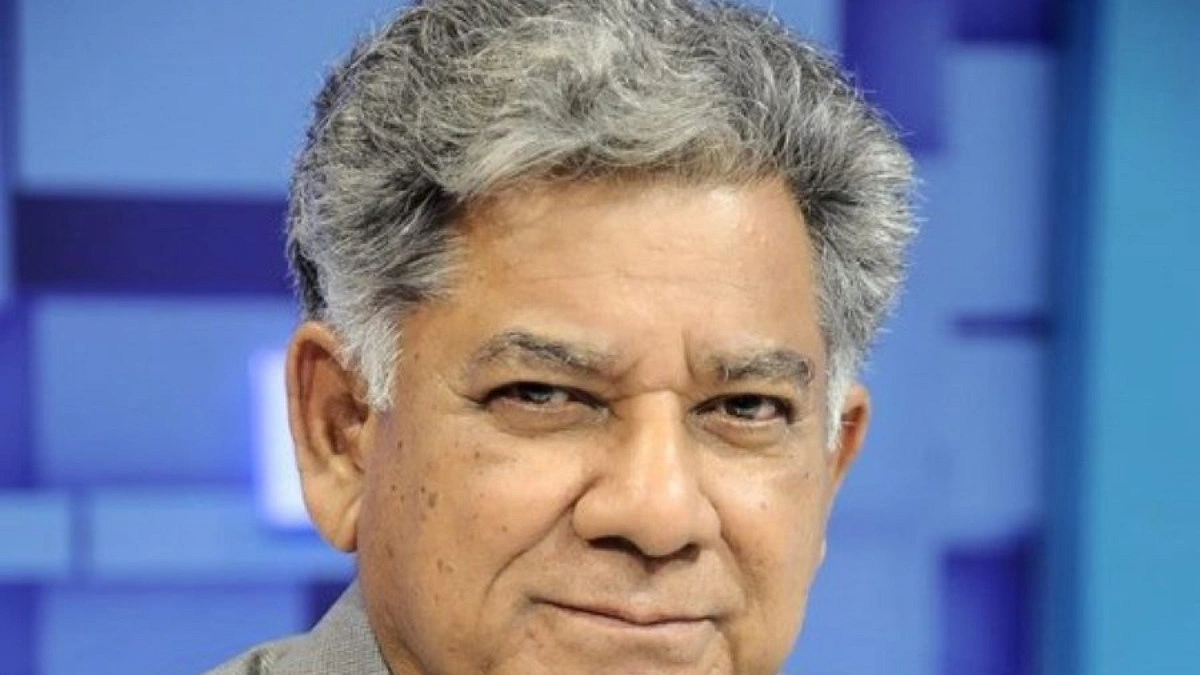
M Sakhawat Hussain. Photo courtesy: Center for Governance Studies.
Retired army officer M. Sakhawat Hussain is a former advisor to the interim government. He has also served as an Election Commissioner. He writes on national politics and security issues. Agamir Somoy caught up with him to discuss events spanning from the tenure of the interim government to the recent developments. The interview was taken by Sayeed Jubary.
Question: How was your experience as an advisor to the interim government? In particular, how do you evaluate the decision when you were moved from the Ministry of Home Affairs to another ministry?
M. Sakhawat Hussain: That is in the past. What is the point of evaluating that now? I do not think there is any benefit in evaluating it at this stage. No, there is definitely no benefit. Let us move on to the next question.
Question: Your comments regarding the 'kitchen cabinet' generated a lot of discussion. To what extent do you think this 'kitchen cabinet' is having a negative impact on the government's policymaking?
M. Sakhawat Hussain: Look, a 'kitchen cabinet' is not a new concept. Its history originates from Britain; you can find it on Google. During the tenure of every government, there is a small group or committee, and it is not mandatory that only ministers will be part of it; many outside advisors can also be included.
There are many serious and important day-to-day matters whose preliminary discussions do not take place in the main cabinet. The idea originates from a small group, and after their discussion, the decision is brought to the cabinet at the final stage. Take the US trade agreement, for example. A proper debate or discussion on this did not happen in the full cabinet from the beginning. After the draft was prepared, it was brought to the cabinet at the very final stage when it was about to be adopted. Back then, I was not the only one; many others said this later on. If you talk about its negative or positive impact, the public does not know about it yet. Because there is no discussion on this in parliament or anywhere else; even the political parties are saying nothing about it.
Question: During the tenure of the interim government, successive attacks took place on mobs, shrines, and the cultural arena, alongside incidents of setting fire to newspaper offices. As a former home advisor and military personality, how did you view the overall law and order situation back then? Did the government seek any advice from you?
M. Sakhawat Hussain: Even though I was in the cabinet, I was in a ministry at the time that had no direct communication with the law enforcement agencies. Moreover, I spent most of my time traveling outside Dhaka to bringing discipline to the char areas (Hatiya, Sandwip, Dhalchar, Monpura) and river and land ports.
However, we should have prevented this mob rule, and we failed there—there is no doubt about it. It was a major failure on the part of the then-home advisor, the home secretary, and those in charge of the police force. Especially when two newspaper offices were attacked right on the main road of the city, the police force remained inactive. The cabinet must also take this responsibility, both primarily and jointly.
And regarding what you mentioned about advice, since I was busy with work outside Dhaka and in the char areas, no separate advice was sought from me by the cabinet at that moment. Later, I saw on television that the house at Dhanmondi 32 was being vandalized, etc. Some propaganda regarding this was coming from the outside, while some was also coming from within. Of course, there was some discussion about this later on. However, the entire matter is deeply unfortunate and I would say it was a major failure of our cabinet.
Question: Is the state failing completely to ensure the security of citizens' lives and properties, or is there a deep administrative crisis behind it?
M. Sakhawat Hussain: There is a deep crisis here involving a combination of factors. You have to remember under what circumstances this government took charge. There was no structure left in the state, the entire administration and law enforcing agencies were ruined—in short, it was a broken society.
This broken state cannot be fully repaired in 12 or 15 months. There are extremist elements on both sides of the society now. The administration is not functioning properly; others are not cooperating with those who have been brought back after retirement. All in all, it is a chaotic situation. Furthermore, just because you ban a massive political party, their millions of workers will not vanish like bubbles. They are right there on the ground, and they want to ensure this government cannot become stable. The crisis must be viewed keeping this overall situation in mind.
Question: Recently, incidents like organized hoisting of ISIS-like flags across the country and live-streaming them on social media have taken place. Yet, the police are dodging responsibility simply by saying they are 'searching.' Is this an indication of a new rise of extremism in Bangladesh?
M. Sakhawat Hussain: Instead of calling it outright extremism right now, I would prefer to label it as temporary excitement or due to some other reason. But yes, there is no scope to take this lightly. If this goes against government policy, it must be scrutinized with utmost importance from the point of view of internal and external security, and action must be taken. Otherwise, it will create ground for massive propaganda tomorrow, which will not be good for the country.
Question: Recently, a few people have been arrested for extremist campaigning under the guise of physical training or exercise. Many are trying to downplay this as 'ordinary judo or exercise.' How prepared are our intelligence agencies to counter this new tactic and recruitment process of the extremists?
M. Sakhawat Hussain: Our intelligence agencies were prepared before, and they still are. It would be tragic if a country's intelligence force does not become capable even after fifty to sixty years. The capacity is definitely there, but the main point is how you make them work and what you want from them. In situations regarding security and law and order, very firm decisions have to be taken. You cannot afford to worry about who got pleased or who spoke out against you.
Question: Many are recalling the dark times of JMB, the rampage of 'Bangla Bhai' in 2005, or the simultaneous bomb blasts across 64 districts. What is your observation?
M. Sakhawat Hussain: In the past, the then-government tried to downplay these by calling them 'isolated incidents.' While they kept calling them isolated incidents, a negative image of Bangladesh was eventually created worldwide. There was politics and a political agenda involved. However, 2005 and 2026 are not the same; the situation has changed now, the world has changed. The current government needs to see whether they can handle the situation with an iron fist if they fall into such danger. There is no scope to downplay anything.
Question: There are still various discussions going on in the political arena regarding the ousted and subsequently banned Awami League. How do you view the party's current situation and the possibility of their rehabilitation or return to the future politics of the country?
M. Sakhawat Hussain: Let me be very clear—the then-leaders of the Awami League, who were the decision-makers, failed totally. They created a horrific state apparatus through enforced disappearances, murders, and anarchy, capturing the entire state politically. The way the country was pushed towards a bloody situation during the July Uprising or mass upheaval must be brought to justice. After the trials are concluded, strict action must be taken against those involved in the crimes.
Following that, the government will consider whether they can function as a political party or not. However, to this day, that party has not admitted even once that they did wrong, nor have they apologized. Rather, they are looking for excuses to shift the blame onto others. A proper inquiry must be conducted to identify who held rifles in civilian clothes and who used helicopters or snipers to shoot. Until the criminals are cleared and justice is served, their return to politics is not justifiable.
Question: At that time, you raised questions about weapons falling into the hands of civilians or the use of 7.62 mm bullets. Later, you had to step away...
M. Sakhawat Hussain: Listen, if you cannot understand my words, I will not repeat the same thing over and over. You can see these people with weapons in civilian clothes simply by watching the videos. From whom did these come? Who gave them? They went through the government of that time, right? How do police weapons end up in the hands of civilians? In whose hands did the weapons of the law enforcing agencies go?
I said this back then because I was in charge, stating that an inquiry should be conducted to find out who these people were. I saw it myself in the videos, saw with my own eyes that they were standing there wearing helmets. This is not just about today; when young children were protesting for safe roads, who beat them up? Who were these people? Don't you know?
When I talked about investigating this, it became a massive issue. You media people do this; I see a headline published under my name while there is nothing inside. If you do not understand my words and want to twist them, you can certainly do so. But the point is very clear—many people held rifles in civilian clothes, standing against the protesters. There are video records of this. These are not stories from 50 years ago that I am telling based on hearsay.
Why and how these calibers of rifles, which are supposed to be in the hands of the police, ended up with civilians is something I would have definitely investigated if I were in charge. We have known the 'Helmet Bahini' for a long time, haven't we? Why even this government is not clarifying this through a proper inquiry is something I do not know.
Question: In the current political vacuum, are extremist and radical groups trying to enter the mainstream by riding on the shoulders of mainstream Islamic parties?
M. Sakhawat Hussain: Extremist or radical groups have different definitions at different times. Those who were in the opposition in previous years were also called by this name. They are now in parliament again, holding their heads high. Those who are in leadership now are not all pre-'71 leaders. I cannot comment on this matter.
Question: Regarding those you are speaking of (Jamaat-e-Islami), a few of them were hanged in the past for war crimes. Yet, they have now established themselves in mainstream politics and are sitting in parliament without any clear remorse or statement. How do you view this issue?
M. Sakhawat Hussain: Look, because of those past crimes, a few of them were hanged, right? They did hang. Now, those who are currently in the leadership of that party are carrying that past burden. And not all of the current leadership are pre-1971 leaders.
However, how they became established—I cannot give the answer to that. The answer will be given by those who are currently in parliament or running the parliament. I cannot comment on this.
Question: How much is geopolitics related to Bangladesh's internal instability, mob culture, and the attempts to rise of extremism? Where does Bangladesh's image stand internationally right now?
M. Sakhawat Hussain: Our image is severely damaged internationally. Most of the propaganda, practice, and discussion regarding this are coming from our neighboring country. This always carries a propaganda value or a nuisance value. If the internal law and order situation is not fixed quickly, it will definitely have a long-term negative impact on the country.
Question: Do you think that in some cases, a radical force is growing within our law enforcement agencies, the army, and the administration, or that they are moving towards 'radicalization' in terms of their thinking?
M. Sakhawat Hussain: I do not know; what is your definition of radicalization anyway? A political motivation? Radicalization means forcing my ideology onto others.
Well, as of now, I haven't noticed any such forced imposition where someone is standing on the street and telling you— "From today, if you don't wear a burqa, we will beat you." Has anyone said that? No.
However, yes, when these kinds of offenses or tendencies come to light, handling them softly or avoiding them is not the right approach. I have already said that everything from psychological changes to structural changes needs to be implemented. Now, it's difficult for me to tell you all my ideas in two minutes; it's quite challenging.
Those who are in society and understand these matters better than I do should sit down and discuss with the practitioners to outline a guideline. Bringing about change requires time, and it also requires sitting down and talking with many people. Otherwise, the conventional system will just keep running—today you will beat me, tomorrow I will beat you. How long can this go on? The country has been independent for fifty years, and we still cannot think independently! What is needed now is for everyone to sit down calmly.
Question: What kind of steps should be taken at this moment to protect the country's sovereignty and internal security, and what would be your core advice for the government?
M. Sakhawat Hussain: A state is run through a collective body or a joint leadership. The government needs to take more demonstrative or strict actions so that they serve as examples (for instance, taking strict action against incidents like forced signatures on checks).
The biggest necessity is a psychological shift within the police and law enforcement agencies. The underlying resentment and trauma within the police force must be understood. A major question in their minds right now is— "Who will protect us?" Who will watch their backs if they go into action? The force cannot be made effective merely through physical changes or swapping personnel.
Whether it is the military or the police—the "my people, your people" culture must be stopped everywhere. Recruitment and postings must be done entirely on the basis of merit, and the force must be provided with protection.

