

The Claims of Taj Mahal Once Being a Temple Resurface: What Does History Say?

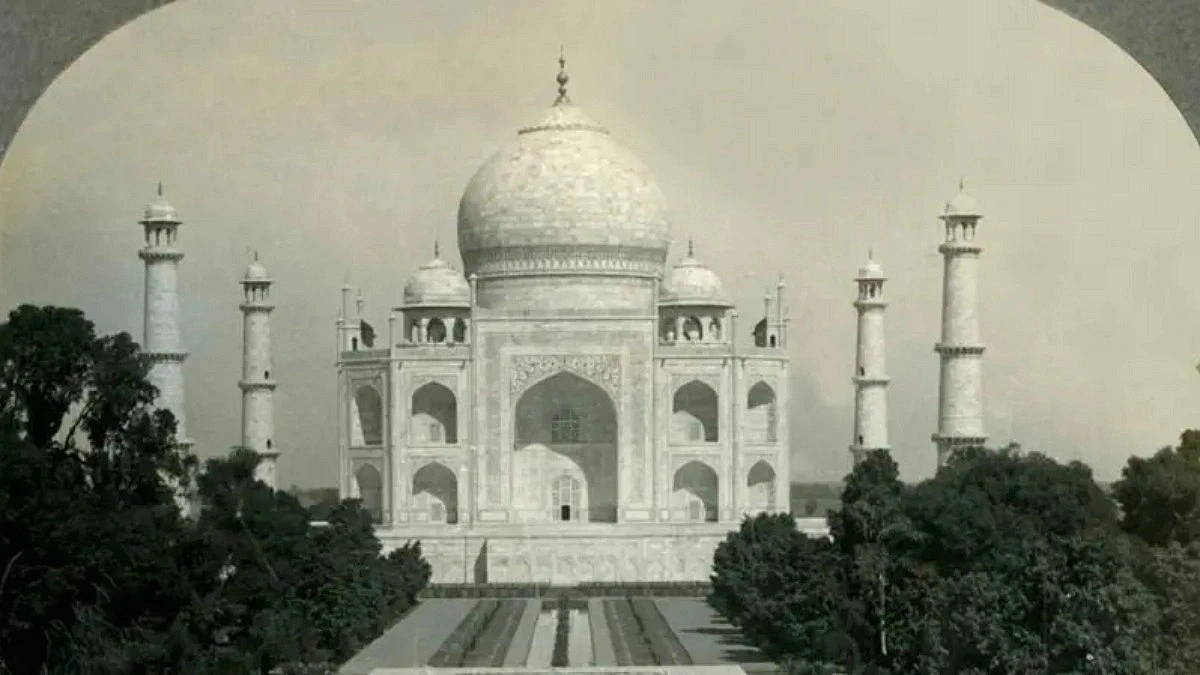
A photograph of the Taj Mahal taken in 1902. (Collected.)
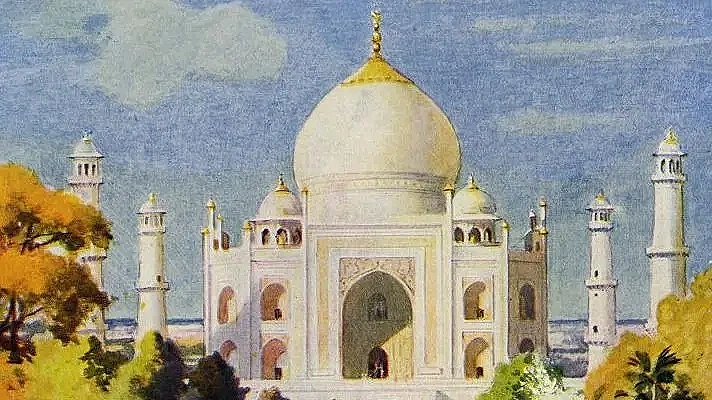
The Taj Mahal in a painting by British artist Frank Dean.
The moment the name of India's Taj Mahal is mentioned, the image of a magnificent structure crafted from white marble flashes before one's eyes. Two to four lines written by various poets in praise of this monument—adorned with carved tall minarets, domes, and arches—also come to mind.
Located 150 miles from Delhi on the banks of the Yamuna River, this structure is a part of the Seven Wonders of the World. However, a fresh controversy has emerged regarding the Taj Mahal, which has been recognized as a symbol of love for nearly 400 years.
A petition was filed by an individual in the District Court of Allahabad, Uttar Pradesh, claiming that a temple once stood at the site of this monument built in memory of Mumtaz Mahal, and that the evidence of this is allegedly hidden to this day in the basement of the Taj Mahal. The petition also requested a survey to be conducted at the Taj Mahal.
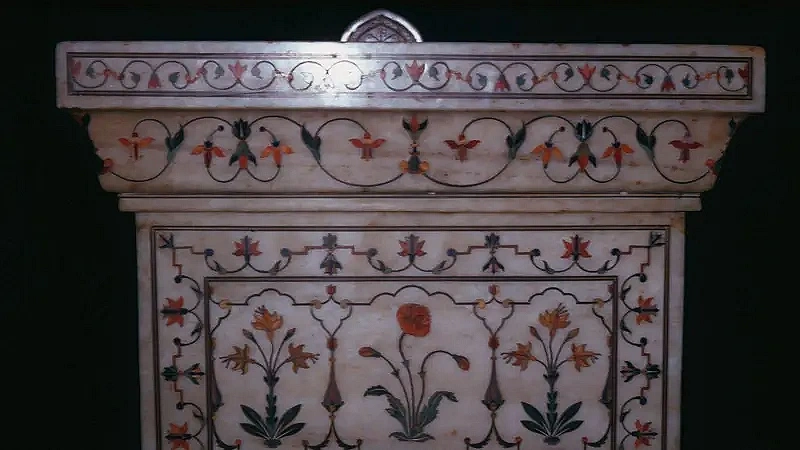
Historians hold the view that the Taj Mahal showcases unique artistic features characteristic of the Mughal era.
After the District Court dismissed the petition, the applicant—who is primarily a BJP leader—approached the Allahabad High Court.
Following this, the Allahabad High Court issued notices to the BJP-led Central Government and the Archaeological Survey of India (ASI). The notices sought to know their stance regarding conducting a survey at the Taj Mahal.
However, this is not the first instance of such a claim. Various theories and claims about the Taj Mahal have come to the fore in the past as well. Nonetheless, according to historians, no controversy existed regarding the Taj Mahal before 1965, and all evidence related to the construction of this historic monument has been carefully preserved.
We spoke to historian Dr. Ruchika Sharma to learn more about this issue.
The Construction of the Taj Mahal
According to historians, , the wife of Mughal Emperor Shah Jahan, passed away in Burhanpur in 1631. Emperor Shah Jahan planned to build a mausoleum for Mumtaz Mahal and chose a picturesque location far from Burhanpur, on the banks of the Yamuna River in Agra.
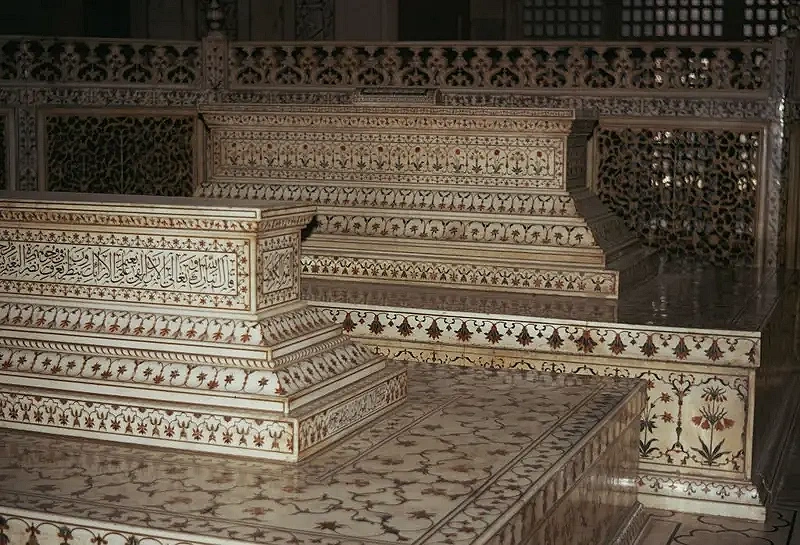
The unique architecture of the Taj Mahal is one of its defining characteristics.
This piece of land belonged to Raja Jai Singh of Amber, who was the grandson of Emperor Akbar's trusted general, Man Singh. Raja Jai Singh also held an important position in the Mughal Empire.
Historian Abdul Hamid Lahori, in his book Badshahnama, mentioned that "the construction of the mausoleum (the Taj Mahal) began with the laying of its foundation."
The Badshahnama depicts the official history of the reign of Mughal Emperor Shah Jahan.
It is known that while the main construction of the Taj Mahal was completed by 1648, it took another five years to finish the intricate carvings and the canals flowing through the Paradise Garden.
In an interview with the BBC, historian Ruchika Sharma stated that Raja Jai Singh had offered the land free of charge, but Shah Jahan refused to accept it. In exchange for the land on the banks of the Yamuna for the Taj Mahal, Shah Jahan provided Jai Singh with another alternative plot of land of equal value. This entire process took nearly two years to finalize.
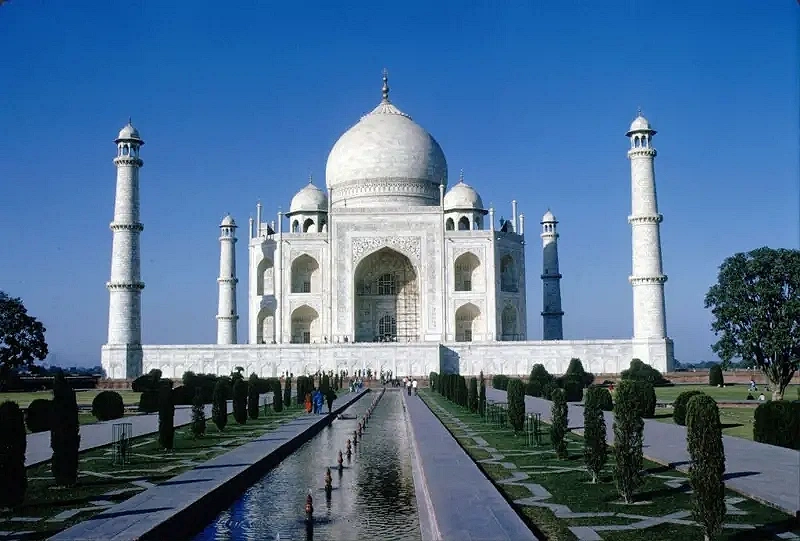
Taj Mahal at the center of controversy once again – File photo
However, there are many widely circulated stories related to the Taj Mahal that many people believe to be true, despite the fact that history offers no evidence of their authenticity.
In this regard, Dr. Ruchika Sharma pointed out two stories that, while lacking any real-world basis, sound quite fascinating to many. Among these, the most popular myth is that Shah Jahan severed the hands of the workers who built the Taj Mahal so that no second structure like it could ever be built.
Dr. Ruchika Sharma explained that while this story paints a cruel picture on one hand, it also emphasizes that the Taj Mahal is a unique, unparalleled structure whose distinctiveness had to be preserved.
Speaking about the second story, she mentioned that some Hindutva organizations and websites claim that Shah Jahan spent such an enormous amount of money constructing the Taj Mahal that he had to collect massive amounts of funds from all provinces.
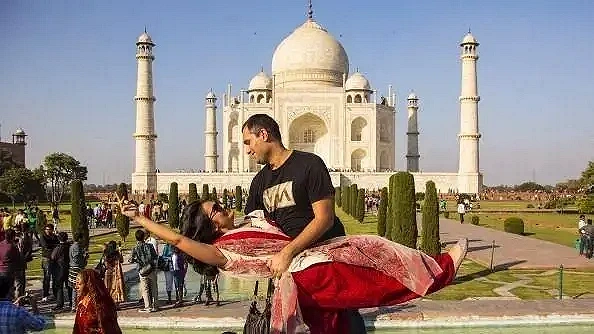
The Taj Mahal is known to the world as a symbol of love.
It is further claimed that this resulted in a famine in Gujarat, leading to the deaths of Hindus.
Dr. Sharma stated that while a famine did indeed occur during that time, Shah Jahan took adequate measures to combat it and supplied food grains and other essential items to everyone.
At the same time, she raised the question: if a famine did break out, how could Shah Jahan selectively kill Hindus? The famine resulted in deaths across both the Hindu and Muslim communities.
Therefore, Dr. Sharma argued that this narrative is driven by an intent to spread religious animosity.
What is the Current Controversy?
The individual who filed the petition in the Allahabad High Court seeking a survey of the Taj Mahal is a BJP leader. The High Court has issued notices to the Central Government and the ASI to know their official stance on conducting a survey.
However, it is worth noting exactly when this controversy surrounding the Taj Mahal originated.
In 1965, an Indian writer named Purushottam Nagesh Oak (P. N. Oak) wrote a book titled The Taj Mahal Was a Rajput Palace. In it, he asserted that the building was constructed in the fourth century. He claimed it was originally a Rajput palace that Shah Jahan later transformed into the Taj Mahal.
Historians like Giles Tillotson, however, challenged this theory. According to Mr. Tillotson, "the technical skills and architectural engineering required to construct a building like the Taj Mahal did not exist in pre-Mughal India."
According to Dr. Ruchika Sharma, although historians did not take Purushottam Nagesh Oak’s claims seriously, he authored another book 24 years later. In that book, titled Taj Mahal: The True Story, P. N. Oak claimed that a temple built in the 12th century originally stood at the site, which Shah Jahan subsequently converted into the Taj Mahal.
In reality, P. N. Oak was not a historian. He was a lawyer by profession and was also associated with journalism.
P. N. Oak’s second theory asserted that the Taj Mahal was originally a Shiva temple built in 1155 AD, which Raja Jai Singh I gifted to Shah Jahan. Later, Shah Jahan allegedly transformed it into a mausoleum.
Historians counter this claim by pointing out that the architectural style of the building is unmistakably from the Mughal era. It features high pendentive domes (an architectural technique used to place a circular or elliptical dome over a square or rectangular room), Timurid architecture, and exquisite stonework. The entire structure is laid out in the "Hasht Behesht" (Eight Heavens) style, which is a classic Persian architectural design.
Dr. Ruchika Sharma noted that P. N. Oak was so resolute in his stance that he approached the Supreme Court of India regarding the matter in 2000. India’s apex court, however, dismissed his petition immediately.
'Oak's Imagination Should Have Been Dismissed as Fiction'
In Dr. Ruchika Sharma's view, P. N. Oak's imagination should have been dismissed as mere fiction and forgotten. However, she believes this theory was fueled further by Hindutva ideologue Amarnath Mishra, who now heads the Ayodhya Sadbhavna Samiti.
In 2005, Mishra filed a petition in the Allahabad High Court, claiming this time that the Chandel king Parmardi had built the Taj Mahal in 1196. Due to a complete lack of historical evidence, the High Court promptly dismissed that application.
To put an end to such baseless claims, the ASI issued a statement in 2017 asserting that no evidence has ever been found to suggest a temple existed at the Taj Mahal site or that the building was ever used as a temple.
Against this backdrop, Dr. Ruchika Sharma questioned the recent steps taken by the Allahabad High Court. She argued that since the Supreme Court had already dismissed the matter and the ASI had provided a clear explanation, there was no logical reason to revive the issue.
In her words, "It is impossible to understand what has changed since the court order was issued."
The petition also claims that remnants of the temple exist in the basement of the Taj Mahal, which contains 22 rooms that ought to be opened and examined.
Dr. Ruchika explained that Mumtaz Mahal and Mughal Emperor Shah Jahan are not the only ones buried there. It serves as their family burial ground where others have been interred as well.
Explaining why those specific rooms in the Taj Mahal remain closed, she stated that opening them would create moisture and water vapor, which could damage the very foundation of the Taj Mahal.
Dr. Sharma added that even if those rooms were opened, nothing would be recovered except the remains of those buried there, as there are absolutely no remnants of any temple.
Why Do Such Claims Arise?
The question remains: why do these claims keep coming up?
Certain theories assert that Islamic architecture in India consists of originally "Hindu" structures that were later altered, or that they were built using "Hindu" construction materials.
According to experts, these claims reinforce a "Hindutva" narrative which views the period of Muslim rule in India as an era defined primarily by the defeat of Hindus, the seizure of their properties, and their forced subjugation.
Experts believe P. N. Oak’s claim that the Taj Mahal is actually the "Tejo Mahalaya" temple is part of this broader campaign.
P. N. Oak made several other similar assertions. For example, he claimed that Christianity originated from "Krishna Niti" (the principles of the Hindu deity Krishna), and that Delhi’s Red Fort was originally a Hindu fort named "Lal Kot."
Dr. Ruchika Sharma alleged that Mr. Oak was adept at playing with words and that his theories were essentially propaganda.
She also noted that it is quite natural for those influenced by forwarded WhatsApp messages—which glorify Hindu benevolence while criticizing Islamic intolerance—to readily accept P. N. Oak’s claims.
Places of Worship Protection Act
Regarding the existing law on religious places of worship, India's Places of Worship (Special Provisions) Act, 1991 stipulates that the status quo of all religious structures as they stood at the time of India's independence in 1947 must be maintained.
However, according to Dr. Ruchika Sharma, this law is being repeatedly violated.
She pointed out that the Madhya Pradesh High Court recently declared the 700-year-old Kamal Maula Mosque in the historic town of Dhar as the Bhojshala Temple. Drawing a parallel to the mosque in Sambhal, she questioned the necessity of intervening in these matters when an existing law is already in place.
Many critics argue that an attempt is being made to rewrite history in India according to a specific ideology, a trend that is increasingly reflecting in history textbooks.
Yet, moving past these controversies and urban legends, one must acknowledge that the Taj Mahal remains the most attractive destination for tourists visiting India from all corners of the world. Not only that, it remains the top travel choice for most domestic tourists as well.
In this context, a few lines by the Urdu poet Shakeel Badayuni, who was also immensely popular in Bollywood, seem highly relevant:
"An emperor built the Taj Mahal
Gifting the entire world a symbol of love
In its shadow, love shall be celebrated forever."
Admirers of the Taj Mahal can only hope that this symbol of love will forever be remembered simply as a symbol of love.

