
The rise of the BLA in Balochistan
Pakistan's growing fear from mountains
- Once a small separatist movement, the BLA has grown into Pakistan's most organized and capable insurgent group.

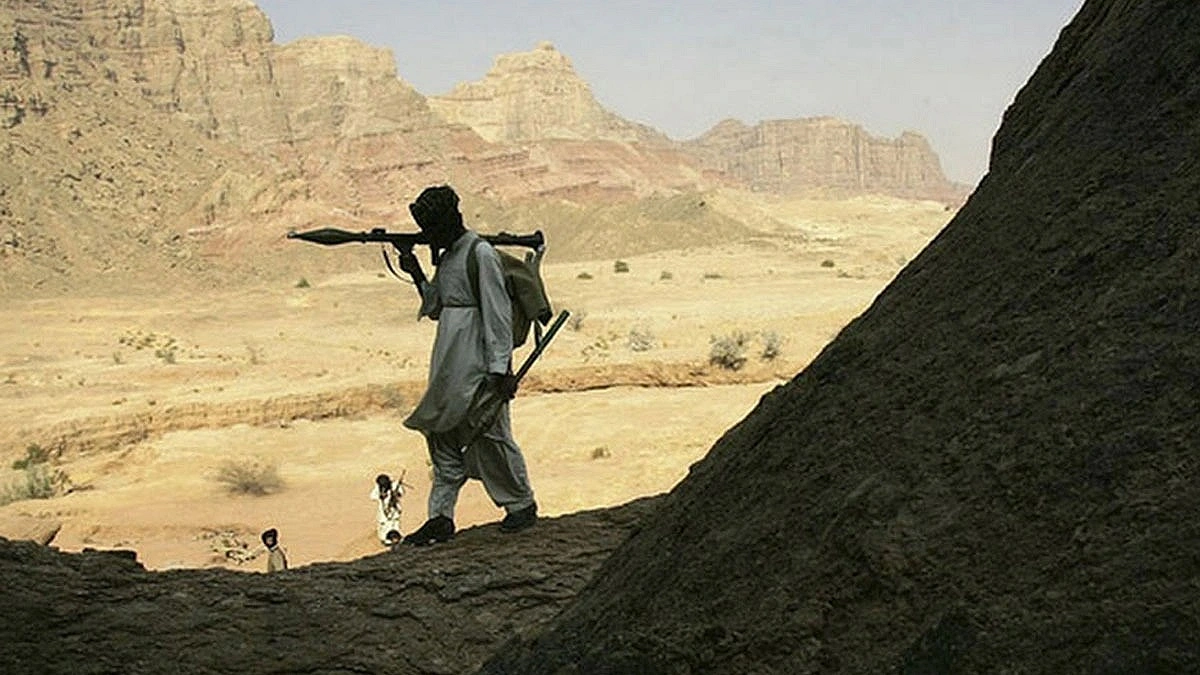
The Baloch Liberation Army (BLA) began as a small separatist group operating from the mountains.
Rich in mineral resources, Pakistan's southwestern province of Balochistan has remained at the center of conflict for more than seven decades. The region has witnessed prolonged political grievances, nationalist movements, and armed insurgency. At the heart of the rebellion is the Baloch Liberation Army (BLA), the most prominent separatist group in the province. On Friday, coordinated attacks by the group killed 45 Pakistani security personnel. The assault was only the latest in a series of increasingly sophisticated operations that have left Pakistan's security forces under mounting pressure.
Once a small separatist movement operating from the rugged mountains, the BLA has evolved into Pakistan's most organized and capable insurgent group. Over the past two decades, it has not only increased the frequency of its attacks but also transformed its tactics. From guerrilla warfare to suicide bombings, train hijackings, and coordinated urban assaults, the group has steadily expanded its operational reach. Its evolution has prompted security analysts across South Asia to reassess the insurgency.
Breaking away from conventional guerrilla tactics, the BLA now combines modern battlefield strategies, advanced weapons, and its suicide unit, the Majeed Brigade. Its attacks are no longer confined to remote military outposts. Instead, the group has repeatedly targeted the foundations of Pakistan's sovereignty and China's multibillion-dollar economic interests in the country. Emerging from the mountains, it has challenged the military prestige of nuclear-armed Pakistan. What began as a separatist movement in a resource-rich yet marginalized province has evolved into a formidable campaign for an independent Balochistan.
The BLA traces its origins to the Baloch independence movement, with limited activities beginning in the 1970s. The group underwent a major revival in the mid-1990s under Aslam Baloch. The killing of veteran Baloch leader Nawab Akbar Bugti by Pakistani security forces in 2006 further energized the insurgency. Under Aslam Baloch, the organization shifted from a tribal structure toward recruiting educated middle-class youth. After his death, Bashir Zeb Baloch assumed leadership and expanded the group's operations through more coordinated and high-profile attacks.
The BLA later adopted one of its most controversial strategies by establishing the Majeed Brigade, ending its long-standing reluctance to carry out suicide attacks. Suicide missions soon became a central part of its operations. In 2022, Shari Baloch carried out a suicide bombing at the Confucius Institute at the University of Karachi, killing three Chinese teachers and drawing international attention.
The attack on the Chinese Consulate in Karachi in 2018 marked another turning point. It was followed by attacks on the Pakistan Stock Exchange in 2020, a convoy of Chinese engineers near Karachi Airport in 2024, and the hijacking of the Jaffar Express in 2025. Each attack demonstrated that the BLA had expanded beyond the remote mountains of Balochistan and was capable of targeting Pakistan's economy, infrastructure, and foreign partners.
The hijacking of the Jaffar Express remains the group's most high-profile operation. Hundreds of passengers were taken hostage before Pakistani security forces ended the siege after a prolonged operation. The incident, however, succeeded in drawing global attention to the BLA.
The group portrays itself as a national liberation movement. It argues that Balochistan's gas, gold, copper, and other natural resources are being exploited. Aslam Baloch repeatedly accused both Pakistan and China of looting the province's wealth. Islamabad, however, designates the BLA as a terrorist organization, accusing it of targeting civilians, security personnel, and foreign nationals in an effort to destabilize the country.
Over time, the BLA has also refined its propaganda strategy. The group now produces high-quality videos, uses social media extensively, and delivers professionally produced messages. Its leader, Bashir Zeb Baloch, who once remained largely out of public view, now appears in video statements, a shift analysts view as part of the group's psychological warfare.
Analysts say the BLA's growing strength stems from deep-rooted local grievances, prolonged political deadlock, effective social media campaigns, organizational restructuring, and greater coordination among smaller insurgent groups. They also argue that Pakistan's heavy-handed security operations and allegations of human rights abuses have further fueled the conflict. Islamabad rejects many of those allegations, insisting that its counterterrorism operations are essential to maintaining national security.
The insurgency that emerged in the dusty mountains of Balochistan now echoes far beyond the province. Its impact is being felt in Islamabad, Beijing, and diplomatic circles around the world. Whether that echo will ever fade remains uncertain.
