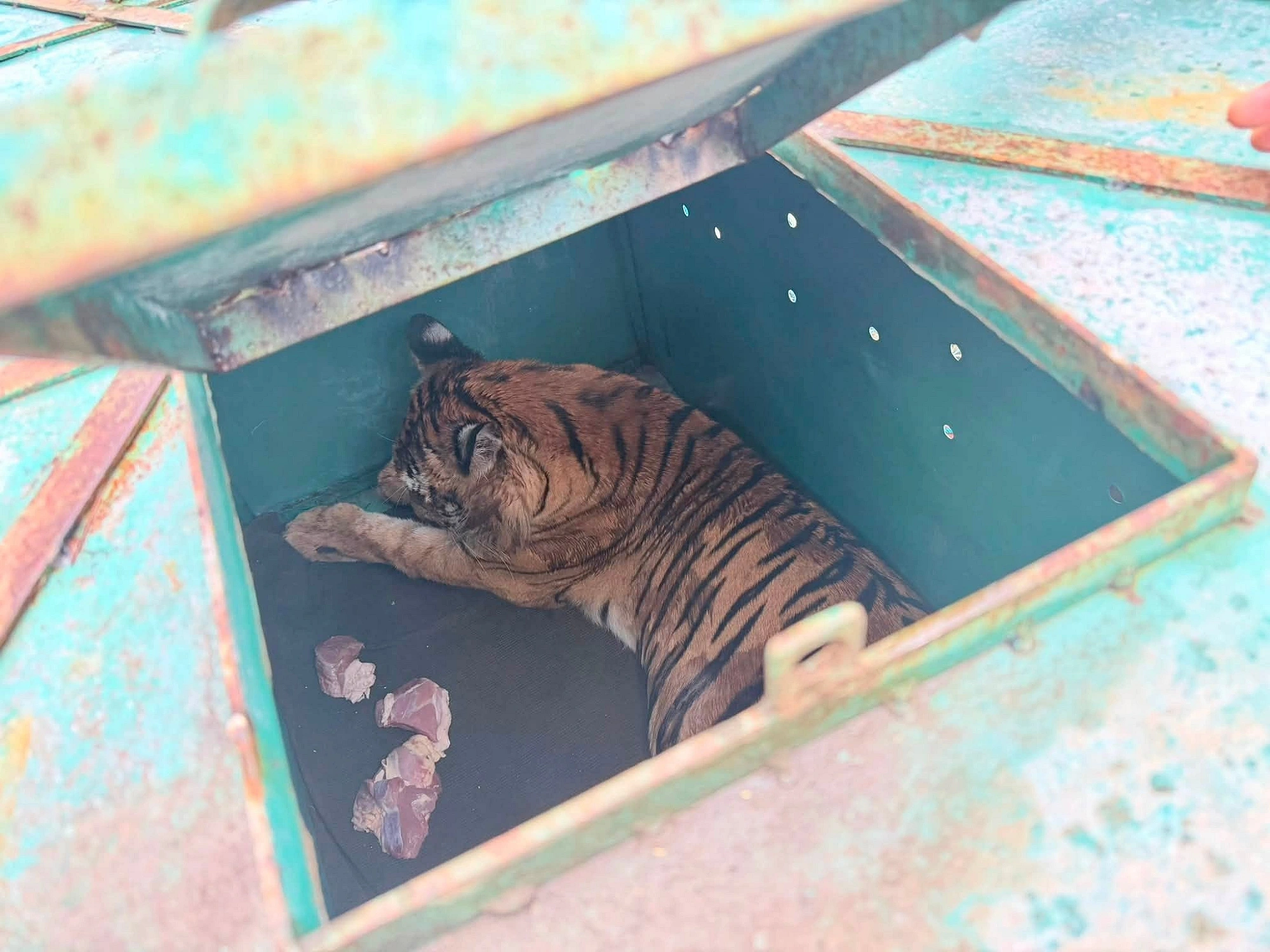
After treatment, tigress released into the Sundarbans

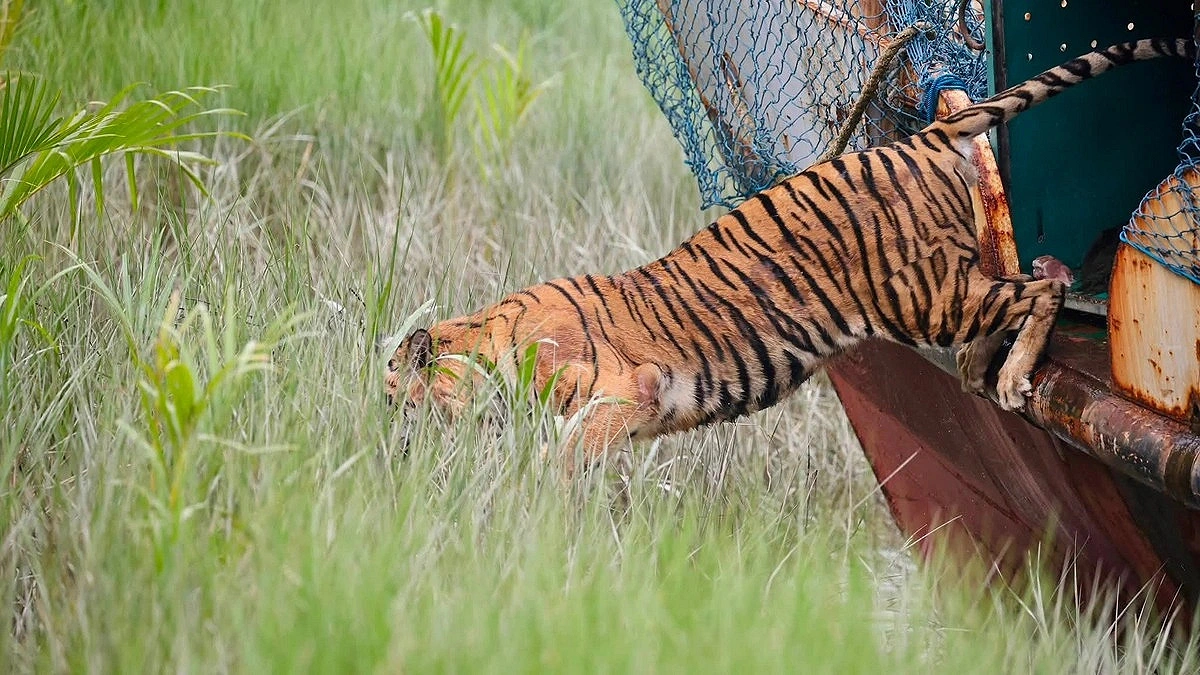
A tigress being released into the Sundarbans after six months of treratment. Photo: Adnan Azad.
A tigress, rescued from a poacher's trap, has returned to her home in the Sundarbans today after more than six months of treatment by a veterinarian. The decision to release the tiger into the Sundarbans was recently made based on the opinions of senior forest department officials and wildlife experts.
State Minister for Forest and Climate Change, Sheikh Faridul Islam, personally attended the event and released the tigress into the Sundarbans this afternoon. The tiger was set free in the forest area of the Andharmanik Ecotourism Centre in the Sundarbans. The matter was confirmed through a Facebook post by Adnan Azad, convenor of the Bangladesh Animal Welfare Association.
He published several photos of the tiger's release. He wrote, "I became a witness to a new history. The history of treating a severely injured tiger from the Sundarbans for 6 months and sending it back to the Sundarbans after recovery. The Honourable Prime Minister's words came to mind - May the country be a safe habitat for all life and animals."
The Wildlife Conservation Department authorities said that the tigress was taken this morning towards the Andharmanik forest area of the Chandpai Range in the Eastern Sundarbans. Four teams were formed, comprising experienced and renowned wildlife veterinarians, tiger experts, and forest department officials, to release the tiger into the Sundarbans. Additionally, 20 cameras have been installed over 8 kilometers in the Sundarbans to monitor the tigress's movements. The seriously injured tigress has now fully recovered after long-term treatment.
Nirmal Kumar Pal, Divisional Forest Officer (DFO) of the Wildlife Management and Nature Conservation Division, Khulna, confirmed the matter to BSS. He said, "We have cared for the tiger over the last six months under the supervision of experienced doctors at the Safari Park. The tiger is now 100% healthy. Last Friday, the medical team, consisting of experienced and renowned wildlife veterinarians, issued a certificate. Accordingly, the tiger was released today in the Andharmanik forest area of the Chandpai Range in the Sundarbans."
Md. Sanaul Haque Patwari, Conservator of Forests of the Wildlife and Nature Conservation Zone under the Forest Department, said that a tiger's maximum lifespan can be up to 15 years. This tigress is 10 to 11 years old. After prolonged treatment, the animal has regained its lost agility and speed. Its current weight is approximately 90 kilograms.
Forest Department sources said that the Royal Bengal Tiger, trapped in a poacher's snare in the Eastern Sundarbans, is returning to its habitat in the Sundarbans today after 6 months of treatment. On January 3rd of this year, at noon, an elderly tigress got caught in a slip-trap set by poachers for catching deer near the Sharkir Khali area of the Chandpai Range in the Eastern Sundarbans Forest Division. A team of forest department experts rescued the seriously injured tigress on January 4th. A five-member medical board treated and provided intensive care to the tigress at the rehabilitation center of the Wildlife Management and Nature Conservation Division in Khulna.
Veterinary surgeon of the Forest Department, Dr. Hatem Sajjat Zulqarnain, said that at the time of rescue, the tigress was lethargic, weak, and emaciated. On the front left leg, over an area of about 3 inches, the skin, muscles, and veins were damaged. Due to the tugging of the trap's rope, the wound had developed gangrene. With antibiotics and regular dressing, the wound started to dry up around March. Currently, the wound area has filled in and hair has also grown there.
Imran Ahmed, Conservator of Forests (CF) of the Khulna region of the Forest Department, said that after recovery, the tigress has returned to its former appearance. The 9-foot-long tigress's weight has increased to 90 kilograms. Her agility has increased. She can now hunt and eat on her own.
He said, a decision was made to put a collar on the tigress to monitor her movements in the Sundarbans after release. However, due to various complications, it was not possible to bring it from abroad. Now, after release, camera trapping will be done to monitor her movements. To that end, 20 hidden cameras are being installed over 8 kilometers of the Andharmanik forest area. In 2024, during camera trapping, the tigress was identified three times across an area of approximately 40 kilometers.