
Bangladesh-Bound Crude Oil Tanker Crosses Hormuz Strait

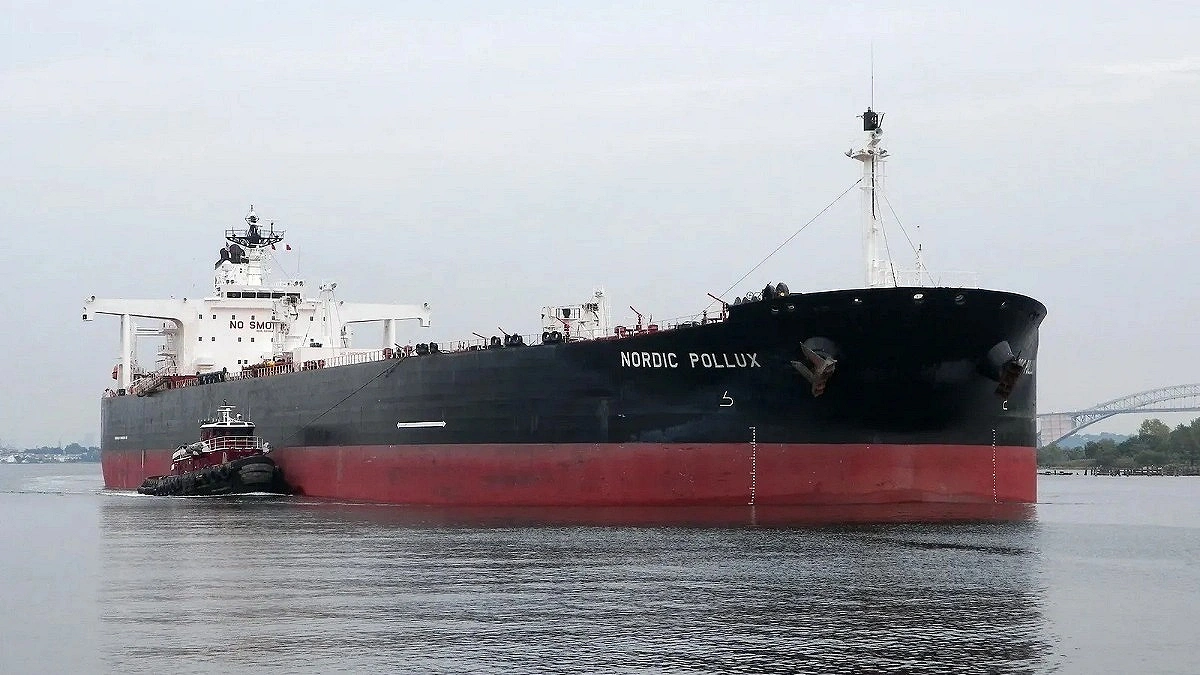
Collected Photo
The crude oil tanker Nordic Pollux has set sail for Bangladesh after crossing the Hormuz Strait.
The vessel had remained stranded at Saudi Arabia’s Ras Tanura port after the Hormuz Strait was closed on February 28 amid the Iran-US war. Taking advantage of the partial easing of restrictions, the tanker safely crossed the strait last Monday. If all goes according to plan, it will arrive at the outer anchorage of Chattogram Port on July 6.
That means the vessel will reach Chattogram with its cargo 128 days after being loaded.
The tanker is carrying 100,000 tons of crude oil. After arriving in Chattogram, the oil will be refined at the country's only state-owned refinery, Eastern Refinery Limited (ERL), and then distributed nationwide.
State-owned Bangladesh Shipping Corporation (BSC) is overseeing the transportation of the fuel on behalf of Bangladesh Petroleum Corporation (BPC). BSC chartered the Nordic Pollux from a foreign company to transport the oil.
Commodore Mahmudul Malek, Managing Director of BSC, said, “We did not remain idle after the closure of the Hormuz Strait. As alternative routes, we have been importing fuel oil through Saudi Arabia’s Yanbu port and the United Arab Emirates’ Fujairah port. Supplies are currently being maintained through fuel brought in via these alternative routes.”
The Nordic Pollux loaded the oil at Ras Tanura port on March 1 and had remained stranded there ever since. Referring to the prolonged delay, the BSC managing director said, “Through extensive diplomatic and institutional efforts, we are bringing the vessel and its oil cargo to the country. However, neither BSC nor BPC will bear the substantial demurrage or additional costs incurred due to the vessel remaining idle for such a long period. Under the terms of the contract, the supplier will bear these expenses. We will resume transporting oil through this regular route only after conditions in the Hormuz Strait return fully to normal.”
Bangladesh typically imports around 1.5 million tons of crude oil annually under government-to-government agreements from Saudi Arabia’s Saudi Aramco and Abu Dhabi’s ADNOC. Saudi oil is usually shipped from Ras Tanura port in the Persian Gulf, while UAE oil is transported from Jebel Ali port, with both routes passing through the Hormuz Strait before reaching Chattogram.
Earlier this year, the closure of the strategic maritime route due to the war left the Nordic Pollux stranded at Ras Tanura with Bangladesh’s 100,000-ton oil shipment. Facing a severe shortage of crude oil, Eastern Refinery suspended production operations on April 14. The shutdown temporarily reduced the country’s fuel supply by nearly 20% of total demand, creating a short-term shortage.
To address the situation, the government quickly began importing refined fuel at higher prices through alternative channels. Later, oil imports resumed through Saudi Arabia’s Yanbu port on the Red Sea coast and Fujairah port on the Gulf of Oman as alternative routes. Eastern Refinery subsequently resumed operations, and oil imports are currently continuing through these routes.
